How to Choose a Western Sydney Builder — 12-Point Checklist (2026)
Choosing the wrong builder will cost you more than any other decision in the project. Not the architect, not the lender, not the suburb. The builder.
I'm going to give you the 12-point checklist I'd use if I were hiring someone to build my own house in Fairfield, Liverpool or Cumberland tomorrow. This is from the inside — what to look for, what to verify, what nobody else will tell you. Some of these points will rule Buildana out for some clients. That's fine. The goal is for you to pick the right builder for your project, not the loudest one with the best Instagram.
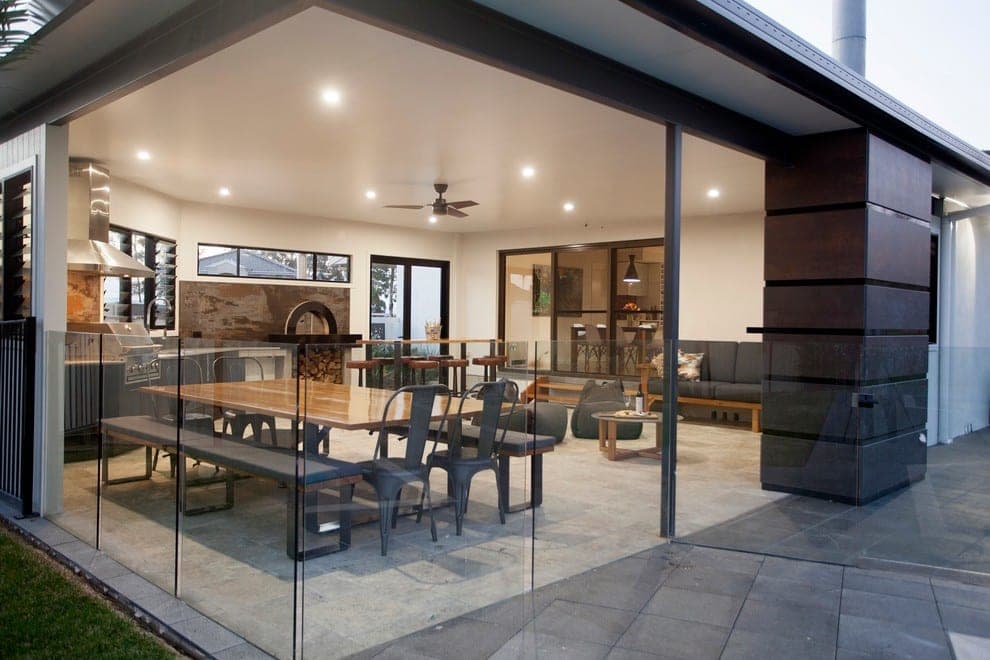
1. Builder's Licence and Insurance — Verify, Don't Trust
Search the builder's company name on NSW Fair Trading Public Register (www.fairtrading.nsw.gov.au). Verify:
• Builder's licence is current (not expired, not suspended) • Class allows residential building over $20,000 • HBCF insurance eligibility certificate is held • No disciplinary history
Buildana licence: 487805C. Look it up. If a builder hesitates when you ask for their licence number, walk. This is the most basic transparency requirement and any reluctance is a flashing red flag.
2. How Long Have They Actually Been Trading?
ASIC company search ($9 from connectonline.asic.gov.au). Check:
• Date of incorporation (not 'we've been building for 30 years' — show me the company) • Director history — how many companies have they registered and deregistered? • Phoenix risk — repeat liquidations is the strongest predictor of you losing your deposit
A builder who's run three different company names in five years is not stable. A builder with a single ABN trading 7+ years is.
3. Three Recent Project References — Visit One in Person
Ask for three completed projects in the last 18 months. Get addresses. Drive past at least one. If possible, knock on the door (politely) and ask the owner two questions:
• 'Did the project finish on time and on budget?' • 'Would you use them again?'
References chosen by the builder are filtered. Visiting unfiltered tells you everything. The houses where the owners avoid eye contact are the warning. The houses where the owners enthusiastically describe the build experience are the green light.
4. Current Site Visit
Ask to visit a current Buildana site (or any builder you're considering). What you're looking for:
• Site cleanliness and signage • Worker safety (PPE, scaffolding, edge protection) • Materials stored properly (no warped timber in puddles) • Site supervisor present or contactable • Subbies who speak well of the site and the builder
A chaotic site is a chaotic project. A clean, organised site is the strongest signal of project management quality.
Building a new home in Sydney?
Custom-designed, fixed-price, end-to-end. Send us your brief and we'll send back a real number.
5. Subcontractor Stability
Ask the builder which subcontractors they've used for their last five jobs. Bricklayers, electricians, plumbers, tilers, painters. If the answer is 'we use whoever's available' — that's a problem. If the answer is 'these are the same six trades we've used for 4+ years' — that's a builder who pays subbies on time and runs sites well.
Sub stability is the single best leading indicator of build quality. Trades who get burned don't come back. Trades who keep coming back trust the builder.
6. Quote Comparison — Like for Like
Get three quotes. Insist on identical specifications across all three. Don't compare a quote with 600x600 floor tile against one with 600x1200 — different cost, different look, you're comparing apples and oranges.
If one quote is 15%+ below the others on identical spec, ask hard questions. Either there's a missing inclusion, an under-allowed PC/PS, or the builder is buying the job to keep cash flow alive (which usually ends in undercapitalised collapse mid-build).
The right builder is rarely the cheapest. They're rarely the most expensive either. They're usually within 5%–8% of the median quote.
7. Fixed Price vs Cost-Plus
On a knockdown rebuild or new build, demand a fixed-price contract. Cost-plus is for renovations of unknowns where the scope literally cannot be defined. New builds can and should be fixed-price.
A builder who insists on cost-plus for a new build is either lazy with their pricing or transferring the financial risk of their own scoping errors onto you. Both are deal-breakers.
8. Inclusions Schedule Detail
Ask for the inclusions schedule before you talk price. A real inclusions document is 15–25 pages. It lists every fixture, every fitting, every brand, every grade. Generic 'standard inclusions' on one page is marketing, not a specification.
The length and specificity of the inclusions document is a direct proxy for how the builder runs the back-end of their business. Vague inclusions = variations later. Detailed inclusions = honest pricing.
Fixed-price estimate
Get a real number for your block
Two minutes now saves the guesswork. Oliver or one of the team calls back with a realistic range for your suburb and block, then books a free site walk if you want a fixed price.
- Priced off your block, not a brochure — soil, slope and council read first
- NSW licensed builder 487805C. HBCF insured. Fixed-price HIA contract.
- Reply within 4 working hours. No sales pressure, ever.
9. Communication Cadence and Project Manager Access
Ask: 'Who is my single point of contact during the build, and how often will I get updates?'
The right answer: a named project manager, weekly update emails or a portal, fortnightly site walks scheduled in advance, and a defined escalation path if you can't reach them within 2 business days.
Wrong answer: 'Just call the office.' That's a builder running on chaos and you'll find out at month 4 when nobody's returning your calls.
10. Reviews — But Read Them Properly
Google reviews and Productreview.com.au are useful. Read them properly:
• Look for 3-star reviews with specific complaints — these are real and tell you what the builder gets wrong • Discount 5-star one-line reviews ('Great service!' = useless) • Look at the builder's responses to negative reviews — defensive responses are a culture problem; thoughtful, action-oriented responses are a culture strength • Watch for review spikes — a builder going from 4.2 to 4.8 over six months is buying reviews
No builder has 100% glowing reviews. The honest ones have 4.2–4.6 averages with a handful of legitimate complaints handled professionally.
11. Defects Liability Period and Service After Handover
Statutory minimum is 13 weeks. Ask: 'What's your post-handover service like at month 6, month 12, year 2?'
A good builder books a 12-month walkthrough into the handover handover paperwork. They have a defects portal or email. They name the person who handles warranty claims. They've systematised it.
A bad builder ghosts you the day the deposit refund clears.
12. Trust Your Gut
After 11 verifiable checks, the 12th is unverifiable but the most important. Sit across from the builder for a real conversation. Watch how they answer hard questions. Watch whether they push back on requests that don't make construction sense (that's good — yes-men cause problems). Watch whether they admit uncertainty where it exists (also good).
The builder will be in your life for 12–18 months. You will spend more decision-making time with them than with most colleagues. If something feels off in the first meeting, it will be 10x worse at month 8.
To see how Buildana operates against this checklist visit /our-story or call 0476 300 300 for a no-obligation conversation.