The Mistakes First-Time Knockdown Rebuilders Keep Making in Sydney
Same mistakes. Different families. Year after year. I've watched it happen on more than 60 knockdown rebuilds across Fairfield, Liverpool and Cumberland LGAs.
None of these are technical. They're not 'I picked the wrong slab system.' They're decisions that look small at the brief stage and cost five-figure regrets at handover. If you're about to start your first KDR, read this once. It saves more than any cost-comparison article will.
Mistake 1 — Designing for the House You Want, Not the Block You Have
The single biggest waste of money I see: clients walk in with a Pinterest board of two-storey Hamptons facades, then try to force that onto a 12.5m frontage with a 9m setback corridor. The result is a compromised footprint, expensive structural workarounds, and a final house that looks awkward because it was never designed for the lot.
Start with the block. Site analysis first — orientation, fall, easements, setbacks, neighbouring overshadowing, view corridors. Design follows constraint, not the other way around. A 240sqm house designed for the lot beats a 280sqm house forced onto it every single time, in livability and resale.
Mistake 2 — Underbudgeting Site Costs
The headline construction price is the number people compare. The site costs are where the comparison breaks down.
Real Western Sydney site costs in 2026:
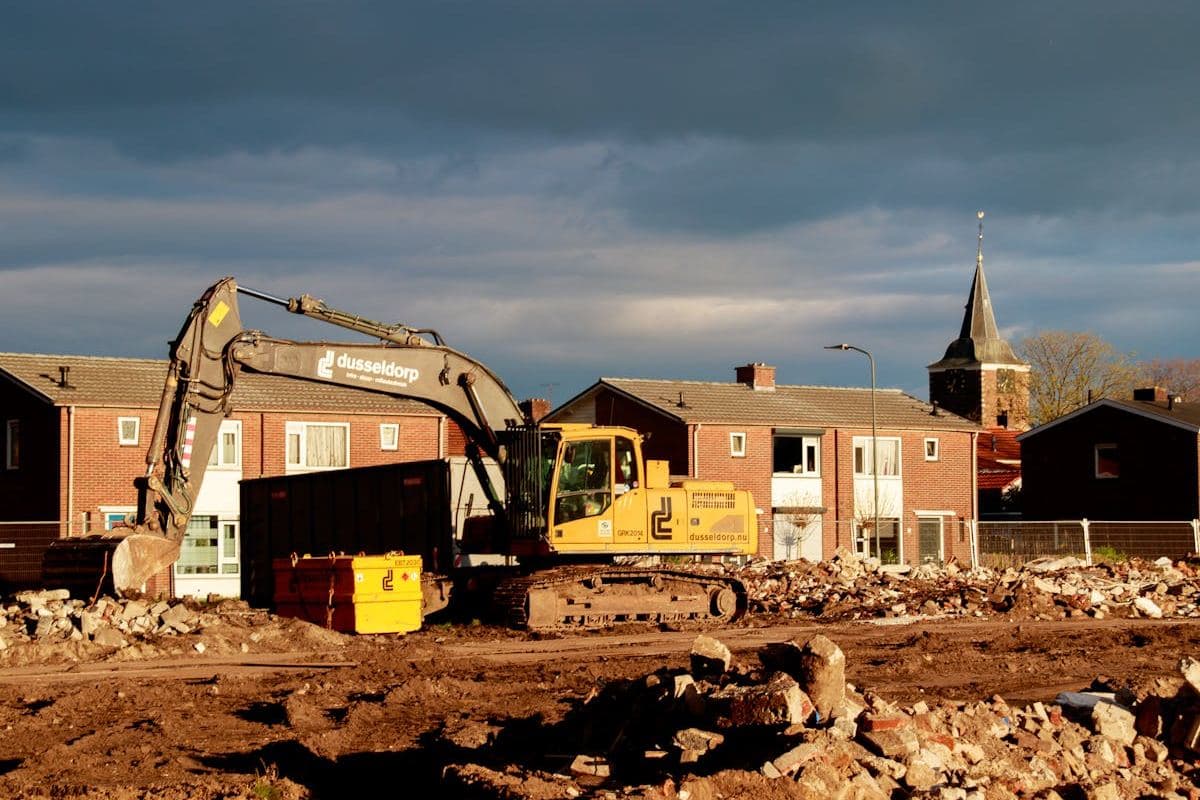
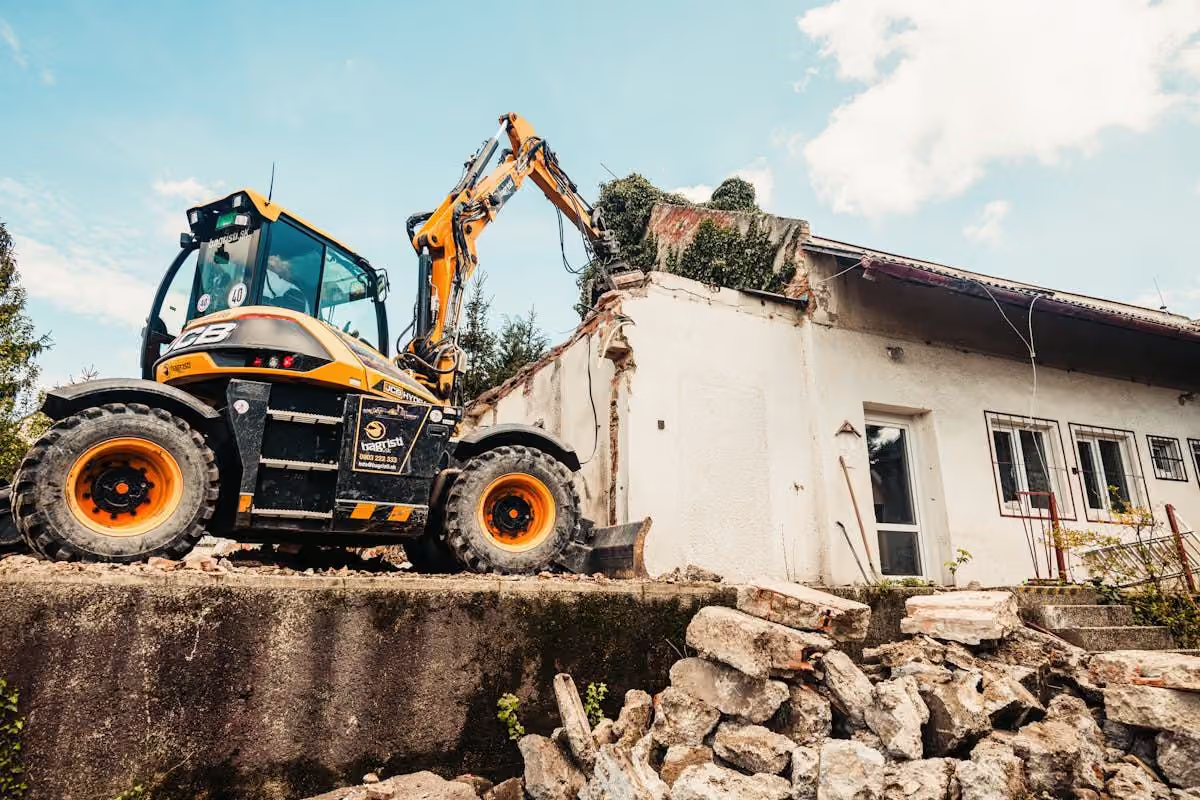
• Demolition (with asbestos): $22k–$35k • Site cut and fill (1m fall): $8k–$18k • Sewer connection upgrade (older suburbs): $4k–$12k • Stormwater detention (Council DCP requirement): $5k–$15k • Driveway crossover: $4k–$8k • Service connections (power, water, NBN): $3k–$7k • Boundary fencing: $5k–$12k
That's $51k–$107k before you've poured a slab. Builders quoting low usually carry $0–$20k for site costs and reconcile against actuals. You wear the difference. Get a builder to walk the block and quote a realistic allowance — not a marketing one.
Considering a knockdown rebuild?
Send us your block — we'll come back with a real cost estimate (demo + new build) within 48 hours.
Mistake 3 — Picking the Builder on Price Alone
The cheapest tender on a $700k KDR is usually $40k–$80k below the median. There are exactly two reasons that happens:
1. The cheap builder has under-allowed for site costs, PCs, PSs — variations will close the gap and then some 2. The cheap builder is undercutting their own margin to win work — they go broke or cut corners on subcontractor selection
Neither outcome is good for you. Compare like-for-like inclusions. If two builders are within 5% of each other on a fully-itemised spec, that's a fair comparison. If one is 15% lower on the same spec, ask hard questions about why. Reference-check the last three projects. Visit a current site. Talk to the previous client without the builder in the room.
Mistake 4 — Ignoring Orientation and Cross-Ventilation
North-facing living. South-facing wet areas. East for bedrooms. West eaves at minimum 600mm with operable shade. Cross-ventilation through every habitable room.
Most spec home plans ignore this entirely because they're designed to be flipped on any block. On a knockdown rebuild you have one chance to get the orientation right. A house that runs its aircon four months a year less because the design respects the sun is a house that's $1,500–$2,500/year cheaper to live in for the next 40 years. That's a real return on a smarter design at concept stage.
Fixed-price estimate
Get a real number for your block
Two minutes now saves the guesswork. Oliver or one of the team calls back with a realistic range for your suburb and block, then books a free site walk if you want a fixed price.
- Priced off your block, not a brochure — soil, slope and council read first
- NSW licensed builder 487805C. HBCF insured. Fixed-price HIA contract.
- Reply within 4 working hours. No sales pressure, ever.
Mistake 5 — Variation Creep
Every variation costs you the variation amount + the builder's margin (typically 15%–20%) + lost time. A $4,000 cabinetry upgrade costs $4,800 plus a week's delay if it requires re-templating.
The pattern I see: client signs a fixed-price contract, then makes 18 small variations through the build. Each one feels minor — $1,200 here, $3,500 there. By handover the variations total $42,000 and the build is six weeks late.
Lock the spec at contract. If you must change something, batch changes weekly with the project manager and decide in groups. This stops the dripping-tap effect on both budget and program.
Mistake 6 — Underestimating Your Own Time Cost
A KDR is a part-time job. You'll make 200+ selection decisions: tile colours, tap profiles, cabinetry handles, paint codes, light fittings, switch plates, door hardware, joinery configurations, splashback patterns, benchtop edge details, floor transitions, fan vs vent, downlight quantity per zone, robe internal layouts.
If both partners work full-time, allow 4–6 hours per week for the build for 14 months. That's 250–350 hours of decision-making. Builders who say 'we handle everything' actually mean 'we handle everything except every decision the client has to make.'
Budget your time. Or pay an interior designer $6k–$12k to make the small decisions for you. Both approaches work. Winging it doesn't. Visit /homes/knockdown-rebuilds or call 0476 300 300 to see how we structure the decision schedule on every Buildana KDR.