The four substructure systems and what each is actually for
Most owners think of footings as a single line item. They aren't. There are four genuinely different substructure systems used on Sydney residential, and the choice between them is the single biggest engineering call in the build.
Strip footings with suspended ground floor. Concrete strip below ground level, structural blockwork or brick walls up to ground level, suspended timber or concrete ground floor. Common on older Sydney heritage homes, sloping sites where the slab can't sit at natural surface, and sites with reactive clay where slab-on-ground would crack.
Slab on ground (waffle pod or raft). The default for flat to gently sloping sites with M to H1 reactive clay. Concrete slab cast directly on the prepared ground over a vapour barrier. Edge beams, internal beams, mesh reinforcement.
Bored concrete piers with ground beams and suspended slab. Used on H2 and E reactive sites, deep fill sites, heavily sloping sites, and sites with bedrock at moderate depth. Concrete piers drilled into stable strata, ground beams between piers, suspended slab over.
Screw piles with steel head plates. Same use case as bored piers, but installed by hydraulic rotation rather than drilling. Faster, less spoil, suit awkward access.
The choice is driven by soil report, slope, water table and structural design. Not by builder preference, not by 'what we usually do', not by what's quickest. The engineering should pick the system; the builder prices what the engineer specifies.
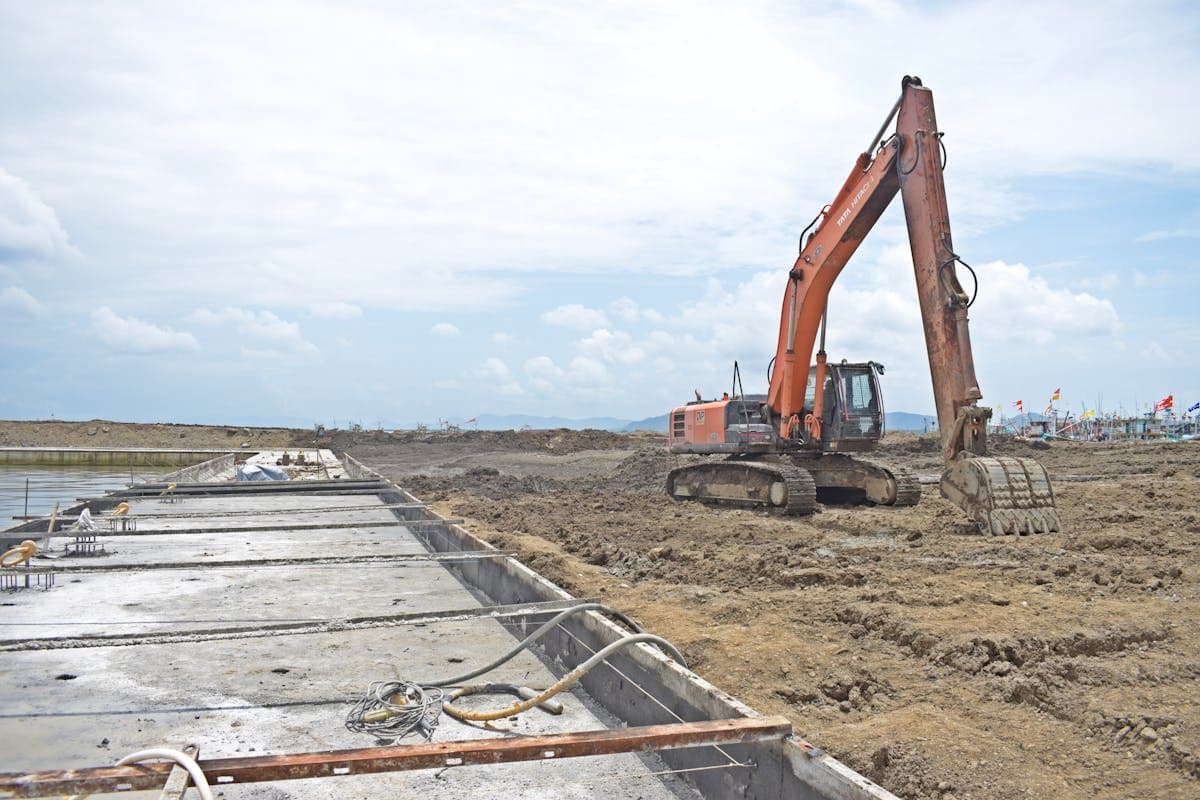
Strip footings — when they're still the right call
Strip footings remain the right system on:
• Sloping sites where the floor level can't match the natural surface and a slab-on-ground would require massive cut or fill.
• Heritage restoration where the existing substructure is strip and the building must match.
• E-class sites where the engineer prefers a structural wall and suspended floor over a deep raft slab.
• Sites with persistent shallow water table where slab-on-ground is at risk of moisture migration.
Rawlinsons Edition 29 Sydney column for strip footings: 20 MPa concrete in strip footing including two layers of trench mesh reinforcement and excavation of equal depth at $510/m³ baseline. A typical strip footing on a 220m² home with 80m of perimeter wall plus internal load-bearing walls runs 35–50m³ of concrete — pure footing concrete at $17,800–$25,500 baseline, before formwork, additional excavation depth, and substructure walls.
Full strip-and-suspended-floor substructure on a 220m² home in 2026: $86,000–$135,000 turnkey. More than slab-on-ground; less than bored pier.
Need a builder who actually communicates?
Weekly progress photos, dedicated PM, fixed-price contract. That's how every Buildana project runs.
Bored piers vs screw piles — the real decision
Both transfer building loads to deep stable strata. The differences are practical, not structural:
Bored concrete piers. • Diameter 350–600mm. • Depth 4–8m typical, 10m+ on E-class or deep fill sites. • Installed by drilling rig, lined with steel casing if hole is unstable, reinforcement cage placed, concrete poured. • Cure time 7 days minimum before loading. • Spoil generated: 0.4–1.5m³ per pier — must be removed off-site. • 2026 Sydney installed cost: $2,400–$3,800 per pier including spoil removal, casing if needed, reinforcement and concrete. • Capacity confirmed by engineer's calculation. Test pier optional ($4,500–$8,000 for static load test if required). • Suit deeper bedrock, sites with stable upper strata, projects with time for cure.
Screw piles. • Steel shaft 76–273mm diameter, helical plate at base. • Depth 3–9m typical, capacity-tested at install via hydraulic torque measurement. • Installed by skid-steer or excavator-mounted rotary head. • No cure time — load can be applied immediately. • Spoil generated: nil to minimal. • 2026 Sydney installed cost: $1,400–$2,800 per pile including head plate and torque test. • Capacity confirmed at install — every pile is essentially load-tested through the torque measurement. • Suit awkward access, small lots, sloping sites where drilling rig can't manoeuvre, heritage sites where spoil and noise must be minimised.
A 220m² H2 home typically needs 22–32 piers/piles. Bored pier system: $52,000–$120,000 just for piers, before ground beams and suspended slab. Screw pile system: $30,000–$90,000 for piles. Plus ground beams ($28,000–$45,000) and suspended slab ($75,000–$110,000) on top.
Common failure modes and how to detect them
Substructure failures are rare but expensive. Patterns:
Strip footings on reactive clay without articulation. Brick walls crack diagonally at corners, doors jam after 12–18 months, plaster cracks reopen each summer. Cost to rectify: $40k–$120k retrospective underpinning if affordable, otherwise the building is structurally compromised for life.
Slab on ground on poorly compacted fill. Differential settlement, slab cracks, internal walls separate from ceiling. Cost to rectify: $80k–$250k, often involves jacking and underpinning.
Bored piers cast into water-bearing strata without proper casing. Concrete dilutes, pier strength reduced, building load transfer compromised. Detection requires destructive testing — usually only discovered when the building shows distress symptoms 2–5 years after handover.
Screw piles installed without torque verification. Capacity unknown. Building may stand for years before load redistribution causes localised settlement. Detection requires re-testing existing piles ($3,500 per pile inspection).
Most failures trace back to one cause: the engineer's specification was substituted by the builder without re-engineering. The designer specified bored piers; the builder substituted screw piles to save money or schedule but didn't get the system re-certified for the actual loads. The math doesn't work and the building eventually shows it.
Pre-substructure checklist
Before any concrete or steel goes in the ground:
1. Soil report current and matched to actual house footprint (see /insights/soil-test-as2870-classification-disputes-2026).
2. Engineer's footing design referenced specifically in the contract by drawing number, revision, and date.
3. Substructure system specified by name (strip / slab on ground / bored pier / screw pile / hybrid) — not 'as required' or 'engineer to specify on site'.
4. Pier or pile schedule attached if applicable, with count, diameter, depth, capacity and location.
5. Any substitution (e.g., screw pile for bored pier) requires written engineer's approval and re-certification before install.
6. Substructure sign-off by certifier and engineer required before any further claim is paid.
7. As-built records: every pier or pile location, depth installed, capacity verified (torque or test pier), photographed and recorded. The as-built file matters in 5 years when something moves and the question is what was actually built versus what was specified.
For a free pre-substructure engineering and contract review on any Western Sydney or sloped Sydney metro build, call 0476 300 300 or visit /tools/feasibility-check.