When the call comes
The phone rings. Your builder's office isn't answering. The site's been quiet for two weeks. The supervisor's number is disconnected. A subcontractor turns up wanting payment because the head builder hasn't paid them and they've put a lien on your property under the Building and Construction Industry Security of Payment Act.
This is the start of a builder collapse. It happens in NSW residential more often than the industry likes to admit — anywhere from 60 to 130 collapses a year through the 2020s, depending on cycle position and interest rate environment. If you're mid-build when it happens, the next 90 days will be the most expensive education of your life. Knowing the process in advance is the difference between recovering 70% of the position and losing all of it.
Step 1: confirm the collapse, do not panic
Before assuming the worst, confirm. Three checks:
ASIC company search ($9). Look for: 'Strike-off Action in Progress', 'External Administration', 'Liquidator Appointed', 'Voluntary Administration'. If any of these appear, the company is gone or on the way out.
Fair Trading licence record. A licence becomes 'cancelled' or 'suspended' when a builder's company enters external administration. This is publicly visible.
HBCF status check. The HBL register shows whether the policy on your job is still active or whether iCare has already received a 'last resort' trigger.
If two of three confirm collapse, do not pay any more money. Do not respond to the builder requesting further deposits or progress payments. Do not allow remaining trades on site without written confirmation they are working on a different contract.
Document the state of the job within 48 hours: photographs of every room, every external face, every service connection, every piece of plant left on site. Lodge those photos in cloud storage. Future you will need them.
Need a builder who actually communicates?
Weekly progress photos, dedicated PM, fixed-price contract. That's how every Buildana project runs.
Step 2: lodge the HBL claim properly
The HBL claim portal is at icare.nsw.gov.au under Home Building Compensation. Required documents:
• Original signed building contract • Original HBL certificate (issued before work started) • Quantity surveyor or independent builder valuation of work-in-place at the date of collapse • Schedule of payments made to the builder, with bank receipts • Schedule of works incomplete • Variation history (if any) • Defect schedule (if any defective work present) • Asbestos clearance certificates (if any work disturbed asbestos) • Engineering certification of work-in-place (slab, frame, structural) • Photographs and dated site records
The claim is assessed by an iCare loss adjuster — usually a senior quantity surveyor seconded to claims work. They will attend site, measure, photograph, value. Expect 6–14 weeks from claim lodgement to first determination.
The maximum claim under HBL is $340,000 per dwelling (current cap, indexed periodically). On a project where you've paid $700k and the builder has built $500k of value before collapsing, the gap that HBL covers is the difference between paid and value-in-place — capped at $340k. On bigger projects the cap matters and you absorb the rest.
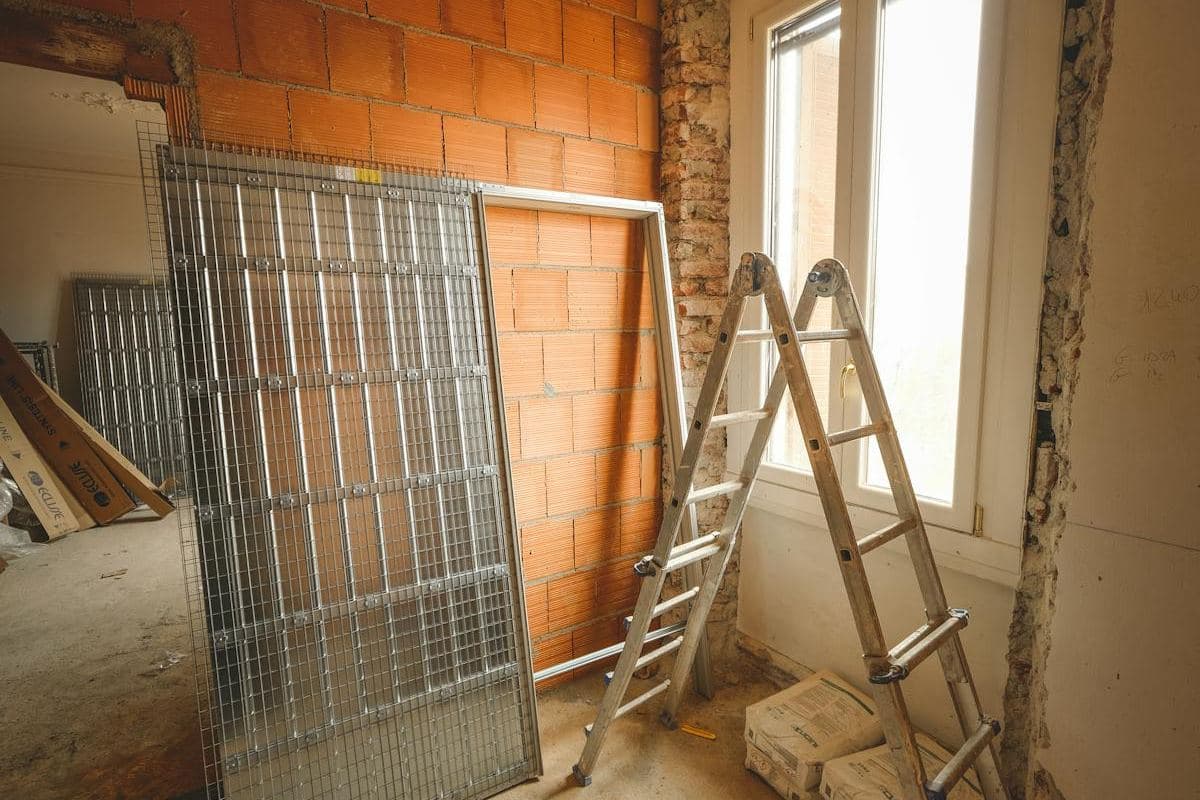
Step 3: secure the site, manage the half-built building
Within 14 days of confirmed collapse:
• Engage a licensed builder for a temporary works inspection — confirm structural integrity of work-in-place, identify any safety hazards (open trenches, exposed reinforcement, unsecured roof framing). • Secure the site — perimeter fencing, lock-up of any built lock-up sections, weatherproofing of any partial roofs or open walls. Cost $3,500–$12,000 depending on scope. • Notify your insurer — the construction works insurance may need transfer to your name from the collapsed builder's policy. • Notify your bank if you're on a construction loan — the lender will halt drawdowns and require independent valuation before any further release. • Notify the HBL — you'll need a 'continuation builder' nominated within 90 days for the policy to extend cover to the completion phase.
The site held in suspense costs $800–$2,400 a month in fencing rental, security, weatherproofing maintenance and council notice fees. Resolve fast — this is dead money.
Step 4: re-quote and re-engage
Once HBL has assessed work-in-place value and you have a determination of recoverable amount, the next builder must:
(a) Be willing to take on a part-built project. Many won't — taking responsibility for somebody else's slab, frame and waterproofing is a defect-liability nightmare. Expect a 15–30% premium over normal pricing for this service.
(b) Provide a full work-in-place inspection report identifying defects, omissions and remediation requirements. This becomes the variation register for the new contract.
(c) Lodge a fresh HBL certificate covering completion works only — but the sum insured is reduced by what's already been paid against the prior policy. Coverage on completion is partial.
(d) Hold the line on the original design intent — substituting cheaper materials to absorb the new builder's premium is the easiest mistake to make and the one that destroys end value.
The owners who recover well from a builder collapse share three traits: they didn't panic-pay extra to the collapsed builder, they documented work-in-place fast, and they engaged a continuation builder who'd done the same recovery work before. Picking a continuation builder on price alone almost always costs more in the back half.
If you're navigating a builder collapse and need a continuation builder walk on what you've got — no pitch, just a defensive valuation — call 0476 300 300 or visit /advisory/development-feasibility. We've completed multiple recovery projects from collapsed builders' work-in-place across Western Sydney and the eastern suburbs.