The July 2024 Reform — What Actually Changed
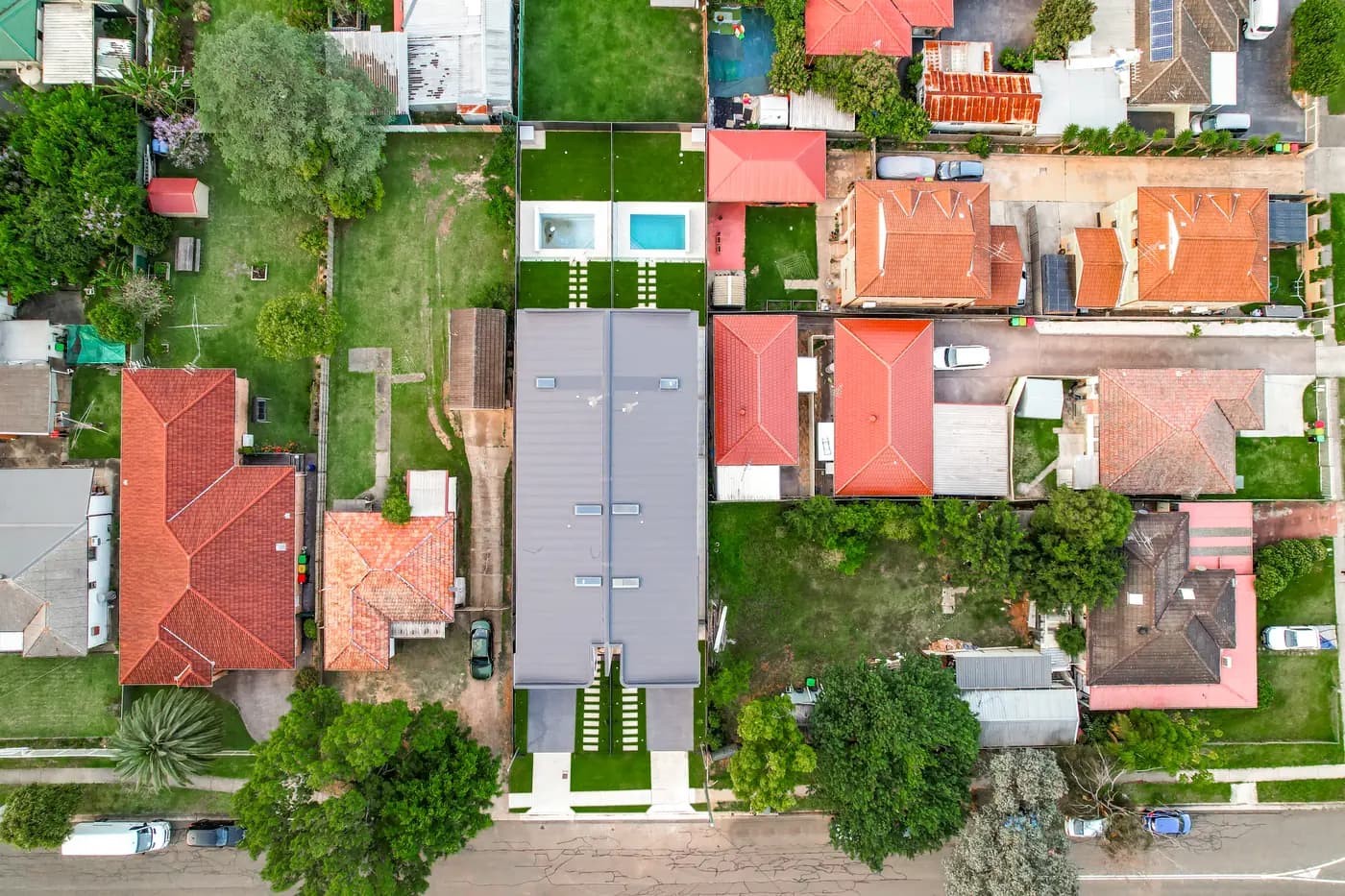
From 1 July 2024 NSW's Low and Mid-Rise Housing SEPP (officially the Housing SEPP amendment) allowed dual occupancy as permitted development on R2 Low Density lots meeting minimum size and width, across most metropolitan Sydney. For builders, developers, and owner-occupiers, the headline was simple: you can now put two dwellings on a block that was previously single-dwelling-only under the LEP.
The detail has been messier. Councils have implemented the reform at different speeds, with different overlays and clarifications, and the practical result is that 'can I build a duplex here?' depends not just on your lot but on your LGA. I've lodged duplex applications under the reform across Fairfield, Liverpool, Cumberland, Canterbury-Bankstown and Blacktown since August 2024. What follows is what each of those councils is actually approving.
The Baseline — What the Reform Requires Everywhere
To use the reform on an R2 lot anywhere in the permitted metro zone, your site needs:
• Minimum lot size: 450sqm (attached) or 600sqm (detached) • Minimum lot width: 12m (attached), 15m (detached) • Minimum 12m of frontage • Not heritage-listed or in a heritage conservation area (some exceptions apply) • Not in an identified environmental or hazard overlay where dual occupancy is expressly excluded • Setbacks: 900mm side, 3m rear, 6m front (can be reduced to street-average on some streets) • FSR: 0.6:1 combined GFA • Height: 8.5m ridge • Landscaped area: 35% (lower than the 45% many DCPs set for single dwellings) • 1 parking space per dwelling minimum
Meet those and you have a permitted-development pathway under CDC. The reform doesn't force councils to approve under DA; it just enables the CDC route where councils previously blocked it.
Fairfield City Council — Running Clean
Fairfield has absorbed the reform relatively smoothly. The LGA has a lot of R2 land that genuinely supports dual occupancy on reasonable block sizes, and council's DCP doesn't have layered environmental overlays that complicate most sites.
What's being approved under CDC: • Attached duplexes on R2 lots from 500sqm (council accepts 450sqm but under 500sqm the setback math gets hard) • Detached duplexes on 650sqm+ where block width allows the two driveways • Reform-based CDCs typically approved in 10–14 business days
What's NOT running smoothly: • Heritage-adjacent streets (Old Fairfield, sections of Canley Vale, parts of Smithfield) — DA still required • Sites in identified flood precincts (Lansvale, Carramar) — DA required for flood assessment • Lots where the applicant has miscalculated landscaped area against the reform's 35% threshold (common)
Fairfield's assessors are experienced with the reform. If you draw the plans correctly to the reform's specifics, you will get a clean CDC approval in under 3 weeks. If you try to use the reform's setbacks but the DCP's landscaped area (which is higher), they will reject it — it's one or the other, not mixed.
Stuck on approvals?
We've taken hundreds of projects through CDC and DA. Tell us your address and approval pathway — we'll map the realistic timeline.
Liverpool City Council — Slower, Plus OSD
Liverpool has been slower to bed in the reform, partly because the LGA has significant flood overlay, contamination history, and reactive soil zones that interact with the reform's assumptions. As of early 2026:
What's being approved under CDC: • Attached duplexes on clean R2 lots (no overlays) of 500sqm+ in suburbs like Hinchinbrook, Green Valley, Cecil Hills, Hoxton Park • Detached duplexes rare under CDC — most go DA because of either flood, reactive clay certification, or neighbour notification issues
The OSD rule (see /insights/liverpool-osd-rules-first-time-developers) adds $30k–$55k to every Liverpool duplex regardless of pathway. Build it into feasibility.
What's NOT running smoothly: • Warwick Farm, Lurnea, Miller — stormwater capacity issues pushing jobs to DA • Chipping Norton, Moorebank (river side) — flood overlay complicates CDC • Prestons older releases — some sites have contamination history requiring Section 7.12 assessment
A reform-compliant duplex CDC in Liverpool that's on a clean site approves in ~14 business days. One on a marginal site ends up as a DA, which is 45–70 days.
Cumberland Council — Conservative Implementation
Cumberland has taken the most cautious approach of the five LGAs we work in. Their position is that the reform applies, but their DCP controls (deep soil, tree canopy, streetscape character) need to be read alongside it. In practice this means more RFIs.
What's being approved under CDC: • Attached duplexes on 550sqm+ R2 lots in Merrylands, Greystanes, Wentworthville • Sites where the applicant has explicitly addressed tree canopy and deep soil beyond the reform's minimums
What's NOT running smoothly: • Anything under 550sqm — council invariably finds a DCP issue • Lots with existing street trees — council's arborist is active on crossover relocations • Auburn and Lidcombe heritage streets — DA required
My advice for Cumberland: design to the DCP, use the reform's CDC pathway as the lodgement mechanism, but don't treat them as two separate rulebooks. A plan that technically complies with the reform but ignores Cumberland's landscaping priorities will get RFI'd even though CDC theoretically should be binary pass/fail.
Canterbury-Bankstown Council — Detailed Overlays
Canterbury-Bankstown has the most layered planning controls of the five LGAs — deep soil requirements, landscaped area by sub-precinct, solar access enforcement on adjoining dwellings, and a very active heritage overlay in Bankstown CBD, Campsie, and parts of Punchbowl.
What's being approved under CDC: • Attached duplexes on 500sqm+ R2 lots in Greenacre, Lakemba, Revesby, Panania • Sites where the applicant has addressed solar access proactively (shadow diagrams lodged with the application)
What's NOT running smoothly: • Bankstown CBD fringe — heritage-adjacent, DA required for most duplexes • Campsie and Lakemba near the station — layered precinct controls, DA preferred • Sites where neighbour solar access is marginal — CDC certifier will refer back for redraw
Canterbury-Bankstown's CDC turnaround for a clean duplex is 12–18 business days. The 'clean' bar is higher here than in Fairfield — you need the shadow diagram, the deep soil calc, AND the landscape hatched plan with numeric totals.
Fixed-price estimate
Get a real number for your block
Two minutes now saves the guesswork. Oliver or one of the team calls back with a realistic range for your suburb and block, then books a free site walk if you want a fixed price.
- Priced off your block, not a brochure — soil, slope and council read first
- NSW licensed builder 487805C. HBCF insured. Fixed-price HIA contract.
- Reply within 4 working hours. No sales pressure, ever.
Blacktown City Council — Reform Working Well
Blacktown has implemented the reform cleanly. The LGA's R2 land is generally well-sized (700sqm+ typical) and the council's DCP is less layered than Cumberland or Canterbury-Bankstown. Duplex feasibility in Blacktown under the reform is strong.
What's being approved under CDC: • Attached duplexes on 600sqm+ R2 lots in Seven Hills, Toongabbie, Blacktown proper, Kings Park, Quakers Hill, Marayong • Detached duplexes on 780sqm+ lots — wider lots in Blacktown LGA make detached more feasible than in tighter LGAs • Reform CDCs typically approving in 11–14 business days
What's NOT running smoothly: • Mount Druitt sub-precinct overlays (some parts of the suburb have specific planning controls) • Riverstone older heritage areas • Lots within 200m of the T-way corridor — transport overlay can apply
Blacktown's combination of larger lots, cleaner DCP, and strong CDC certifier ecosystem makes it the easiest of the five LGAs to execute a reform-based duplex in. If you're weighing up where to buy land for a duplex play, this is the LGA where the reform is genuinely delivering on its promise.
The Mistakes First-Time Developers Are Making
Patterns I'm seeing repeatedly with the reform:
1. Assuming the reform overrides everything. It doesn't. Local DCPs still apply for anything the reform doesn't specifically address (deep soil in some councils, tree canopy in Cumberland, solar access in Canterbury-Bankstown). Design to the reform's numbers PLUS the local DCP's unaddressed items.
2. Ignoring the 35% landscaped area requirement. Most single-dwelling DCPs require 45%. The reform drops this to 35% for a reform duplex. But the calc is unchanged — driveways, pool coping, paved alfresco do count against the 35%. Plans I've seen from other designers routinely miss this.
3. Trying to use the reform on sub-minimum lots. 450sqm is the floor for attached, 600sqm for detached. One square metre under and the certifier can't issue. I've had two prospective clients arrive with a 442sqm lot asking if we can 'get it through' — no, the certifier's compliance is binary.
4. Missing the heritage overlay check. A lot in a conservation area that wasn't clearly indicated on the real estate listing is still a lot in a conservation area. Pull the 149 cert before you commit.
5. Not budgeting for OSD in Liverpool. Repeating this from the Liverpool section because it's the single most common margin-killer: $30k–$55k for a duplex-scale tank.
For a site-specific check on whether a duplex under the reform is feasible on your block — including land-use overlay, DCP conflicts, OSD sizing, and fixed construction cost — visit /advisory/development-feasibility or call 0476 300 300.