Wet weather is not an excuse — it's a planning failure
Western Sydney averages 850–1,150mm of annual rainfall in a normal year. In a La Niña-influenced year, that range jumps to 1,300–1,800mm with extended wet periods. Saturated clay sites, stalled excavation, halted concrete pours, slipping retaining works, blown-out programs, and angry owners watching the site sit idle for weeks while the builder blames 'unprecedented' weather.
The weather isn't unprecedented. La Niña events come round every 4–7 years and have been documented since the 1970s. Builders who let a wet season blow out their program by 10–14 weeks didn't plan for the weather; they planned for the best case and called the worst case 'force majeure'. That's not an excuse — that's a process failure.
The builders who finish on schedule through a wet season aren't lucky. They sequenced the work differently. They invested in different site management. They priced wet-weather contingency into the program from day one. None of it is mysterious — most of it is just discipline.
Six site-management practices that work in wet conditions
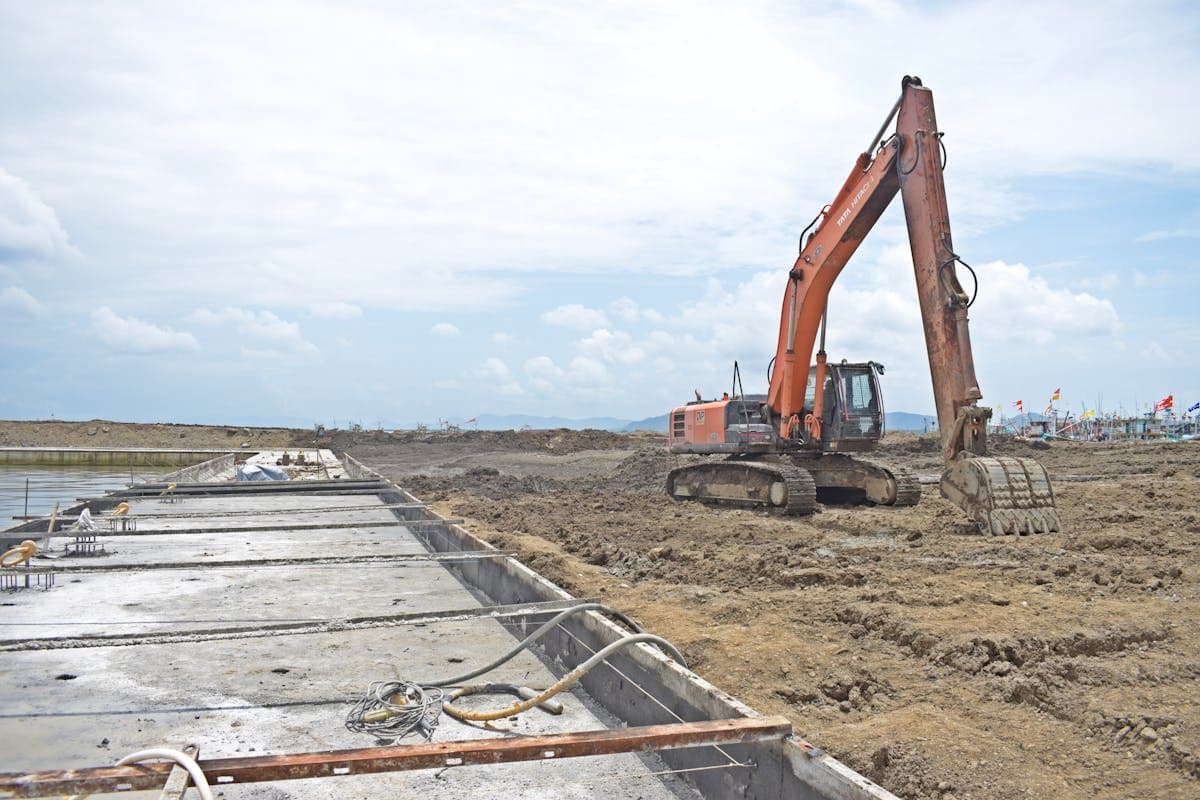
1. Bulk earthworks compressed into dry windows. Don't strip the topsoil, run the bulk cut and leave the site exposed for two weeks waiting for engineering certification. Compress earthworks into a single dry-weather window (5–10 days), get the site to slab-ready condition, and lay the slab as fast as possible. A site that's sitting open mid-saturation will need re-compaction and re-cert when it dries — adding $4k–$15k in plant and time.
2. Aggressive site drainage from day one. A 10m wide × 3m deep rear yard isn't going to dry in February if there's no controlled drainage path. Install temporary drainage at site setup — 100mm flexi pipe in a graded gravel trench, discharging to street kerb or stormwater connection. Cost $2,500–$6,500 depending on size. Pays for itself the first time the site doesn't flood after a 60mm rain event.
3. Slab-pour scheduling tied to weather windows, not contract dates. Pour the slab when the weather permits, not when the program demands. A pour that gets caught in light rain produces surface laitance, micro-cracking, weakened curing — and engineering certification often won't sign off on a marginal pour. Better to push 4 days than redo $48k of slab.
4. Frame and roof prioritisation. Once frame is up, get the roof sarking on within the same week. A frame standing exposed to a week of rain absorbs moisture, and the timber moisture content can rise above 18% — meaning the linings, plasterboard and finishes will need to wait for the timber to dry, adding 2–4 weeks to the program. Sarking and waterproofing membrane immediately on framing completion turns the building into a sealed envelope and removes weather risk for everything downstream.
5. Trade pre-booking with weather contingency. Plumbers, electricians, framers and roofers should be pre-booked at confirmed start dates with a 2-week sliding window. Builders who only call trades when the previous stage finishes hand the trade scheduler a dilemma in wet weather and routinely lose 1–3 weeks per stage waiting for trade availability.
6. Site supervisor on site, not on phone. A wet-weather site needs decisions made within hours, not days. Pump fired up. Tarps redeployed. Drainage rerouted. Concrete pour postponed. A supervisor checking site twice a week during a La Niña period is not running the site — they're auditing damage. Daily presence costs more in supervisor hours but saves multiples in stalled stages.
Need a builder who actually communicates?
Weekly progress photos, dedicated PM, fixed-price contract. That's how every Buildana project runs.
Concrete pour rules in wet weather
Three rules that should never be broken:
Rule 1: don't pour into rain. AS 3600 and the supply concrete delivery dockets specify temperature and weather conditions for placement. Pouring in light rain causes surface aggregate exposure, weakened top-skin curing and visible map cracking once the slab dries. The structural engineer can refuse to certify a slab that was poured in violation of placement conditions. Reject the truck if rain is falling. The redeposit fee is real but it's $2k, not $48k.
Rule 2: cure protected. Curing concrete needs 7 days minimum at controlled temperature and moisture. In wet weather, this means polyethylene curing membrane laid immediately after finishing — protects from rain damage on the green slab, retains moisture for proper hydration. Cost $1.20–$2.40 per m². Skipping it costs $15k+ in remedial epoxy injection treatment when the cracks show up at frame stage.
Rule 3: drainage gradient maintained around the cure. A poured slab sitting in a depression that fills with rainwater is curing below water — laitance, weakness, future cracking. Maintain peripheral drainage during the 7-day cure window. This is supervisor-level vigilance, not after-the-fact remediation.
What to ask the builder about wet-weather plan at contract stage
Before signing during a forecast La Niña or wet cycle:
1. What's your wet-weather contingency in the program — how many days are factored?
2. What's your drainage management approach at site setup?
3. What's your concrete-pour weather threshold and decision-maker?
4. What's your supervisor visit cadence — daily, twice-weekly, weekly?
5. What's your trade-scheduling approach when stages slip — do you have a pre-booked sliding window with key trades?
6. What's your contractual treatment of weather-induced delays — is there a wet-weather extension formula in the contract, or is it 'force majeure' (which is a fight)?
7. What's your example of a project you took through a wet-weather period in the last 5 years and the actual delay versus original program?
A builder who can answer all seven questions concretely has thought about wet weather. A builder who shrugs and says 'we deal with it as it comes' has not. The cost of the second mindset, on a 10-month project, can be $25k–$80k in extended supervision, holding interest, plant standby and trade reschedule fees — all of which the owner ultimately wears.
Pre-build wet-weather checklist
If you're starting a Western Sydney build during a forecast La Niña or active wet cycle:
1. Site setup includes temporary drainage. Quoted and itemised. Not 'covered under prelims'.
2. Bulk earthworks compressed into a single dry window. Builder commits to a fast-cut sequence.
3. Slab pour conditional on Bureau of Meteorology 7-day forecast. Decision-maker named in the contract.
4. Curing membrane mandatory. Itemised in slab cost.
5. Frame-to-sarking transition specified at <10 days. Penalty if exceeded without weather justification.
6. Supervisor presence specified — minimum 4 days a week on site during construction.
7. Wet-weather extension formula written into the contract — typically 1 day of program extension per day of recorded >10mm rainfall on Bureau records, capped at total 8 weeks across the project.
8. Contractual non-compensable for builder weather delay (no weather variation cost claimable against the owner).
For a free wet-weather contract walk on a build you're starting in a forecast La Niña period, call 0476 300 300 or visit /tools/feasibility-check. We've built through the 2010–2011 La Niña, the 2020–2022 La Niña, and we know which contractual language costs owners during wet seasons and which protects them.