What the two terms actually mean
Provisional sums (PS) and prime cost items (PC) are the two contract mechanisms used to price work or materials that aren't fully specified at the time of signature. They sound similar. They behave differently. Owners who treat them as the same lose money on at least one of them.
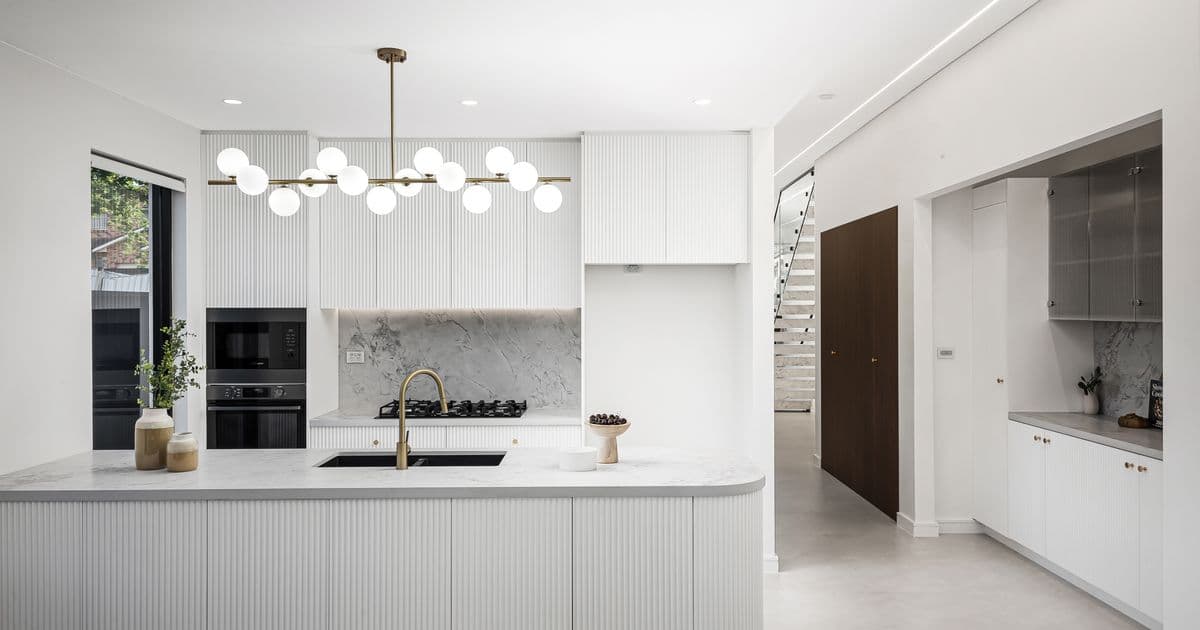
Prime cost item (PC). A specific item where the type is known but the exact selection isn't. Common examples: kitchen appliances, bathroom tapware, light fittings, floor tiles, internal doors. The contract names the item ('400L upright fridge', 'tapware allowance'), nominates a supply allowance, and the owner makes the final selection during construction. If the chosen item costs less than the PC allowance, the contract sum is reduced. If it costs more, the difference is paid by the owner. Builder retains a margin on the PC supply (typically 10–20%).
Provisional sum (PS). A specific work package where the scope is known in principle but the detailed pricing isn't yet possible. Common examples: kitchen joinery, bathroom fit-out, landscaping, driveway. The contract nominates an allowance for the work, and the actual cost is determined when the design is finalised or the trade quotes are obtained. PS adjustments work the same as PC — under runs reduce contract sum, overruns are billed to the owner. Builder typically applies a margin on the PS work (often 15–25%).
The operational difference: PCs are usually owner-driven discretionary items ('I want the $4,200 oven not the $1,800 one'). PSs are usually scope items where the cost isn't fully knowable yet ('the joinery quote came back $32k against the $24k allowance').

Where the money leaks
Three patterns:
Pattern 1: PC and PS allowances set too low at signature. The headline contract sum looks competitive. The PC and PS allowances inside it are unrealistic. Owner finds out at selection time that the $18,000 kitchen appliances allowance buys an entry-level package, not the German integrated package they assumed. Variation $14,000 to upgrade. Multiply across 12 PC items and 6 PS items: $80–180k of variation that wasn't in the headline.
Pattern 2: Builder margin stacking on PC and PS. Default contracts apply 15–25% margin on PC supply and PS work. Owner doesn't see the margin in the headline because it's embedded. When variations occur, the same margin applies again. A $12,000 PS overrun costs the owner $14,400–$15,000 with margin, even though only $12,000 of trade or supplier cost actually changed.
Pattern 3: PC items used to disguise undefined scope. Some builders bury major work elements in PC items to bring the headline contract down. Common targets: 'PC item: external paint allowance $8,000', when the actual external paint job will run $14,000–$22,000. Headline looks better than the competition's; reality bills against the variation chain. Hidden in plain sight.
Need a builder who actually communicates?
Weekly progress photos, dedicated PM, fixed-price contract. That's how every Buildana project runs.
How to evaluate PC and PS allowances against your real brief
Before signing, run each PC and PS item through:
Visit the suppliers and price your actual brief. Spend a Saturday at the kitchen supplier, the tile shop, the lighting showroom. Get real quotes for what you actually want. Compare against the contract allowance.
For joinery PS items, get a separate quote from a joinery firm. Don't accept the builder's allowance number on faith. A 230m² home's kitchen, laundry, bathroom and built-in joinery commonly runs $42k–$78k in 2026 depending on finish quality. PS allowances of $20–28k are usually understated.
For external work PS items, walk a similar completed project. Driveway, paths, fencing, landscape — these add up. PS allowance of $30k for full external works on a 600m² block is usually understated by $20–40k.
Check the margin rate applied to PC and PS. Some contracts disclose this; some don't. Ask. The rate matters because it compounds on every variation.
Identify any major work item that is in PS rather than fixed. If kitchen, bathroom, joinery, driveway, landscape are all in PS, the contract isn't really fixed-price — it's a head-line for the structure with a big PS chain attached for everything else.
Contract language that protects you
Push for these clauses before signature:
PC and PS allowances based on a documented schedule. The schedule names the supplier (or a comparable benchmark), the model or specification level, and the basis for the allowance figure. Stops vague allowances.
Cap on cumulative PC and PS overruns. Total PC + PS variations capped at 8–12% of the contract sum without further owner approval. Anything beyond requires written approval per item.
Margin disclosed and capped. PC supply margin disclosed in writing. PS work margin disclosed in writing. Both capped — PC at 15%, PS at 20% is reasonable in 2026 Sydney.
Right of audit on PS. Owner has the right to see the actual sub-trade or supplier invoice that the PS work was priced against. Stops phantom variations.
Owner choice of supplier. For PC items, owner can elect to supply directly rather than through builder. Builder's margin then doesn't apply to the supply, only to installation. Saves 10–20% on PC items where the owner has direct supplier relationships.
Under-run credits. If PC or PS comes in under allowance, the difference is credited to the owner — not retained by the builder. Most contracts already do this; some don't. Check.
The pre-signature PC and PS audit
Before you sign:
1. List every PC and PS item in the contract with its allowance.
2. Get real-world price comparison for each — actual visits, actual quotes, actual research.
3. Total the realistic spend versus the contract allowance. If the gap is more than 8% of the contract sum, the headline is understated.
4. Negotiate the allowances up to realistic levels before signature, even if it raises the headline. A higher honest headline is better than a lower headline with a big variation tail.
5. Confirm margin rates and protective clauses (cap on overruns, audit rights, owner-supply option, under-run credits) are in writing.
6. Save your supplier visit notes and quotes. They become the variation defence later if the builder challenges your selections.
For a free PC and PS audit on any quoted NSW residential build, call 0476 300 300 or visit /tools/feasibility-check. Most contracts we audit have $40–120k of PC and PS understatement that becomes variation pain — better to surface it before signature than after.