The maths most people get wrong
Owners thinking about a knockdown rebuild on their existing block usually skip a step: the stamp duty math against the alternative of selling and buying.
The alternative move is: sell the existing house ($1.4m typical Sydney middle-ring), buy a finished house in the same area ($1.85m for an equivalent newer build), pay stamp duty on the purchase. That's a 6.5% transfer tax on $1.85m = $99,930 in stamp duty alone, plus 2.5% agent commission on the sale ($35,000) plus legal and conveyancing both ends ($4,500), plus moving and incidental costs ($8,000–$15,000). Total transaction cost: $147,000–$155,000 before any actual house upgrade.
Knockdown rebuild on the existing block at $980k–$1,350k construction cost has zero stamp duty and zero agent commission. The transaction cost saving on the move alternative is $147k–$155k.
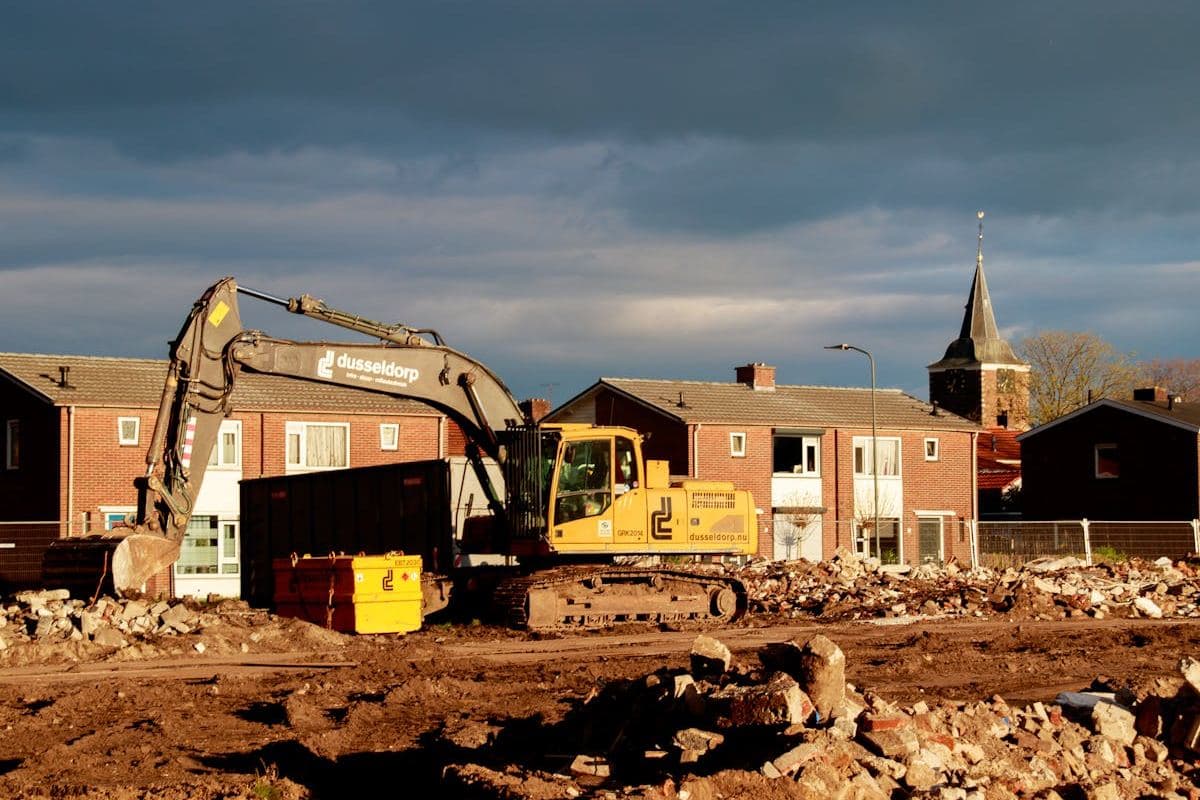
But KDR has its own costs the move-alternative doesn't: 9–14 months of rental during the build ($45k–$65k), demolition and tip ($28k–$48k), additional approvals and reports ($14k–$24k). Total KDR-only cost: $87k–$137k.
The net advantage of KDR over move on the same end-result: $10k–$68k. Plus the KDR delivers a brand-new house designed to your brief, not someone else's compromise. That's the math most people skip.

When the stamp duty number tilts toward staying
KDR strategy wins decisively when:
The land is more valuable than the house. Most middle-ring Sydney is here. Land 65–80% of total property value, building 20–35%. Paying stamp duty to buy back the same land plus a new building is paying tax on land you already own.
The land has development upside the buyer can't replicate. Duplex potential, granny flat addition, future subdivision. Selling the lot to a developer who'll capture that upside is leaving money in someone else's pocket.
The location is locked in (school catchment, family proximity, commute). Move means losing the location anchor. KDR keeps it.
The existing house is structurally tired but the land is excellent. Heritage value is in the ground, not the building. Especially common in 1960s–1980s brick veneer middle-ring stock where the building is end-of-life but the streetscape is premium.
The owner has 12–18 months of construction patience and a viable rental-during-build budget. Without rental tolerance, the math breaks because the rental cost compresses against the timeline.
Considering a knockdown rebuild?
Send us your block — we'll come back with a real cost estimate (demo + new build) within 48 hours.
When the stamp duty number tilts toward moving
Move beats KDR when:
The land is the wrong land for the brief. Wrong slope, wrong orientation, wrong neighbourhood, wrong school catchment. KDR doesn't fix any of these. You'll spend $1.1m to build a house on a block you'll regret in five years.
The owner has zero construction patience. Some owners cannot live through 12 months of build. They'll fight every variation, harass the supervisor, change their mind on selections. Better to buy finished.
The replacement house exists in the market and is materially better than what the owner could build. Custom builds rarely beat purpose-built premium developments on amenity per dollar — basement parking, lift access, rooftop terraces, integrated common services. If those features are non-negotiable, buy.
The cash flow doesn't tolerate concurrent rental + construction loan + existing mortgage. Some owners can't run all three at once. Sell-and-buy clears the cash position before the new commitment.
Foreign or interstate factors apply. Surcharge stamp duty for foreign purchasers in NSW (8% on top of the standard duty) makes the move math much worse — KDR avoids it on existing land. But owners selling to release equity may still need to move.
First Home Buyer or principal place stamp duty exemptions — when they apply
NSW stamp duty exemptions and concessions update regularly. Current at May 2026:
First Home Buyers Assistance scheme. Full duty exemption on purchases up to $800k for first home buyers; concessional duty on $800k–$1m. Construction loans on vacant land for first home buyers may be exempt up to $400k value.
First Home Buyer Choice (annual property tax option). Eligible first home buyers can opt into annual property tax instead of stamp duty for purchases up to $1.5m. Material if the owner expects to stay 7+ years.
Off-the-plan duty deferral. Stamp duty payable 12 months after exchange or at completion, whichever is earlier, on off-the-plan apartments and townhouses up to $3m.
Principal place of residence concession. None as a direct duty exemption, but principal place of residence is exempt from CGT on sale — material when comparing KDR (CGT-exempt forever) against investment-property strategies (CGT-exposed).
KDR on existing principal place of residence land does not trigger stamp duty. The land has already had its duty paid at original acquisition. Building on owned land is a construction transaction, not a property transfer. Common confusion among new clients.
Decision framework
Step through:
1. Is the land excellent for your 5–10 year brief? Yes → KDR favoured. No → move favoured.
2. What's the difference between current property value and the move-target property value? Multiply by 6.5% for an estimate of stamp duty. Add 2.5% agent and 0.5% legal for total transaction cost. This is the headwind on moving.
3. What's the realistic KDR cost? Construction at $/m² × build size + demolition + rental during build + approvals. Don't forget the rental.
4. What's the value gap at completion? End-value of KDR house minus current property value. End-value of move target minus current property value.
5. After all costs, which path leaves you with more equity? Run both columns end to end. Don't anchor on one number — anchor on the post-cost equity outcome.
6. Soft factors. Construction patience, location anchor, school catchment lock-in, family proximity, commute. Stamp duty math doesn't capture these but they often dominate the decision.
For a free KDR-vs-move feasibility on a specific Sydney property, call 0476 300 300 or visit /advisory/development-feasibility. We've turned away owners who'd be better off moving and accelerated owners who'd been hesitating on a clear-win KDR.