
Duplex builders · The Hills Shire · 2026
Best Duplex Builders in The Hills (2026): A Builder's Guide
In the Hills, the lot usually picks the builder before you do.
A flat, fresh lot in Box Hill and a sloping 1980s block in Baulkham Hills need very different builders. The Hills adds its own twists: estate covenants, bushfire maps, steep streets and neighbours with big, well-finished homes. Here's how to match a builder to your Hills lot. Disclosure first: we're Buildana, a duplex builder, so apply every test here to us as well.
Short answer
Which duplex builder is best for a lot in The Hills?
Start with the lot. New estates in the north-west growth area often suit volume builders, but check the title for covenants against dual occupancy. Established, sloping or bushfire-prone lots in suburbs like Castle Hill, Baulkham Hills and Glenhaven usually need a custom builder. Then verify each builder's licence, NCAT history and home warranty cover, and compare quotes for site costs and finish level.
Written and reviewed by Oliver Alameri
Licensed builder, NSW Contractor Licence 487805C · Founder, Buildana
Fact-checked
Two Hills markets, two kinds of builder
The newer estates in the growth area, around Box Hill, Rouse Hill and North Kellyville, have regular lots, services at the boundary and ground that's already been engineered. Catalogue duplexes can drop straight on, which is where volume builders do well.
The established Hills is different. Castle Hill, Baulkham Hills, West Pennant Hills, Glenhaven: older houses, bigger and often sloping lots, mature trees, and streets full of substantial family homes. A duplex here usually means a knockdown, a design that works with the slope, and a finish that stands up next to the neighbours. That's custom-builder territory.
- Growth-area estates: regular lots, catalogue-friendly
- Established suburbs: slopes, trees, knockdowns
- Finish expectations set by the surrounding homes
- Different builders excel in each
Covenants: read the title before anything else
Many Hills estates were released with restrictions registered on title by the developer. Some cover materials, fencing and facades. Some limit or prohibit a second dwelling for a period of years.
A covenant can stop a duplex regardless of what council or state planning rules allow. Pull the title search and the section 88B instrument before you pay for a design. It's the cheapest check in the whole project, and the one owners skip most.
A developer's covenant can say no to a duplex that council would happily approve.
Got a Hills lot in mind?
Send the address. I'll check covenants, bushfire mapping and slope, and tell you what kind of builder your duplex really needs.
0476 300 300Bushfire maps matter twice here
Plenty of the Hills sits beside bushland, and bushfire-prone land carries a bushfire attack level that drives construction: glazing, cladding, decking, gutters and ember protection all get more expensive as the rating rises.
It matters a second time for duplexes. Those NSW planning changes that opened dual occupancy up in R2 zones? They exclude bushfire-prone land. On those lots you're working purely under The Hills LEP and DCP, which can change what's permitted and how.
Near the metro, it's worth checking whether your lot is within walking distance of a station the policy lists, such as Bella Vista, where extra non-discretionary standards apply.
Slopes, clay and the cost of the site
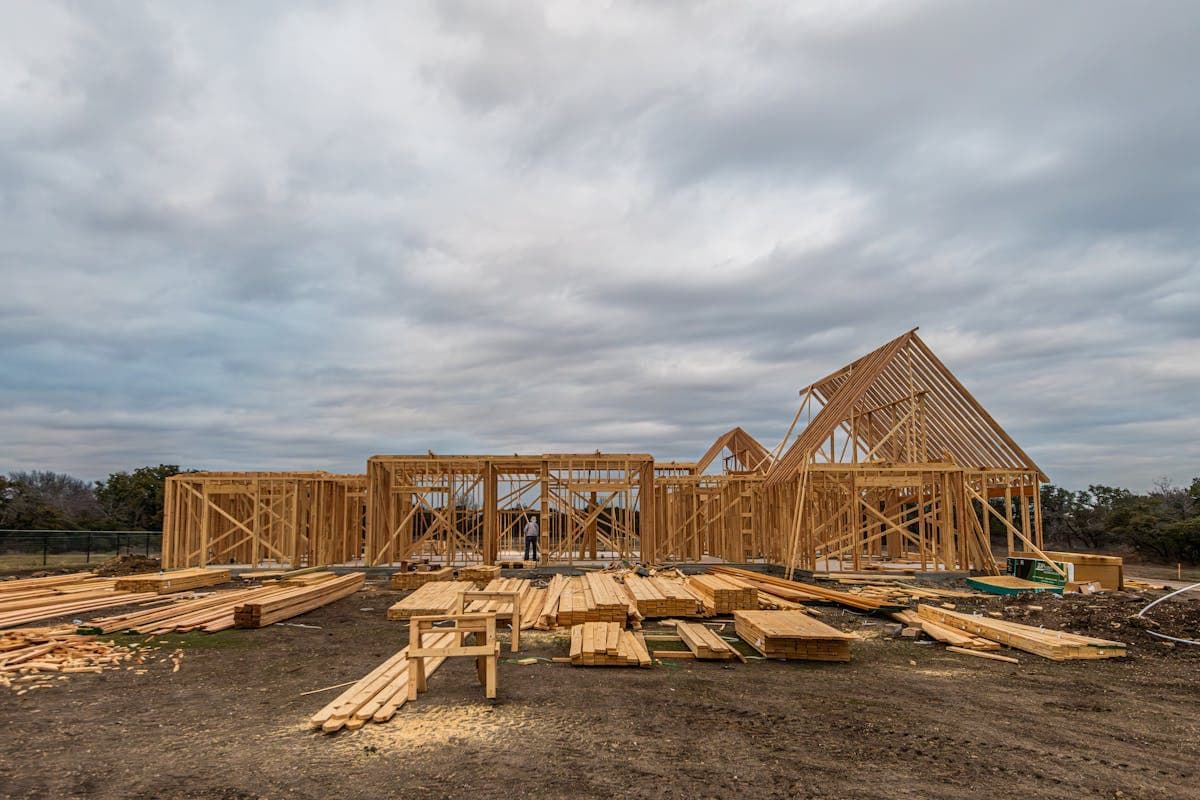
Hills blocks often fall across the site, and the clay beneath much of the district is reactive. Together that means engineered slabs or split levels, retaining walls, careful stormwater design, and driveways that meet grade limits.
These are site costs, and they're exactly what catalogue base prices leave out. Ask every builder for a quote that includes them, after a survey and soil test, not before.
The checks that apply to any builder
Search the licence on Verify NSW for status, class and disciplinary history. Look the company up on NSW Caselaw, where NCAT publishes its decisions. Before handing over money, ask for the HBCF certificate naming your property, and keep the deposit within the 10% the law allows.
Then walk through a finished duplex, ideally one in the Hills, and talk to the owner without the builder present. Ask about variations, supervision and how the defects list was handled.
Before choosing a Hills duplex builder
Settle these first and the right builder type becomes obvious.
- 01
Title and 88B instrument checked for dual occupancy restrictions
- 02
Bushfire-prone status and BAL confirmed
- 03
Survey and soil test done on sloping or older lots
- 04
Distance to a listed metro station checked
- 05
Licence, NCAT history and HBCF cover verified
- 06
Quotes compared with site costs included
Duplex builders in The Hills
Is a duplex allowed in a new Hills estate?
Often, but check the title first. Some estates carry covenants that restrict or prohibit second dwellings for a period, regardless of planning rules.
Does bushfire-prone land stop a duplex in The Hills?
Not necessarily, but it adds construction requirements, and NSW's low- and mid-rise rules exclude that land, so the council's LEP and DCP govern what's allowed.
Are volume builders cheaper in The Hills?
On regular growth-area lots, usually. On sloping, established or bushfire-affected lots, site costs and plan changes can close the gap with a custom builder.
Why doesn't this page rank named builders?
We can't independently verify competitors' performance, and we're a competitor. The checks here work on every builder, us included.
Sources and references
Costs are from the Rawlinsons handbook with the local cost index applied; rules and timeframes are checked against the sources below.
Let the lot choose the builder type. Let the evidence choose the builder.
Send us your Hills address and we'll show you, plainly, how we'd approach the duplex.