
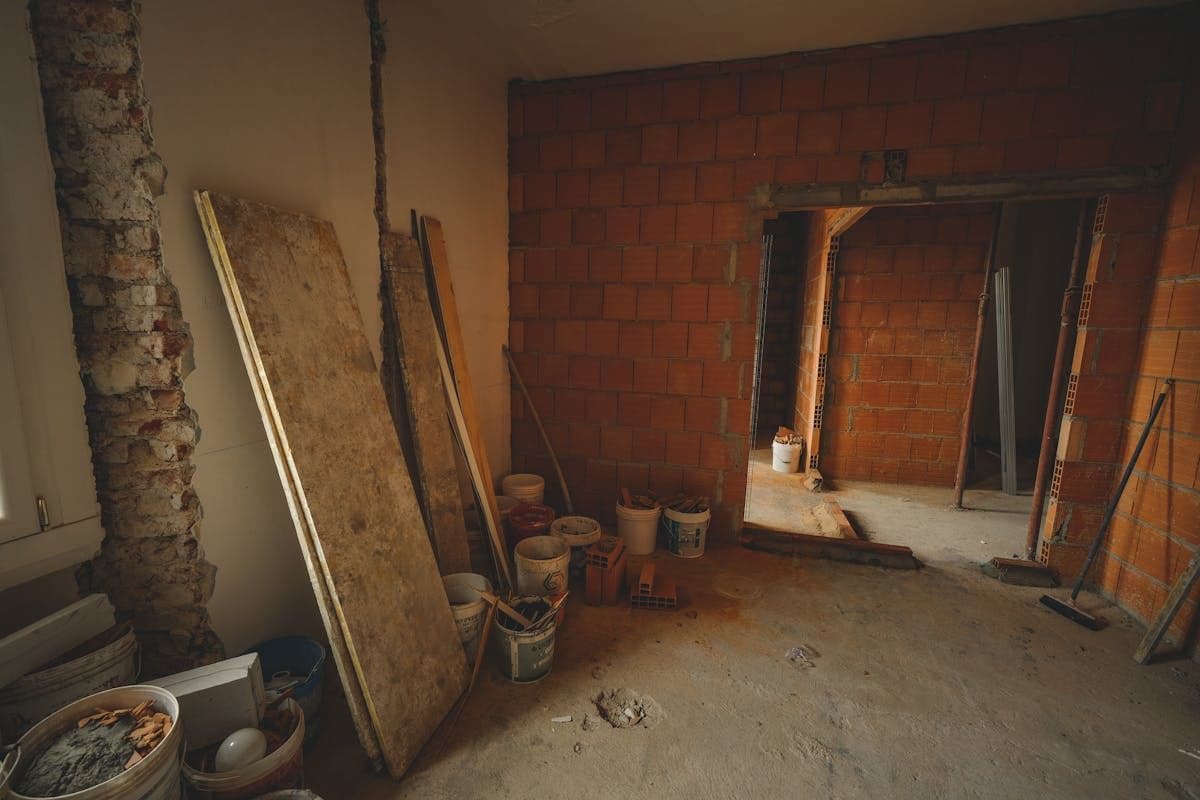
Doonside 2767 · Blacktown City
Builders in Doonside: Salt Damp, Additions and New Homes
White powder on the bricks isn't dust. It's salt.
Parts of Blacktown sit on soils with natural salt in them, and Doonside's 1970s to 90s brick homes often show it: a white crust low on the walls, mortar turning to sand, paint lifting inside. It's fixable. And any addition or new home here should be built so it never starts.
Short answer
What causes salt damp in Doonside homes, and can it be fixed?
Saline groundwater under western Sydney rises through brickwork and leaves white salt on the wall as it dries. Mild cases improve once drainage and garden beds against the wall are fixed; worse ones need a new damp-proof course and salt-resistant render. Any addition beside a salty wall needs that sorted first. Framed ground-floor additions run $1,690 to $1,825 per m² on Rawlinsons' Sydney figures.
Written and reviewed by Oliver Alameri
Licensed builder, NSW Contractor Licence 487805C · Founder, Buildana
Fact-checked
How salt gets into a house
Groundwater in parts of Western Sydney carries dissolved salt. When it rises into brickwork by capillary action and evaporates at the surface, the salt stays behind. That's the white crust, called efflorescence. Worse, salt crystals growing inside the brick and mortar slowly break them apart.
Every brick house has a damp-proof course, a membrane a few courses up that should stop moisture rising. The trouble is bridging. A garden bed piled against the wall, a concrete path poured above the damp course, a render coat run all the way down to the ground. Water and salt simply go around the barrier.
So half of fixing salt damp in Doonside is removing whatever's bridging the damp course, and getting drainage to carry water away from the walls.
- White crust or staining on the lower courses of brickwork
- Mortar that crumbles when you scratch it
- Paint bubbling or plaster softening low on internal walls
- Garden beds, paths or render sitting above the damp-proof course
Most salt damp I see isn't a failed damp course. It's a garden bed built over it.
Building an addition next to a salty wall
The biggest request I get in Doonside is a home addition: a family room across the back, an extra bedroom, a second bathroom. Tying new brickwork into an old wall that's already salt-affected is where it goes wrong if nobody checks first.
Before we extend, we look at the existing walls, fix any bridging, and repair damaged brick and mortar where the new work joins. The new section gets a continuous damp-proof course that laps correctly with the old one.
Cost guidance? Rawlinsons lists framed ground-floor additions of 50 to 75 square metres at $1,690 to $1,825 a square metre for Sydney, excluding wet areas and kitchens. Brick veneer costs a little more. With the Blacktown adjustment and your site conditions, we turn that into a fixed number.
Worried about the marks on your walls?
Send me photos of the brickwork and your Doonside address. I'll tell you whether it's salt, a leak or bridging, and how an addition or rebuild would deal with it.
0476 300 300New homes built for saline ground
On a knockdown rebuild, the protection goes in from the ground up. Where salinity is a risk, the engineer may call for stronger concrete in the slab, extra cover over the reinforcing steel and a heavy-duty vapour barrier underneath.
Below the damp course, bricks and mortar should be a grade rated for salt exposure. It's a small upgrade on paper and it's the difference between a wall that lasts and one that starts crumbling in fifteen years.
Site drainage finishes the job: ground falling away from the house, downpipes connected, and no garden beds built up against the walls. Doonside soils are also typically M to H reactive, so keeping moisture steady helps the slab too.
Bathrooms in older Doonside homes
New bathrooms come up constantly in Doonside too. In a 1970s or 80s house, the old shower often leaks into the wall or slab below the tiles, which can look a lot like salt damp. Which is it? We find out before quoting.
The handbook figure for a new bathroom, fixtures and plumbing included, is $23,500 to $26,500 (Rawlinsons, Sydney), and that's before structural work. Waterproofing to current standards is the part you can't see and shouldn't skimp on.
Blacktown Council usually takes 9 to 13 weeks for a single-dwelling DA. Many additions and rebuilds can go through a certifier instead.
Salt and moisture checks for a Doonside home
What I look at before recommending an addition, a renovation or a rebuild.
- 01
Signs of efflorescence or fretting mortar on external walls
- 02
Anything bridging the damp-proof course: beds, paths, render
- 03
Site drainage and where downpipes actually discharge
- 04
Internal wall condition near the floor, especially in wet areas
- 05
Eastern Creek flood mapping, which affects parts of Doonside
- 06
Soil class and salinity notes for the new slab design
Doonside questions
What causes white powder on brick walls?
Usually salt carried up by moisture and left behind as the water evaporates. It's called efflorescence. Persistent crusting low on the wall, with crumbling mortar, points to salt damp that needs fixing at the source.
Can salt damp be fixed without rebuilding?
Often, yes. Removing whatever bridges the damp course, improving drainage and repairing damaged brick and mortar solves most cases. Severe damage may need sections of wall replaced.
Which council handles Doonside?
Blacktown City Council, under the Blacktown LEP 2015. Doonside is postcode 2767.
Can I add a room onto my Doonside house?
Typical Doonside blocks of 550 to 700 square metres leave room for a rear addition. Setbacks, sewer, flood mapping and the state of the existing walls get checked first.
Sources and references
Costs are from the Rawlinsons handbook with the local cost index applied; rules and timeframes are checked against the sources below.
Keep the salt out. Keep the house solid.
Addition, new bathroom or full rebuild, a Doonside home should be built for the ground it stands on.