
Glendenning 2761 · Blacktown City
Home Extensions in Glendenning: Adding to a 1990s Home
The house is only thirty. The floor plan feels a hundred.
Glendenning is mostly 1990s project homes: sound brick veneer, decent blocks, and a layout designed for a different way of living. Formal lounge at the front, a small kitchen boxed in the middle, a family room that can't fit the family. Extending fixes it, if the ground under the new part is right.
Short answer
Can I extend a 1990s project home in Glendenning?
Usually, yes. Check first whether the estate lot sits on fill, because that changes the footings. Most jobs open up the kitchen and family room and add space at the rear, with the new work articulated so it doesn't crack where it meets the old. A 75 to 125m² brick veneer extension costs $1,835 to $1,980 per m² in Sydney, and Blacktown DAs take 9 to 13 weeks.
Written and reviewed by Oliver Alameri
Licensed builder, NSW Contractor Licence 487805C · Founder, Buildana
Fact-checked
Estate lots and the fill question
When Glendenning's estates were laid out, some lots were levelled by cutting high ground and filling low ground. Good subdivisions placed and compacted that fill properly. Not all of it was. Either way, fill behaves differently from natural clay.
For an extension, that matters. A slab sitting partly on fill and partly on natural ground can settle unevenly. So the geotech bores down to find out what's there and how deep. If there's uncontrolled fill, the new footings go through it on piers to reach natural ground.
Below the fill, the natural clay across much of Blacktown tests M to H. The engineer designs for both layers.
Two parts of the same slab sitting on different ground is how extensions crack.
Joining new to old
A 1990s slab has had thirty years to settle. A new slab next to it hasn't started. So the two need to be connected in a way that lets them move slightly without cracking the finishes.
The engineer specifies how: dowels drilled into the old slab edge, an articulation joint, or a deliberate step in the floor. Brickwork gets control joints at the junction. Inside, we choose floor finishes and plasterboard joints that tolerate a little movement.
The roof is the other join. A hip roof from the 90s is fairly easy to extend if the pitch is matched. We match the tile or the Colorbond profile as closely as possible so the addition looks like it was always there.
- Engineered connection between old and new slabs
- Control joints in the brickwork where the extension meets the house
- Roof pitch and material matched to the original
- Stormwater upgraded where the new roof adds runoff
Let's fix the layout properly
Send me your Glendenning address and a rough sketch of your current floor plan. I'll look at the ground, the structure and the approvals, then price the extension as a fixed contract.
0476 300 300Fixing a 90s floor plan
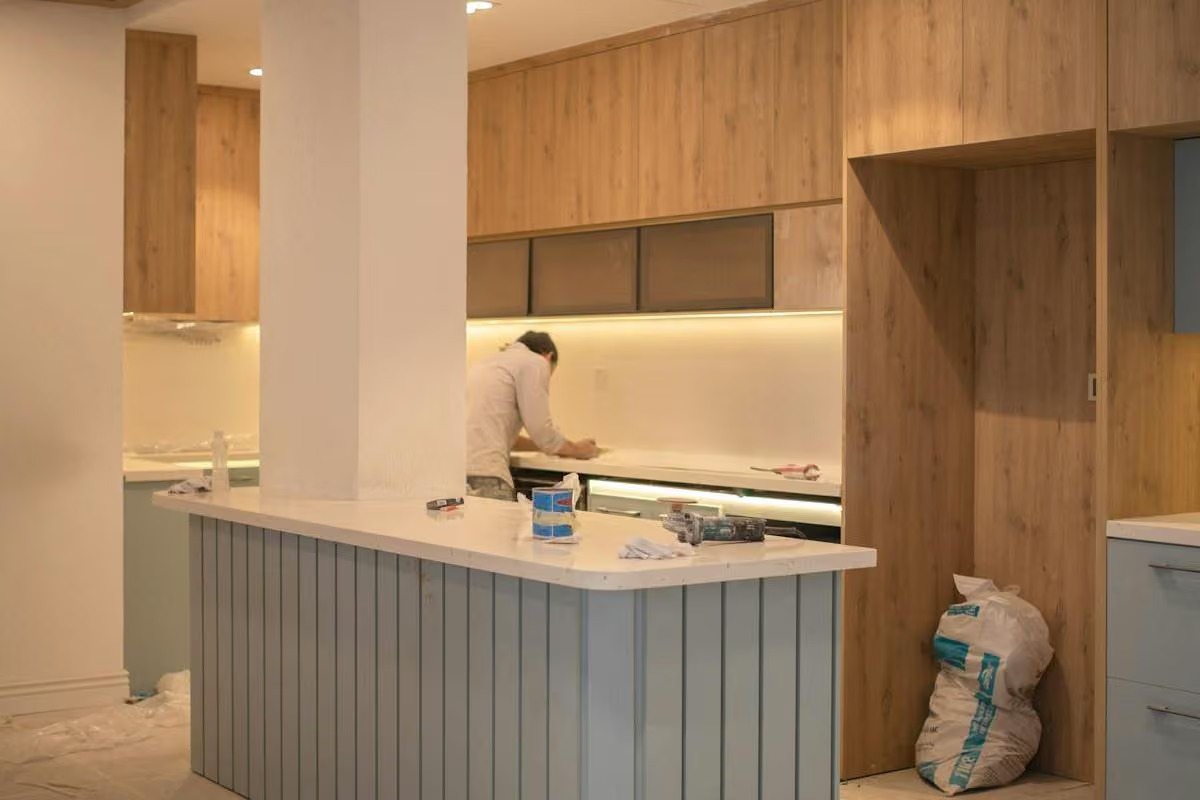
Most owners here want the same thing: one big room across the back with the kitchen, dining and family area together, opening onto a covered outdoor space. The formal lounge becomes a media room or a study.
That usually means removing or opening a load-bearing wall, which needs a steel or timber beam sized by the engineer. It's routine work, but it has to be designed, not improvised.
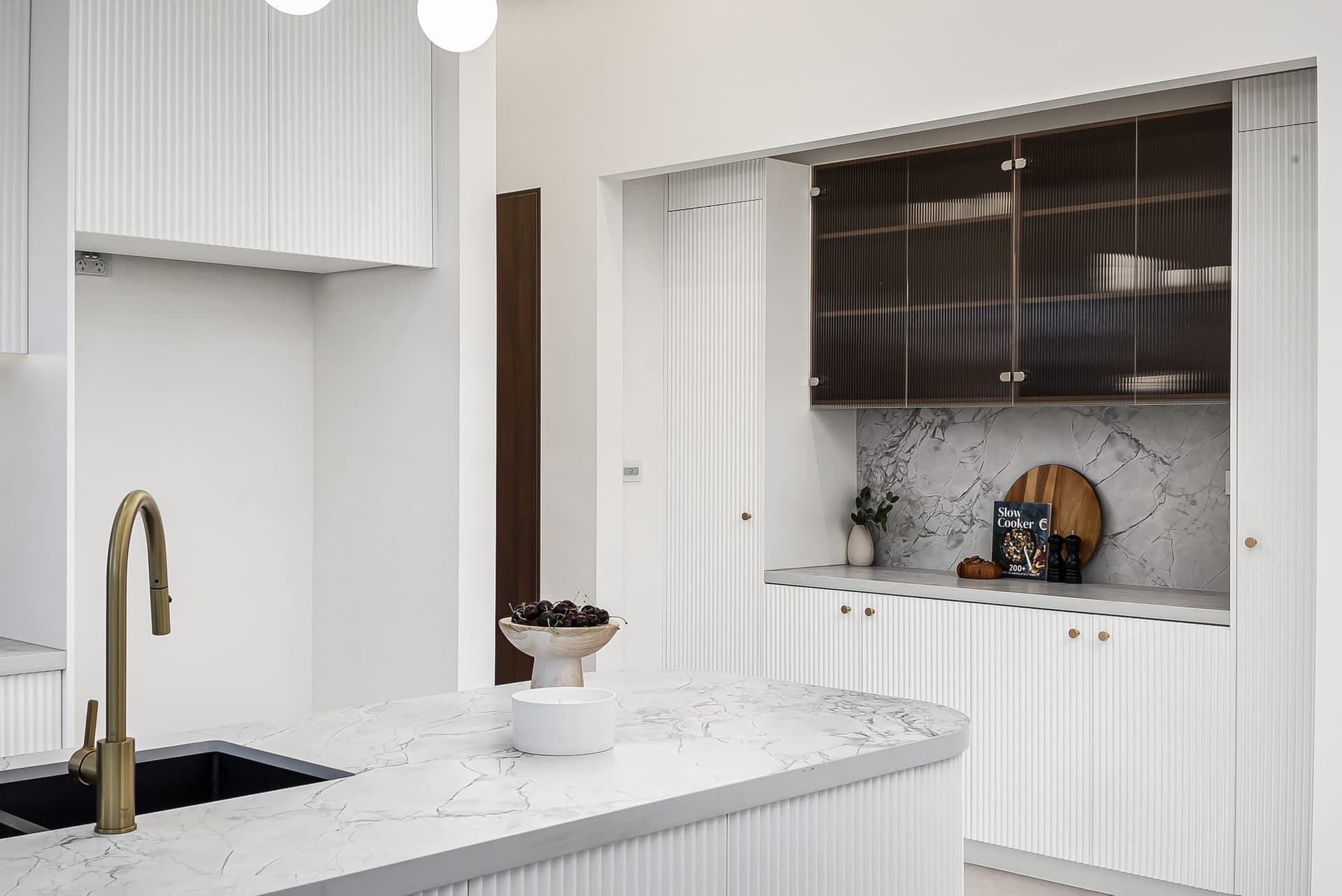
Kitchen renovations are often part of the same project. Moving the kitchen to the new rear room brings it closer to the outdoor area and frees the old kitchen space for a walk-in pantry or laundry.
Approvals and budget in Glendenning
Glendenning is R2 low density under the Blacktown LEP 2015. Many rear extensions meet the state code and can be approved by a certifier. Others go to Blacktown Council, which usually takes 9 to 13 weeks for a house.
Older estates often have downpipes and grading that don't meet the current Blacktown requirements, so an extension may pick up stormwater work. We price it upfront.
For a medium-sized rear addition in brick veneer, 75 to 125 square metres, the Rawlinsons Sydney rate is $1,835 to $1,980 a square metre, kitchens and bathrooms extra. We adjust for Blacktown and your site, including any piering through fill.
Before you extend a Glendenning home
Six checks that decide how the extension is founded, joined and approved.
- 01
Geotech boreholes where the extension will sit, to find any fill
- 02
The engineer's slab and footing design, including piers if needed
- 03
How the new slab connects to the old one
- 04
Which internal walls are load-bearing before opening up the plan
- 05
Existing stormwater and whether it can take the new roof area
- 06
Approval route: a certifier if the design meets the code, otherwise a Blacktown Council DA
Glendenning extension questions
Is my Glendenning block built on fill?
Some estate lots are, some aren't. A geotech report with boreholes at the extension site tells us exactly what's there and how deep.
Why do extensions crack where they meet the house?
Usually because the new and old slabs move differently and weren't connected or jointed correctly. Proper engineering and control joints prevent it.
Can I remove the wall between my kitchen and family room?
Usually, yes, if an engineer sizes a beam to carry the load. It's routine in 90s project homes and often part of a rear extension.
Which council approves extensions in Glendenning?
Blacktown City Council for a DA. Plenty of code-compliant rear extensions skip council and go to a certifier instead.
Sources and references
Costs are from the Rawlinsons handbook with the local cost index applied; rules and timeframes are checked against the sources below.
Keep the house. Change how it lives.
A well-founded extension turns a tired 90s layout into the home you actually need. Let's start with the ground.