
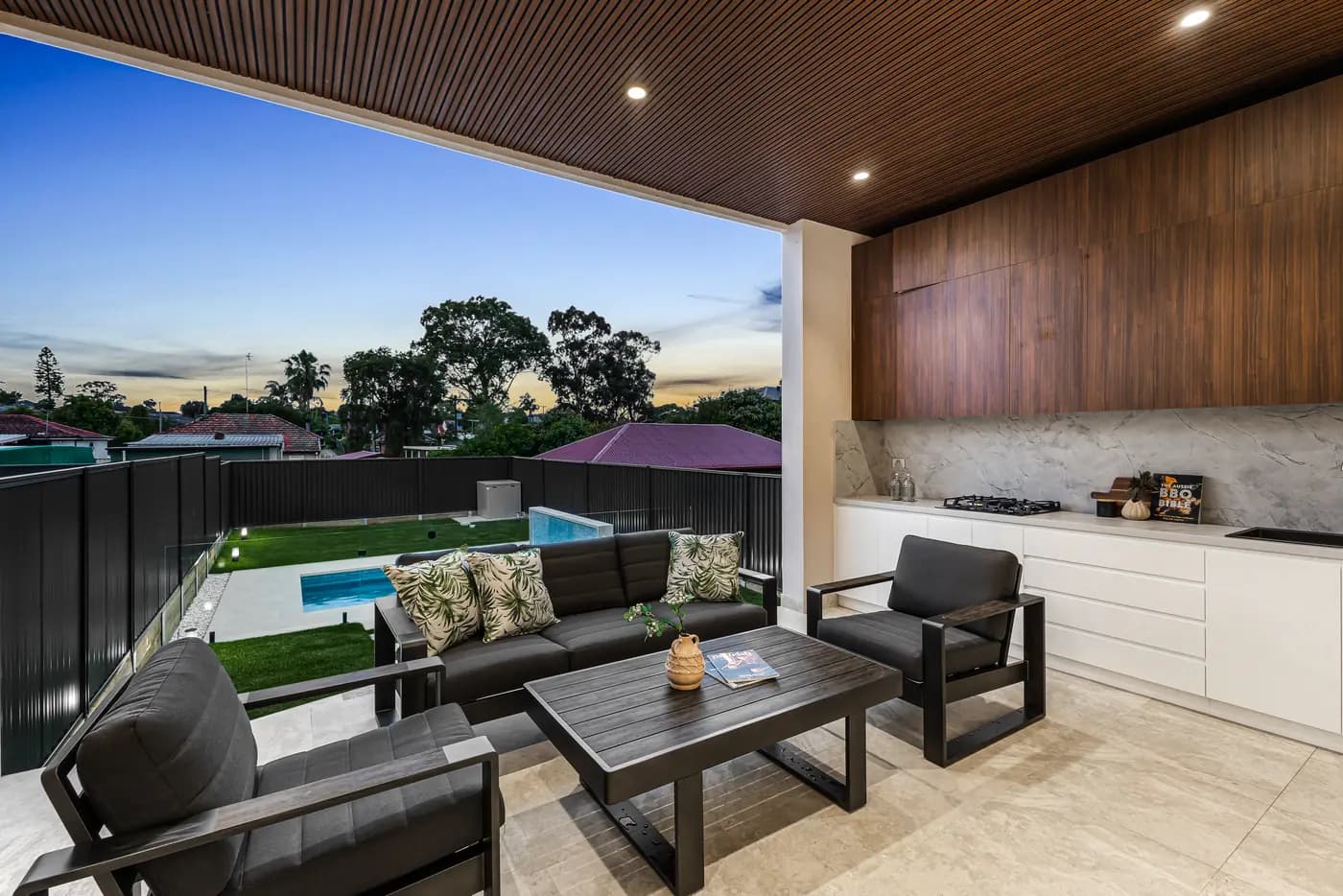
Cranebrook 2749 · Penrith City Council
Home Additions Cranebrook
Ground floor or first floor? In Cranebrook, read the flood study and the right DCP chapter before you choose.
Penrith City Council has mapped how stormwater moves across Cranebrook, and it has just renumbered the development control plan your addition is assessed against. Both bear on where an addition can go and how high its floor sits. Here's how they fit together, what a complete extension involves from design to handover, and what the published rates say.
Short answer
How do home additions get approved in Cranebrook?
Cranebrook is in Penrith City Council's area. If the addition meets the State's Housing Code, a certifier can approve it as complying development. If not, it's a development application assessed against the Penrith LEP 2010 and the Penrith DCP 2014, whose residential chapter is now C2. Check the planning certificate for flood and bush fire mapping first, because either can change the design.
Written and reviewed by Oliver Alameri
Licensed builder, NSW Contractor Licence 487805C · Founder, Buildana
Fact-checked
Penrith renumbered its DCP. Here's where an addition sits now
The Penrith Development Control Plan 2014 supports the Penrith LEP 2010. Council adopted it on 23 March 2015 and it took effect on 17 April 2015. At its meeting on 24 August 2026, council endorsed the first stage of a review, Amendment No. 18. Council describes the changes as mostly administrative, but they include a new format and new chapter numbers, and council's page lists the restructured plan as in effect from 1 October 2026.
For an addition, the chapter that matters is C2 Residential Development. It used to be D2, and its single dwellings section covers alterations and additions to an existing house as well as new ones. The city-wide controls in Part B still apply alongside it, including B4 Heritage and Archaeology and B5 Environmental Management, which deals with water, land and landscape design.
Cranebrook also has its own precinct chapter, D3, in three parts: A Waterside, B Cranebrook Neighbourhood Centre and C Cranebrook Rural Residential development. If your lot falls in one of those areas, that part adds its own controls. Older drawings, reports and pre-lodgement notes may still quote the old numbers, and council has published a comparison table to match old chapters to new.
- C2 Residential Development, single dwellings section
- Part B city-wide controls, including water management
- D3 Cranebrook, if the lot is in Waterside, the neighbourhood centre or the rural residential area
- The Penrith LEP 2010 for zoning and development standards
What the Cranebrook flood study means for an addition
Penrith City Council's Cranebrook Overland Flow Flood Study, dated August 2023, defines local catchment flooding in Cranebrook, Penrith and Cambridge Gardens. Overland flow is rain running across the ground and along streets on its way to the drains and creeks, rather than a river breaking its banks. The study also refined how Nepean River flooding is defined in its study area.
Council describes the study as the base for a floodplain risk management study and plan, which will look at ways to manage existing and future flood risk. So the mapping can still lead to new measures or controls. Until then, the planning certificate and council's flood information tell you whether your lot is affected, and if it is, council can advise the flood level the floor is designed to.
For a ground floor addition, that can decide two things: how high the new floor sits, and whether the addition sits in a path that water currently uses to get past the house. A new floor that's higher than the old one means a step or a ramp inside, which is easier to plan from the start than to fix on site.

Weighing up ground floor or first floor?
Send the Cranebrook address and a photo of the back of the house. Oliver will respond within 4 working hours for a free initial conversation about which way your house should grow.
0476 300 300Out the back: a ground floor addition
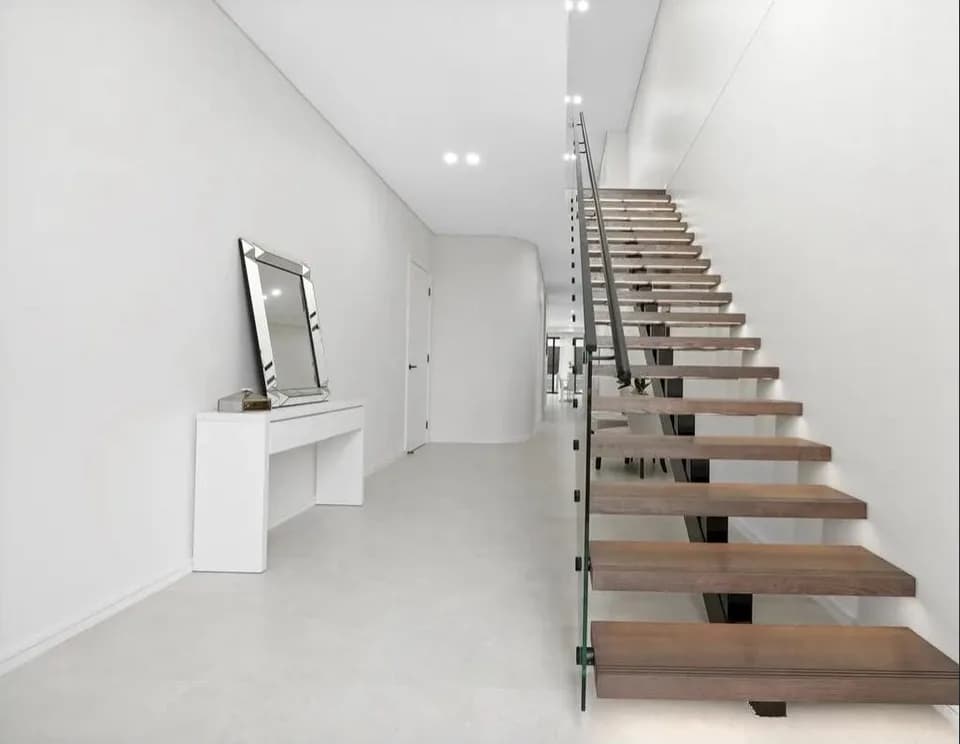
If the house is single storey with a usable backyard, and what you're short of is a bigger family room or kitchen opening onto the yard, this is the direct answer. The old rear wall usually comes out, so the opening needs a beam sized by an engineer, and the roof of the addition has to meet the existing roof cleanly so it drains the way it should.
Rawlinsons gives $2,620–$2,820/m² for a brick veneer ground floor addition of 50–75m² and $2,630–$2,840/m² for 75–125m². A framed addition of 75–125m² is $2,360–$2,550/m². These are Sydney rates, excluding GST, escalated to the ABS September 2026 index. If the addition takes a new bathroom, Rawlinsons adds $37k–$42k, and a new kitchen $31k–$35k, both including GST.
A complete extension means one contract from design through approval to handover, rather than a set of plans from one person and a builder found later. It also means the same person answers for the beam, the floor level and the roof junction, which is where additions tend to go wrong.
Up: a first floor on a single-storey house
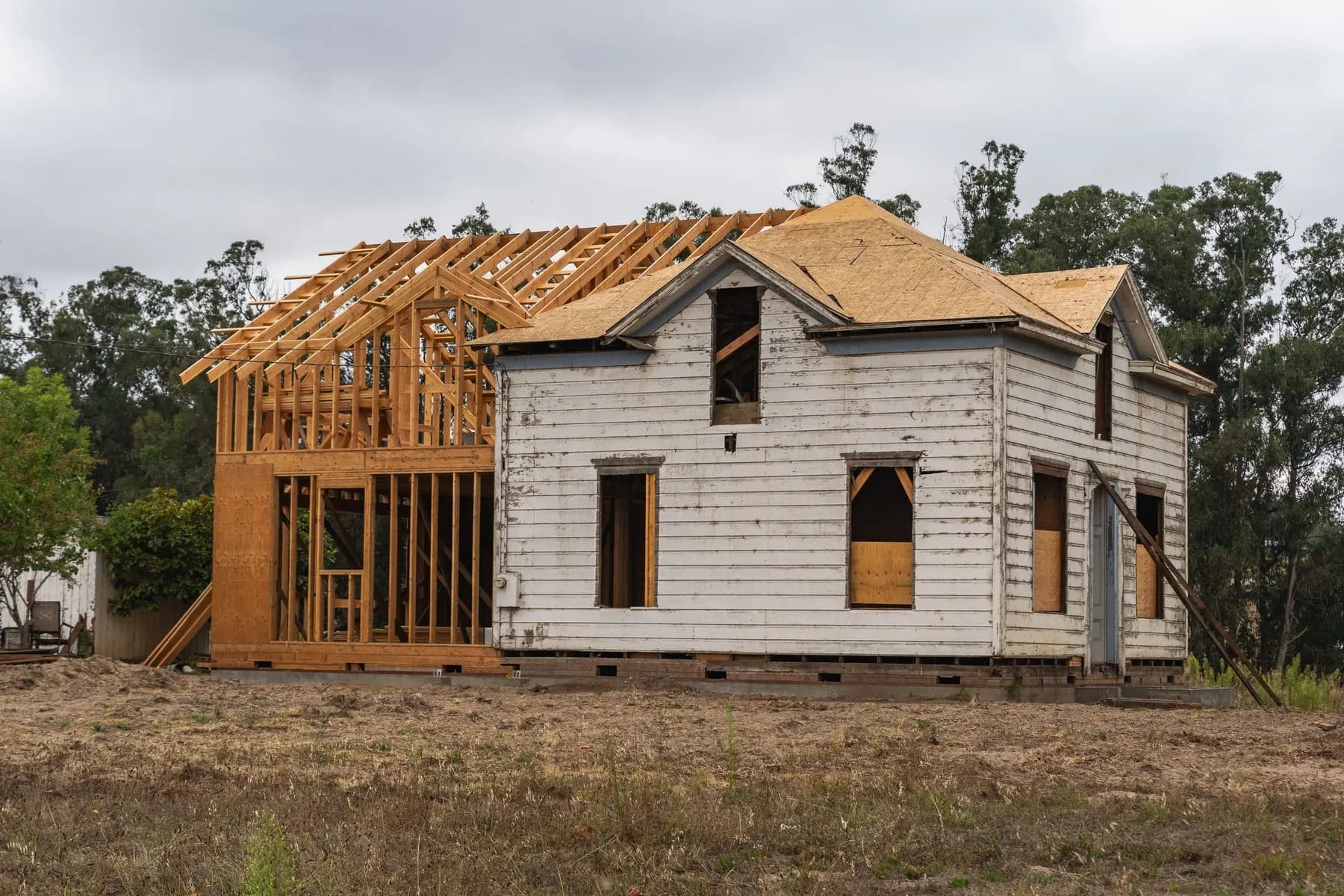
If the yard is better left as it is, a first floor addition adds bedrooms above the existing footprint. Rawlinsons gives $3,930–$4,230/m² for 75–100m² and $3,790–$4,090/m² for 100–150m², Sydney, excluding GST, escalated to the ABS September 2026 index. It costs more per square metre than building at ground level because the roof comes off and the house below has to carry the new floor.
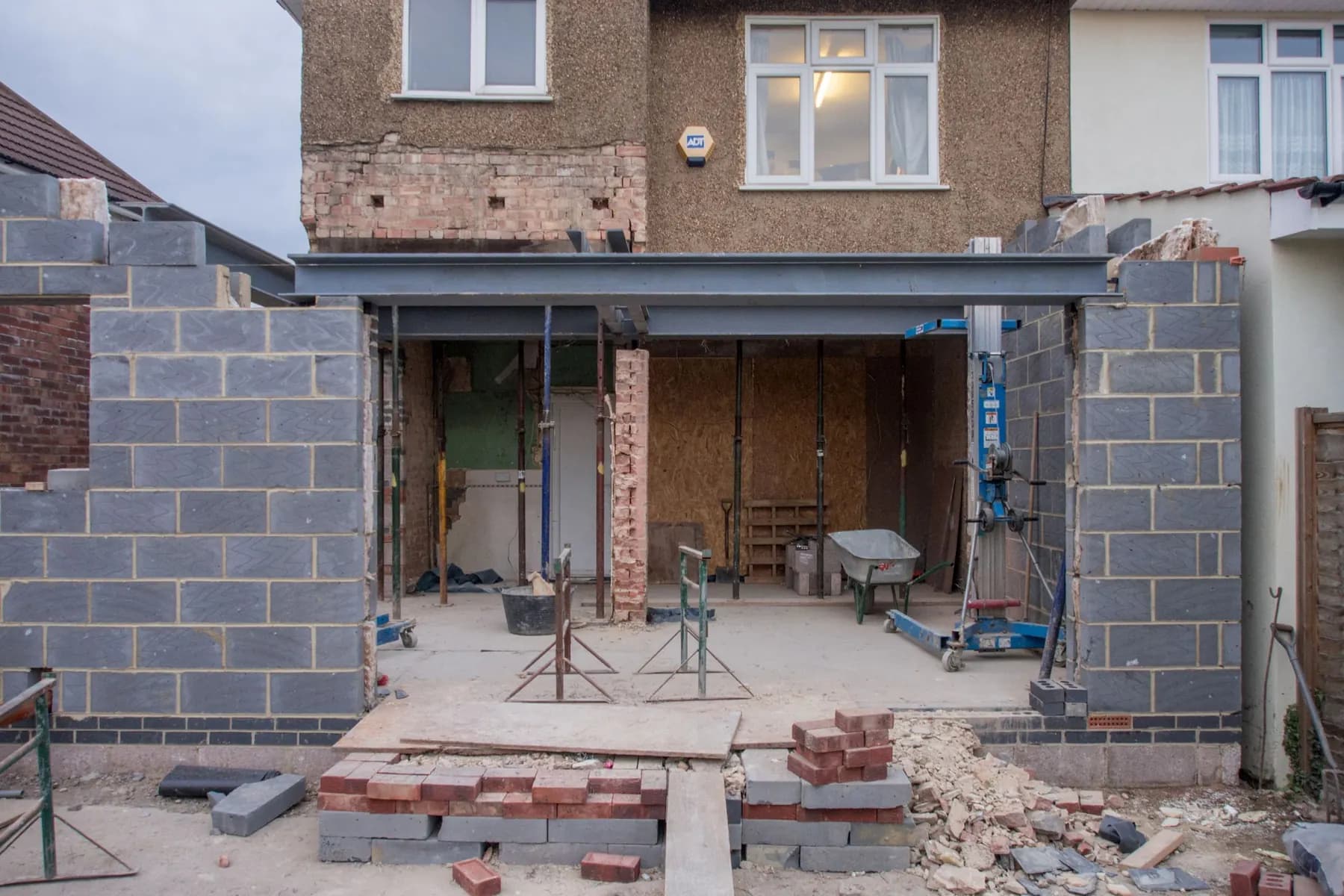
Before any design, an engineer looks at the footings, the walls and the slab or subfloor. Then the stair: it needs a footprint downstairs and a landing upstairs, and it often decides the layout of both floors. The residential chapter's privacy and overshadowing controls apply to upstairs windows and balconies, so the neighbours' yards are part of the brief.
First floor additions also change how you live during the work. Depending on the scope, it may be practical to stay in the house for part of the build and not for other parts. That's worked out with you and set in the contract.
The engineer's report on the house below decides whether up is an option at all.
CDC or DA, and the bush fire question
The State's Housing Code covers additions as well as new houses, on lots in the R1, R2, R3, R4 and RU5 zones of at least 200m² and 6m wide. If the design meets every standard and the lot isn't excluded, a certifier can approve it as complying development. If not, it goes to Penrith City Council as a development application.
A CDC must be decided within 20 days where neighbours are notified (10 days otherwise). For a DA, a DA has a 40-day assessment period, and an application that arrives with the survey, the engineering and any flood or bush fire report has the best chance of moving through it without requests for more information.
The planning certificate also shows whether the lot is mapped as bush fire prone. If it is, the addition is built to a bush fire attack level assessed for the site, which affects windows, doors, cladding and decks. Being mapped doesn't always rule out a CDC, but it adds standards. I read the certificate before quoting the design, not after.
What I check first on a Cranebrook addition
These come before floor plans.
- 01
Flood affectation and any flood level on the planning certificate
- 02
Bush fire prone land mapping on the same certificate
- 03
Whether the lot is in a D3 Cranebrook precinct area
- 04
The existing footings and frame, if going up
- 05
How water currently moves past the house in heavy rain
- 06
Restrictions on the title under section 88B
Cranebrook home addition questions
Is a ground floor or first floor addition cheaper in Cranebrook?
Per square metre, ground floor is lower: $2,630–$2,840/m² for a brick veneer addition of 75–125m², against $3,790–$4,090/m² for a first floor of 100–150m², Sydney, excluding GST. Flood levels, the slab and the engineering can narrow that gap, so I price both once the house has been seen.
Does the flood study mean I can't extend?
No. It means council knows more about where water goes. If your lot is affected, the addition is designed to the flood level and kept out of the way of flow paths. The planning certificate and council's flood information tell you where you stand.
Which chapter of the Penrith DCP applies to my extension?
C2 Residential Development, which was D2 before the restructure that council lists as in effect from 1 October 2026. If your lot is in Waterside, the neighbourhood centre or the rural residential area, chapter D3 Cranebrook applies as well.
What protections should I expect from a builder?
A written contract for work over $5,000 in value, and from $20,000 including GST, home building compensation cover before you pay a deposit or work starts. Service NSW's HBC Check confirms the cover. The deposit is capped at 10%.
Who will I be dealing with?
Oliver Alameri, who holds NSW contractor licence 487805C and has more than 15 years' building experience. Buildana's studio is in Fairfield, and the work runs Sydney-wide, out to Penrith and beyond. A price comes after the house has been seen, not from a first call.
Sources and references
Costs are from the Rawlinsons handbook with the local cost index applied; rules and timeframes are checked against the sources below.
- Rawlinsons Australian Construction Handbook, Rawlhouse Publishing
- Environmental Planning and Assessment Act 1979 (NSW)
- State Environmental Planning Policy (Exempt and Complying Development Codes) 2008
- Building on bush fire prone land, NSW RFS
- Home Building Act 1989 (NSW)
- Search heritage databases, NSW Environment and Heritage
- NSW Planning Portal Spatial Viewer (zoning, FSR and hazard maps)
- Penrith City Council
- Licence check, Verify NSW (Service NSW)
Start with the certificate and a photo
The address and a photo of the back of the house are enough to begin. Oliver will respond within 4 working hours for a free initial conversation, and the price follows once the house and the flood information have been checked.