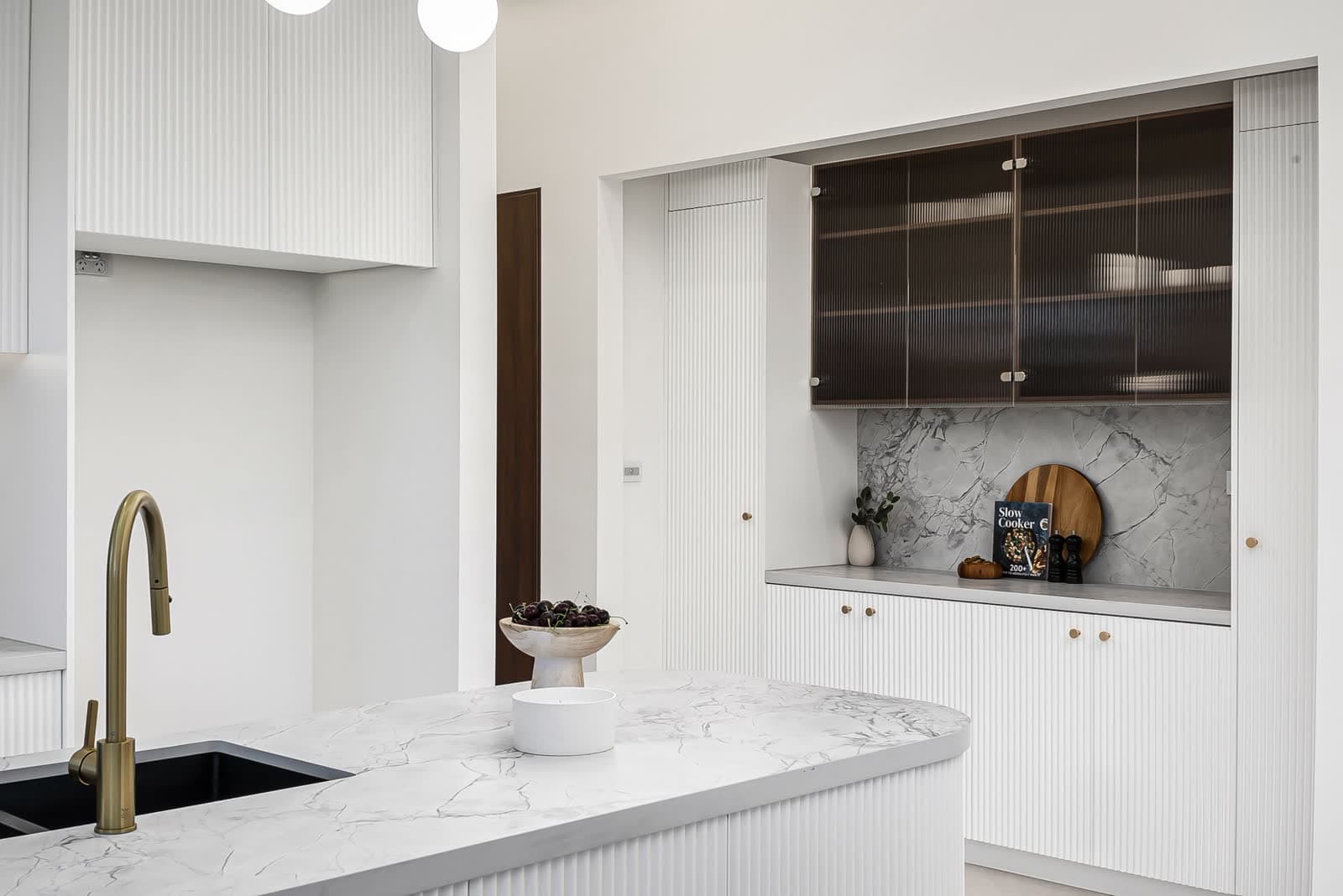
Eastwood Home Extension Builder — Live In, Build On
Buildana extends homes across Eastwood 2122 while you stay in place. 1900s–1970s-era structure, City of Ryde Council rules, weatherproofing during build — all managed locally from Fairfield.

Quick Answer
A home extension in Eastwood costs $150,000–$600,000+. Rear extension from $150K, second-storey addition from $300K. Buildana manages design, City of Ryde Council approvals, and construction under one fixed-price contract.
Second-Storey & Rear Additions in Eastwood
Extension in Eastwood is dominant scope on Brush Farm Park HCA precinct — Federation cottage additions, inter-war heritage extensions. Realistic budget $260K–$650K for 50–110m² addition; $580K–$1.2M heritage-grade.
Practical realities of extending in Eastwood: Eastwood (T9, in suburb) station services the suburb, which influences site access during construction (deliveries, cranage, skip placement). 550–900m² blocks usually have enough room for proper site set-up, but tight battle-axe lots and narrow frontages need staging plans factored into the build program. City of Ryde Council processes a steady volume of residential applications — clean documentation moves fast, and Buildana lodges everything at full standard the first time. Class M (Wianamatta Shale) / H (Lane Cove + Parramatta River fall, sandstone outcrops) soil (moderately to highly reactive clay) sets foundation cost in the $24,000–$42,000 range; budget allocation for that line item is fixed in your contract, not estimated.
Buildana manages the complete home extension process in Eastwood — from design consultation and structural engineering through to DA or CDC approval, and fixed-price construction to handover. Extend your home without the stress.
Read our Home Extension Cost Guide 2026 or explore extension approval pathways in NSW.
- Home extensions in Eastwood from $150K
- City of Ryde Council DA and CDC approvals managed
- Ground floor, rear and second-storey additions
- Class M (Wianamatta Shale) / H (Lane Cove + Parramatta River fall, sandstone outcrops) soil — structural engineering included
- 1900s–1970s-era homes assessed for extension suitability
- Connect new to existing — clean, matched finish
- 6-year structural warranty
- Free design consultation — near Eastwood (T9, in suburb) station
Reviewed by Oliver Alameri
Licensed Builder (NSW 487805C) · Master of Property Development · PhD Student · Building across Western Sydney since 2010
Why Extend Your Home in Eastwood?
Eastwood is split between the City of Ryde and City of Parramatta — Federation cottages, inter-war heritage, post-war brick and contemporary on 550–900m² blocks. Major Asian-Australian commercial centre at Eastwood village. Heritage Conservation Areas in pockets including Brush Farm Park precinct. Wianamatta Shale soil.
Residential blocks of 550–900m² across Eastwood (2122) provide solid building envelopes for a range of project types. City of Ryde Council manages planning controls with well-established DCP provisions. Direct rail access from Eastwood (T9, in suburb) station adds genuine value to Eastwood property. 1900s–1970s-era homes in Eastwood often have good structural foundations worth building on. Extensions add living space at a fraction of the full rebuild cost. Class M (Wianamatta Shale) / H (Lane Cove + Parramatta River fall, sandstone outcrops) soil (moderately to highly reactive) is standard for Eastwood — Buildana includes engineered slab design in every quote.
Extension is the dominant scope across Ryde's Heritage Conservation Areas (Putney village, Gladesville Victoria Road precinct, Eastwood Brush Farm precinct, Denistone heritage streets, parts of West Ryde) where KDR is restricted. Federation cottage additions, inter-war heritage extensions, river-fall heritage-grade work on Putney and Tennyson Point all common. Suspended slabs on river-fall sites; foreshore consent on direct waterfront. Heritage Council expects retention of original Federation/inter-war detail. Apartment renovations the other major category — Macquarie Park towers, Meadowbank station precinct, Top Ryde City precinct, Melrose Park master-planned community. Realistic budget $250K–$700K for thoughtful 50–110m² addition inland; $600K–$1.4M premium river-fall heritage-grade work.
Planning Controls — City of Ryde Council
Ryde LEP 2014 & Ryde DCP 2014. R2 Low Density covers most residential streets: FSR 0.5–0.55:1, building height 9.5m, front setback 6–7.5m, landscaped area 40–50% (Ryde DCP enforces 50% on >580m² lots). R3 Medium Density along Victoria Road, Blaxland Road, Devlin Street and Lane Cove Road permits FSR up to 0.9:1. R4 High Density and B4 Mixed Use concentrated on Macquarie Park strategic centre, Top Ryde City precinct, Meadowbank station precinct, West Ryde station precinct and the Eastwood town centre. Duplex minimum lot 580m² (slightly below the typical 600m² standard). Heritage Conservation Areas in pockets — West Ryde Federation streets, Putney village core, Gladesville Victoria Road and side streets, Eastwood Brush Farm Park precinct, Denistone heritage streets. Tree Preservation Order LGA-wide and strict — Ryde retains substantial bushland (Lane Cove National Park frontage on East Ryde, North Ryde; Field of Mars Reserve in Ryde). Wianamatta Shale soil predominant; sandstone outcrops on the Lane Cove River fall (Putney, Tennyson Point, Gladesville) and Parramatta River fall (Meadowbank, Melrose Park) — suspended slab engineering on premium river-fall lots. Riparian setbacks apply to all Lane Cove River and Parramatta River frontages. Sydney Metro Macquarie Park / North Ryde stations and the Macquarie University Hospital + Macquarie University precinct anchor the LGA's strategic centre. Melrose Park master-planned brownfield redevelopment (PAYCE 25-hectare precinct) under specific design controls with industrial-legacy contamination management on remediated parcels.
Home extension builder in Eastwood — key facts
- Suburb
- Eastwood, NSW 2122
- Council / LGA
- City of Ryde Council (City of Ryde)
- Primary zoning
- R2 Low / R3 Medium / R4 (Macquarie Park, Top Ryde, Meadowbank station precincts)
- Typical lot size
- 550–900m²
- Soil class
- Class M (Wianamatta Shale) / H (Lane Cove + Parramatta River fall, sandstone outcrops)
- Median house price
- $2.1M–$3.0M
- Home era
- 1900s–1970s
- Typical price range
- $150,000 – $600,000+
- Typical timeline
- 6–12 months design to handover
- Approval pathway
- CDC for most rear extensions, DA for second-storey
Building in Eastwood — Local Context
Ground Conditions That Affect Your Build
Class M (Wianamatta Shale) / H (Lane Cove + Parramatta River fall, sandstone outcrops) is the rule across Eastwood — moderately to highly reactive clay. For your home extension, expect engineered footings in the $24,000–$42,000 range. The variables that shift you up or down inside that band: building footprint, number of storeys, point loads (heavy stone benchtops, masonry feature walls), and whether the adjacent stormwater system needs upgrading. Eastwood is close to Eastwood (T9, in suburb) station — site access on tighter blocks adds a logistics premium, which is why we cost cranage and material delivery before signing, not after.
City of Ryde Council & Approval Pathway
Eastwood sits inside the City of Ryde LGA, governed by City of Ryde Council. For a home extension, the approval question is usually CDC vs DA. Extensions in Eastwood usually need a full DA through City of Ryde Council — typically 40–90+ days from lodgement, longer if neighbour notification triggers objections. Either way, we manage submission, RFIs, and re-lodgement in-house — you don't deal with the council.
Realistic Budget for Eastwood
For a home extension in Eastwood, the budget conversation starts with what you actually want versus what the site supports. Most quotes you'll get from volume builders strip out the things that matter on Class M (Wianamatta Shale) / H (Lane Cove + Parramatta River fall, sandstone outcrops) soil — engineered slab upgrade, decent waterproofing, real drainage design, BASIX-compliant glazing — and present them as variations after you sign. We don't do that. Buildana's contract is fixed-price including everything required to deliver a extension that complies with NCC 2025 on a 550–900m² block in Eastwood.
Eastwood Housing Stock & What That Means
Most homes in Eastwood were built 1900s–1970s. That puts asbestos risk firmly in play — sheeting, eaves linings, vinyl floor tiles, and pipe lagging are likely. Licensed removal adds $5,000–$25,000 to a extension where demolition is involved, and Buildana manages SafeWork NSW notifications, removal, and clearance certificates as part of the contract. Existing structures from 1900s–1970s usually need wiring, plumbing, and insulation upgrades to meet NCC 2025 — worth costing that into the extension scope upfront, not as a variation later.
City of Ryde Council Processing & Eastwood Activity
City of Ryde Council processes thousands of residential applications a year across the City of Ryde LGA, and Eastwood (2122) sits in the active end of that workload. For a home extension, the realistic clock from lodgement to DA determination is 8-14 weeks. The applications that move to the front of the queue are the ones where every required document is correctly named, drawn to scale, and matched against the SEPP or LEP clause it's claiming compliance with. Buildana lodges every project at that standard — not because it's required, but because it's how you avoid sitting in the RFI loop for an extra month.
Builder's Take on Eastwood
Existing-structure assessment is the non-negotiable first step. Eastwood 1900s–1970s homes often have undersized footings or termite-damaged wall plates that won't carry a second storey. We check with drilled inspections before quoting — no point designing a dream that's not structurally viable.
Second storey on a Eastwood home: the existing single-storey footings usually need reinforcement, which adds $15K–$40K. The roof comes off. The house is exposed for 4–8 weeks (weatherproofed nightly). Clients often underestimate the disruption — but the result is a doubling of floor area for 50% of the cost of a rebuild.
Eastwood vs Nearby Suburbs
Eastwood vs nearby suburbs — key metrics for extending.
| Suburb | Median Price | Typical Lot | Soil Class | Era | Station |
|---|---|---|---|---|---|
| Eastwood2122this suburb | $2.1M–$3.0M | 550–900m² | Class M (Wianamatta Shale) / H (Lane Cove + Parramatta River fall, sandstone outcrops) | 1900s–1970s | Eastwood (T9, in suburb) |
| Denistone East2112 | $2.0M–$2.9M | 600–900m² | Class M (Wianamatta Shale) / H (Lane Cove + Parramatta River fall, sandstone outcrops) | 1950s–1980s | Eastwood (T9, 1.5 km) |
| Marsfield2122 | $2.1M–$3.2M | 600–1,000m² | Class M (Wianamatta Shale) / H (Lane Cove + Parramatta River fall, sandstone outcrops) | 1950s–1980s | Macquarie University Metro (1 km) |
| Epping2121 | $2.0M–$3.0M (apartment-heavy) | 450–800m² | Class M (Wianamatta Shale predominant) / Class P/E (alluvial Parramatta River corridor: Rydalmere, Ermington, Sydney Olympic Park, Wentworth Point) / industrial-legacy contamination overlays on Camellia, Rosehill, Silverwater fringe and Sydney Olympic Park | 1900s–1970s + 2010s+ apartment towers | Epping (Sydney Metro + T9, in suburb) |
Median price, soil class, and lot size shape build feasibility and final cost. Buildana assesses every site against these and other constraints during the free feasibility stage.
Have a question about your project?
Talk to our team — free site assessment and fixed-price quote.
How It Works
From First Call to Final Key
Everything that has to be right before we touch the ground. Walk through your Eastwood home with our designer and structural engineer. We measure, photograph, and check the bones — footings, frame condition, roof structure. The cost estimate that follows is grounded in what we found, not a generic per-m² number. Our designer works with your existing home's layout — connecting new living areas to existing rooms, matching materials and roof pitch, and maximising natural light. You approve floor plans and 3D renders before we proceed.
⏱The Eastwood construction phase. Fixed price, programmed, supervised. Most rear extensions in Eastwood qualify for CDC — cleaner, faster, no neighbour notification. Second-storey additions typically need DA through City of Ryde Council because of overshadowing and privacy assessments. We choose based on your design, not on what's easier to lodge. Extension built from new footings to completion — connecting structurally to your existing home. Class M (Wianamatta Shale) / H (Lane Cove + Parramatta River fall, sandstone outcrops) soil design managed. Temporary weatherproofing maintains liveability where possible.
⏱The job isn't done when the site's clean; it's done when you have keys, certificates and warranties. Walk through the completed extension, confirm finishes, collect your OC. Six-year structural warranty covers all new work including the junction with your existing home. Maintenance guide provided.
⏱Quality Promise
Buildana's Eastwood home extension process: assess the existing structure, design the addition, approve, build. Fixed price throughout.
Cost Guide
| Item | Estimated Range |
|---|---|
| Small rear extension (up to 30m²) | $86,000 – $170,000 |
| Medium rear/side extension (30–60m²) | $170,000 – $300,000 |
| Large ground-floor extension (60–100m²) | $300,000 – $480,000 |
| Second-storey addition (60–120m²) | $270,000 – $520,000 |
| Wrap-around (ground + 1st floor) | $480,000+ |
| Structural engineering & tie-in | Included |
Prices are indicative for Western Sydney (2025). Actual costs depend on site, specifications, and approvals.
Our Team
Oliver Alameri
Founder / Director / Builder · MPropDev · PhD Student
Ahmad Alameri
Accounts Manager
Claire Wendell
Project Manager
Estimate Your Build Cost
Use our free calculator to get an instant cost estimate for your project
Ready to take the next step?
Free consultation — no obligation, no pressure.
Frequently Asked Questions
“Buildana built our granny flat in just 12 weeks. Fast approvals, great communication, and a beautiful final product. Highly recommend.”
Fatima Al-Rashid
Liverpool, NSW
We Build Across Sydney
Buildana builds across greater Sydney — with deep roots in Western Sydney's Fairfield, Liverpool, Cumberland, Canterbury-Bankstown, and Blacktown LGAs.
Last updated: 1 April 2026
Explore Related Topics
Extend, Don't Move — Eastwood
Free design consultation for Eastwood 2122. We'll assess your home, design the extension, and provide a fixed-price quote.
Start Your Project