Skip to content
Buildana construction project in Western Sydney

Licensed Home Extension Builder Kensington

NSW licensed extension specialist. Kensington 2033 extensions on 1900s–1960s + apartments-era homes require structural sign-off, Class M (sandstone ridges) / H–E (cliff fall on coast) footings, and matched connection — we engineer and document properly.

Based in Fairfield, Western Sydney5.0 Google RatingLicensed & Insured (LIC 487805C)HIA Member — Buildana Custom Home Builders SydneyHIA MemberMaster Builders Association NSW Member — BuildanaMBA NSW0476 300 300
?

Quick Answer

A home extension in Kensington costs $150,000–$600,000+. Rear extension from $150K, second-storey addition from $300K. Buildana manages design, Randwick City Council approvals, and construction under one fixed-price contract.

Kensington Home Extensions — Fixed Price

Extension in Kensington is Federation cottage and inter-war heritage additions on 250–600m² blocks. HCAs restrict scope on character streets. Apartment renovations dominant along Anzac Parade R4 corridor. Realistic budget $300K–$800K for 70–130m² addition. Pre-construction 5–7 months.

For a extension in Kensington, the economics are the framing question. Median price $2.2M–$4M; build cost on 250–600m² blocks scales by site conditions and specification. Class M (sandstone ridges) / H–E (cliff fall on coast) ground (extremely reactive clay) keeps foundations honest — $45,000–$80,000 band — and blowouts on that line are the single most common reason fixed-price contracts elsewhere don't stay fixed. Buildana itemises the slab, structural engineering, and geotech work upfront so you see the actual cost in the contract. R3 zoning in pockets of Kensington opens up dual occupancy potential — worth exploring even if you're not initially considering it.

Buildana manages the complete home extension process in Kensington — from design consultation and structural engineering through to DA or CDC approval, and fixed-price construction to handover. Extend your home without the stress.

Read our Home Extension Cost Guide 2026 or explore extension approval pathways in NSW.

  • Home extensions in Kensington from $150K
  • Randwick City Council DA and CDC approvals managed
  • Ground floor, rear and second-storey additions
  • Class M (sandstone ridges) / H–E (cliff fall on coast) soil — structural engineering included
  • 1900s–1960s + apartments-era homes assessed for extension suitability
  • Connect new to existing — clean, matched finish
  • 6-year structural warranty
  • Free design consultation — near Light Rail Kensington / Kingsford station
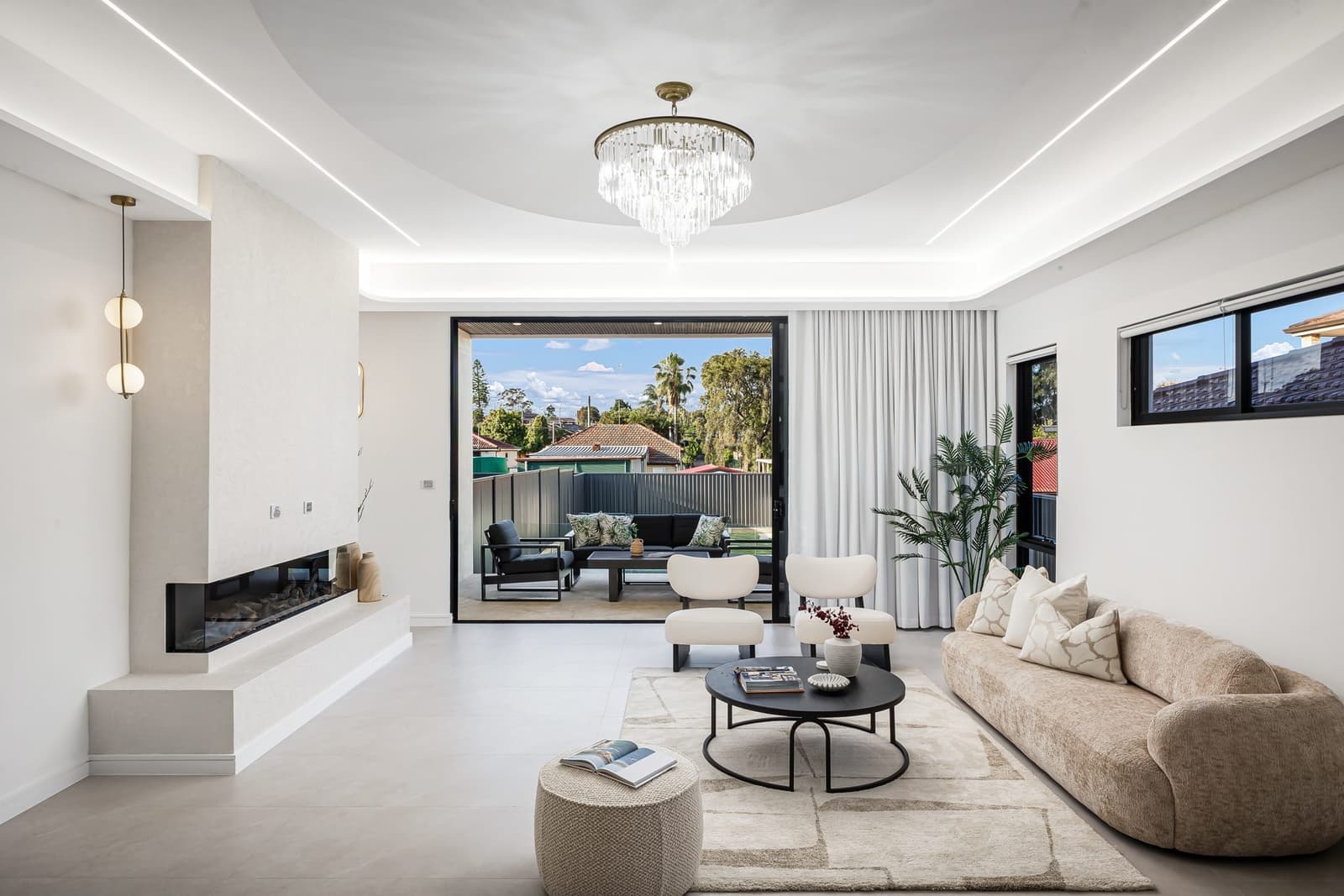
Rear extension on a 1900s–1960s + apartments home in Kensington
OA

Reviewed by Oliver Alameri

Licensed Builder (NSW 487805C) · Master of Property Development · PhD Student · Building across Western Sydney since 2010

Why Extend Your Home in Kensington?

Kensington is the inner Randwick LGA suburb adjoining UNSW — Federation cottages, inter-war heritage, post-war flats and contemporary apartments on 250–600m² blocks. R3/R4 along Anzac Parade and Doncaster Avenue. Heritage Conservation Areas cover several streets. UNSW campus and Light Rail Kingsford line drive density.

Kensington's established streetscape and median house prices of $2.2M–$4M reflect a premium location within Randwick. Building costs sit above the metro average, offset by stronger capital growth and rental returns. Direct rail access from Light Rail Kensington / Kingsford station adds genuine value to Kensington property. 1900s–1960s + apartments-era homes in Kensington often have good structural foundations worth building on. Extensions add living space at a fraction of the full rebuild cost. Class M (sandstone ridges) / H–E (cliff fall on coast) soil (extremely reactive) is standard for Kensington — Buildana includes engineered slab design in every quote.

Extension is the dominant scope across Randwick coastal heritage suburbs (Clovelly, Coogee village, South Coogee, Maroubra heritage core, Malabar, La Perouse) and Daceyville garden suburb where KDR is restricted. Federation cottage additions, inter-war heritage extensions, cliff-top heritage-grade work all common. Suspended slabs and substantial retaining on cliff-fall sites. Coastal salt-grade specs standard on coastal-facing builds. Heritage Council expects retention of stained glass, ornate plasterwork, slate roofing on protected streets. Apartment renovations the other major category along Anzac Parade UNSW corridor through Kensington/Kingsford, Coogee village, Maroubra Junction. Realistic budget $300K–$900K for thoughtful 60–130m² addition inland/mid-tier; $700K–$1.8M premium coastal heritage-grade work; $1.2M–$3M direct beachfront/clifftop.

Planning Controls — Randwick City Council

Randwick LEP 2012 & Randwick DCP 2013. R2 Low Density covers most residential streets: FSR 0.55–0.65:1, building height 9.5m, front setback 4–6m, landscaped area 35–40%. R3 Medium Density along Coogee Bay Road, Carrington Road, Belmore Road, Maroubra Road and Anzac Parade permits FSR up to 0.9:1. R4 High Density and B4 Mixed Use concentrated on the Anzac Parade UNSW corridor through Kensington and Kingsford, Randwick Junction, Coogee village and Maroubra Junction. Heritage Conservation Areas cover Daceyville (entire suburb), Coogee village, Clovelly, parts of Maroubra and South Coogee, Randwick Junction, La Perouse, Malabar and Kensington/Kingsford pockets. Tree Preservation Order LGA-wide. Sandstone-dominant soil with substantial cliff fall on the eastern coast from Clovelly through South Coogee to Malabar Headland — suspended slabs and substantial retaining standard, rock excavation $20K–$60K. Coastal salt-grade specifications mandatory across all coastal-facing builds (Clovelly, Coogee, South Coogee, Maroubra, Malabar, Little Bay, La Perouse). Aboriginal cultural heritage protocols apply on the La Perouse headland and parts of the Botany Bay foreshore. UNSW campus and Light Rail (Randwick line + Kingsford line) drive density along Anzac Parade. The new Randwick Health & Innovation Precinct (Prince of Wales Hospital, UNSW Health Translation Hub) is the LGA's signature strategic centre. Randwick Racecourse and Centennial Parklands frontage on the western edge of the LGA.

Home extension builder in Kensington — key facts

Suburb
Kensington, NSW 2033
Council / LGA
Randwick City Council (Randwick)
Primary zoning
R2 Low / R3 Medium (Coogee/Maroubra/Kingsford R4 spines)
Typical lot size
250–600m²
Soil class
Class M (sandstone ridges) / H–E (cliff fall on coast)
Median house price
$2.2M–$4M
Home era
1900s–1960s + apartments
Typical price range
$150,000 – $600,000+
Typical timeline
6–12 months design to handover
Approval pathway
CDC for most rear extensions, DA for second-storey

Building in Kensington — Local Context

What Kensington Soil Means for Your Extension

Most blocks across Kensington (2033) classify as Class M (sandstone ridges) / H–E (cliff fall on coast) — extremely reactive clay. Translation for a home extension: foundation cost lands somewhere between $45,000–$80,000, depending on building footprint and how the engineer reads the borehole. Reactive soils move with seasonal moisture. A waffle pod alone won't cut it on a Class M (sandstone ridges) / H–E (cliff fall on coast) site — you need stiffened edge beams, sometimes piered footings, and careful detailing around wet areas to stop differential movement showing up as cracking. Buildana includes the geotech report, structural engineering, and slab design in every quote. No site allowance, no provisional sum.

Randwick City Council & Approval Pathway

Kensington sits inside the Randwick LGA, governed by Randwick City Council. For a home extension, the approval question is usually CDC vs DA. Extensions in Kensington usually need a full DA through Randwick City Council — typically 40–90+ days from lodgement, longer if neighbour notification triggers objections. Either way, we manage submission, RFIs, and re-lodgement in-house — you don't deal with the council.

Where the Money Goes on a Kensington Extension

Cost breakdown for a typical extension in Kensington: structure and frame around 30%, slab and foundations 8–14% (driven by Class M (sandstone ridges) / H–E (cliff fall on coast) soil), roofing and external 10–12%, services (plumbing, electrical, HVAC) 12–18%, fit-out (kitchen, bathrooms, joinery) 18–25%, and finishes (paint, tiles, flooring) 8–12%. The remaining 4–6% covers approvals, certifications, and site establishment. Buildana itemises every line so you see what you're paying for — no lump sums hiding margin.

Kensington Housing Stock & What That Means

Most homes in Kensington were built 1900s–1960s + apartments. That puts asbestos risk firmly in play — sheeting, eaves linings, vinyl floor tiles, and pipe lagging are likely. Licensed removal adds $5,000–$25,000 to a extension where demolition is involved, and Buildana manages SafeWork NSW notifications, removal, and clearance certificates as part of the contract. Existing structures from 1900s–1960s + apartments usually need wiring, plumbing, and insulation upgrades to meet NCC 2025 — worth costing that into the extension scope upfront, not as a variation later.

Why Some Kensington Builds Stall

Builds in Kensington stall for predictable reasons. Lodgement defects (missing BASIX, wrong drawing scale, undeclared overlays). Soil surprises on Class M (sandstone ridges) / H–E (cliff fall on coast) ground when the builder didn't commission a borehole upfront. Variation creep when the contract was light on inclusions. Trade scheduling gaps when the builder is over-committed across too many sites. Randwick City Council delays when neighbour objection triggers committee review. Buildana protects against each of these at contract stage — fully documented lodgement pack, geotech in the price, itemised inclusions instead of allowances, and a tight project-manager-to-job ratio that keeps trades moving.

Builder's Take on Kensington

Randwick City Council setback and height rules apply to the extension, not the whole house. An older Kensington home that was built inside the setback might not be extendable to the boundary. We check that during feasibility so there's no expensive surprise at DA stage.

Timing on Kensington extensions typically runs 14–24 weeks for ground-floor additions, 20–32 weeks for second-storey. Living in the house during the build is possible but requires staging — we plan around it so the kitchen and main bathroom aren't out at the same time.

Kensington vs Nearby Suburbs

Kensington vs nearby suburbs — key metrics for extending.

SuburbMedian PriceTypical LotSoil ClassEraStation
Kensington2033this suburb$2.2M–$4M250–600m²Class M (sandstone ridges) / H–E (cliff fall on coast)1900s–1960s + apartmentsLight Rail Kensington / Kingsford
Kingsford2032$1.9M–$3.2M350–650m²Class M (sandstone ridges) / H–E (cliff fall on coast)1920s–1970s + apartmentsLight Rail Kingsford (terminus)
Randwick2031$2.5M–$5M250–600m²Class M (sandstone ridges) / H–E (cliff fall on coast)1900s–1940s + apartmentsLight Rail Randwick (in suburb)
Centennial Park2021$4M–$10M300–800m²Class M (sandstone ridges) / H–E (harbour fall)1880s–1920s heritage mansionsBondi Junction (2 km)

Median price, soil class, and lot size shape build feasibility and final cost. Buildana assesses every site against these and other constraints during the free feasibility stage.

Have a question about your project?

Talk to our team — free site assessment and fixed-price quote.

Cost Guide

ItemEstimated Range
Simple rear extension (single wall removal, no roof change)$95,000 – $210,000
Moderate extension (multiple openings, roof extended)$210,000 – $400,000
Complex extension (structural steel portals, re-roofing)$400,000 – $630,000
Second-storey tie-in (existing house re-engineered)$370,000 – $680,000

Prices are indicative for Western Sydney (2025). Actual costs depend on site, specifications, and approvals.

Concept design in 2–4 weeks — you see the plan before committing
Randwick City Council CDC in 10–15 business days for eligible ground-floor additions
DA path 40–90 days for second-storey or non-complying designs
Construction programmed around liveability — staged weatherproofing
Ground-floor extension typically 10–20 weeks build time
Second-storey 16–28 weeks including tie-in roof sequence

How It Works

From First Call to Final Key

The first job on an extension is finding out what you're extending onto. Kensington homes from the 1900s–1960s + apartments were built to different standards — we open walls, check footings, verify load paths. The existing house has to carry the new work.

Design follows the existing roof. A bad extension looks like a bolt-on; a good one reads as original. Matched brickwork or contrasting render (whichever the architecture calls for), tied-in roofline, continuous flooring where it should be continuous.

Construction happens while you live in the house. That means weatherproofing every night, staging the works so kitchens and bathrooms don't disappear on the same week, and keeping the site clean of debris that doesn't belong in a family home.

Finish is seamless. Paint match, floor match, roofline match, brick match where possible. The only way to tell the extension is new is the date on the plans.

Our Team

OA

Oliver Alameri

Founder / Director / Builder · MPropDev · PhD Student

AA

Ahmad Alameri

Accounts Manager

CW

Claire Wendell

Project Manager

Estimate Your Build Cost

Use our free calculator to get an instant cost estimate for your project

Open Calculator →

Ready to take the next step?

Free consultation — no obligation, no pressure.

Frequently Asked Questions

Google Reviews
5.0
Buildana built our granny flat in just 12 weeks. Fast approvals, great communication, and a beautiful final product. Highly recommend.

Fatima Al-Rashid

Liverpool, NSW

See all reviews on Google
Areas We Serve

We Build Across Sydney

Buildana builds across greater Sydney — with deep roots in Western Sydney's Fairfield, Liverpool, Cumberland, Canterbury-Bankstown, and Blacktown LGAs.

Start a Kensington Home Extension

Free design consultation for Kensington 2033. We'll assess your home, design the extension, and provide a fixed-price quote.

Start Your Project