Home Extension Builder The Spit — Approved in 60 Days
The Spit 2088 extensions with tight approval timelines. CDC where eligible (~15 days), DA via Mosman Council in 40–60 days. Construction 12–24 weeks depending on scope.

Second-Storey & Rear Additions in The Spit
Extension in The Spit is heritage-grade harbour-fall work. Heritage Conservation Areas cover most older streets. Suspended slabs, rock anchoring, Foreshore Building Line negotiation drive cost. Realistic budget $800K–$2.2M for premium 80–150m² addition. Pre-construction 12–15 months.
Most The Spit blocks run 600–1,500m² on Class M (sandstone ridges) / H to E (harbour fall) ground. Extension feasibility depends on what's underneath the existing slab and whether the frame can carry a second-storey load — Buildana checks both before quoting, so what's in the contract is what gets built. Median price band: $4.5M–$10M. Nearest rail is North Sydney (7 km).
Buildana manages the complete home extension process in The Spit — from design consultation and structural engineering through to DA or CDC approval, and fixed-price construction to handover. Extend your home without the stress.
Read our Home Extension Cost Guide 2026 or explore extension approval pathways in NSW.
- Home extensions in The Spit from $150K
- Mosman Council DA and CDC approvals managed
- Ground floor, rear and second-storey additions
- Class M (sandstone ridges) / H to E (harbour fall) soil — structural engineering included
- 1900s–1950s heritage-era homes assessed for extension suitability
- Connect new to existing — clean, matched finish
- 6-year structural warranty
- Free design consultation — near North Sydney (7 km) station
Reviewed by Oliver Alameri
Licensed Builder (NSW 487805C) · Master of Property Development · PhD Student · Building across Western Sydney since 2010
Why Extend Your Home in The Spit?
The Spit is the harbour-fall locality at the southern end of the Spit Bridge — Federation mansions, inter-war heritage and contemporary harbour-fall builds on 600–1,500m² blocks. Heritage Conservation Areas cover most older streets. Sandstone-dominant soil with deep rock excavation typical. Northern Beaches LGA boundary across the Spit Bridge to Seaforth. Premium for Middle Harbour outlook.
The Spit's established streetscape and median house prices of $4.5M–$10M reflect a premium location within Mosman. Building costs sit above the metro average, offset by stronger capital growth and rental returns. Transport access via North Sydney (7 km) connects The Spit to the wider Sydney network. 1900s–1950s heritage-era homes in The Spit often have good structural foundations worth building on. Extensions add living space at a fraction of the full rebuild cost. Soil conditions in The Spit (Class M (sandstone ridges) / H to E (harbour fall), extremely reactive) are factored into every Buildana foundation design.
Extensions are the dominant scope across most of Mosman given heritage controls and harbour-fall sites that complicate KDR. Federation mansion additions, sandstone terrace reconfiguration, harbourside heritage-grade work all common. Suspended slab engineering, structural underpinning, rock anchoring drive cost on harbour-fall sites. Heritage Council expects retention of stained glass, ornate plasterwork, marble fireplaces, slate roofing, sandstone walling. Realistic budget $700K–$2.5M for premium 80–150m² heritage-grade addition; $400K–$1M for simpler character work outside HCAs (rare). Pre-construction 9–12 months including heritage, tree and foreshore consents.
Planning Controls — Mosman Council
Mosman LEP 2012 & Mosman DCP 2012. R2 Low Density dominates: FSR 0.5:1 (sliding down on larger lots), building height 8.5m, front setback 6–9m varying by streetscape, landscaped area 50%, deep soil 30%. R3 Medium Density along Military Road and parts of Spit Junction permits FSR up to 0.7:1. B2/B4 mixed-use along the Military Road and Spit Junction commercial spines. Heritage Conservation Areas cover virtually all older residential streets across Mosman, Balmoral, Beauty Point, Clifton Gardens, Georges Heights and The Spit — the LGA has one of Sydney's heaviest heritage coverages. Tree Preservation Order applies LGA-wide and is enforced strictly. Substantial harbour-fall sites are the LGA's signature engineering challenge: suspended slabs, structural underpinning, sandstone rock excavation $25K–$80K standard. Sydney Harbour National Park frontage at Middle Head, Bradleys Head, Chowder Bay and parts of Clifton Gardens adds further heritage and ecological controls. Foreshore Building Line restricts harbourside building envelopes on most premium lots.
Home extension builder in The Spit — key facts
- Suburb
- The Spit, NSW 2088
- Council / LGA
- Mosman Council (Mosman)
- Primary zoning
- R2 Low Density / R3 Medium pockets
- Typical lot size
- 600–1,500m²
- Soil class
- Class M (sandstone ridges) / H to E (harbour fall)
- Median house price
- $4.5M–$10M
- Home era
- 1900s–1950s heritage
- Typical price range
- $150,000 – $600,000+
- Typical timeline
- 6–12 months design to handover
- Approval pathway
- CDC for most rear extensions, DA for second-storey
Building in The Spit — Local Context
The Spit Block Realities
Typical The Spit blocks are 600–1,500m² on Class M (sandstone ridges) / H to E (harbour fall) ground (extremely reactive clay). For a extension, the structural envelope is more constrained than the headline lot size suggests — once you subtract setbacks, easements, landscaped area requirements, and any tree preservation, the actual buildable area is usually 35-45% of the block. We map that early in the feasibility stage so you're designing to what's actually allowed, not what looks possible from the title plan. Foundation cost band on most The Spit blocks: $45,000–$80,000.
Approval Timeline for The Spit
Realistic timeline for a extension in The Spit: 8–14 weeks for DA through Mosman Council. Add 2–4 weeks before lodgement for documentation, BASIX certificate, geotech report, and survey if you don't already have one. Construction Certificate is issued separately before works commence.
What a Extension Costs in The Spit
The Spit's median house price sits at $4.5M–$10M. That's the number that decides whether a home extension stacks up financially. If you're spending more than 50% of $4.5M–$10M on a extension, the economics tilt toward knockdown rebuild instead. Worth running the numbers properly before locking in scope. Buildana provides itemised quotes — no provisional sums, no allowances, no "as per engineering" line items.
Building to Suit The Spit
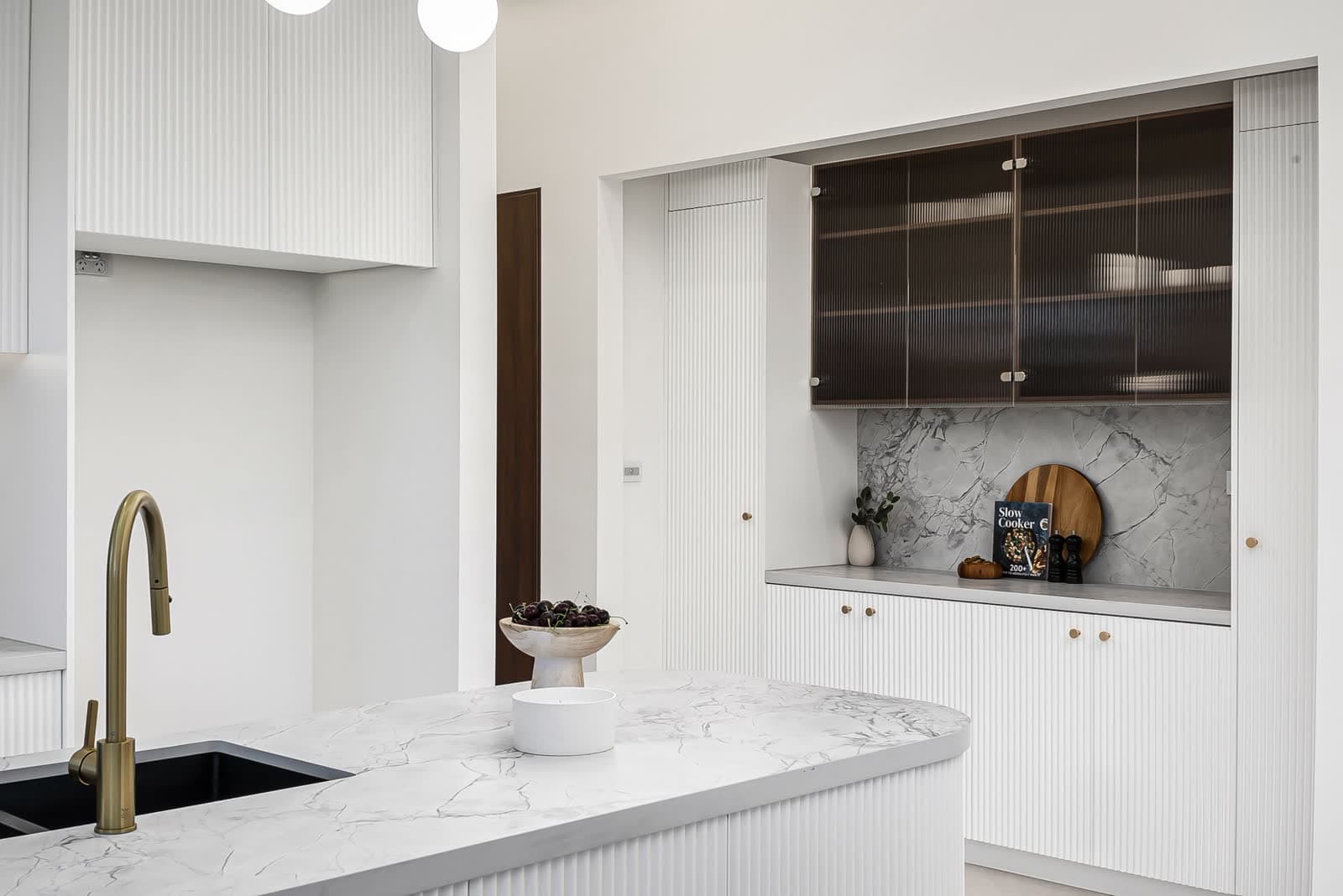
The Spit's R2 Low Density / R3 Medium pockets zoning, 600–1,500m² blocks, and 1900s–1950s heritage housing stock set the design context. For a extension, the practical implications: extensions read best when the addition shares structural logic with the existing — extending the existing roof line, matching ceiling heights at the junction, using the same brick range. Buildana's design phase resolves all of this before you commit to construction pricing.
Why Some The Spit Builds Stall
Builds in The Spit stall for predictable reasons. Lodgement defects (missing BASIX, wrong drawing scale, undeclared overlays). Soil surprises on Class M (sandstone ridges) / H to E (harbour fall) ground when the builder didn't commission a borehole upfront. Variation creep when the contract was light on inclusions. Trade scheduling gaps when the builder is over-committed across too many sites. Mosman Council delays when neighbour objection triggers committee review. Buildana protects against each of these at contract stage — fully documented lodgement pack, geotech in the price, itemised inclusions instead of allowances, and a tight project-manager-to-job ratio that keeps trades moving.
Builder's Take on The Spit
BASIX re-certification on extensions catches people out. Any extension over 50m² triggers BASIX on the combined envelope. Your existing home might be well short of 7-star, so the extension has to pull the whole house closer to compliance. That can mean insulation upgrades in the existing walls and ceiling.
The cost-per-square-metre on an extension is almost always higher than new build — roughly $3,800–$5,500/m² vs $3,200–$4,500/m² for new. Reason: connecting new to old adds engineering, matching adds material cost, working around occupation adds time. Budget accordingly.
The Spit vs Nearby Suburbs
The Spit vs nearby suburbs — key metrics for extending.
| Suburb | Median Price | Typical Lot | Soil Class | Era | Station |
|---|---|---|---|---|---|
| The Spit2088this suburb | $4.5M–$10M | 600–1,500m² | Class M (sandstone ridges) / H to E (harbour fall) | 1900s–1950s heritage | North Sydney (7 km) |
| Beauty Point2088 | $4.5M–$9.0M | 600–1,200m² | Class M (sandstone ridges) / H to E (harbour fall) | 1900s–1950s | North Sydney (6 km) |
| Spit Junction2088 | $3.5M–$5.5M | 350–700m² | Class M (sandstone ridges) / H to E (harbour fall) | 1900s–1960s + apartments | North Sydney (5 km) |
Median price, soil class, and lot size shape build feasibility and final cost. Buildana assesses every site against these and other constraints during the free feasibility stage.
Have a question about your project?
Talk to our team — free site assessment and fixed-price quote.
The Spit Extension — Free Consultation
Free design consultation for The Spit 2088. We'll assess your home, design the extension, and provide a fixed-price quote.
Start Your Project