
Hornsby 2077 · Hornsby Shire
Home Builders in Hornsby: Building on Sandstone and Slope
Under most Hornsby lawns, there's a sheet of sandstone waiting.
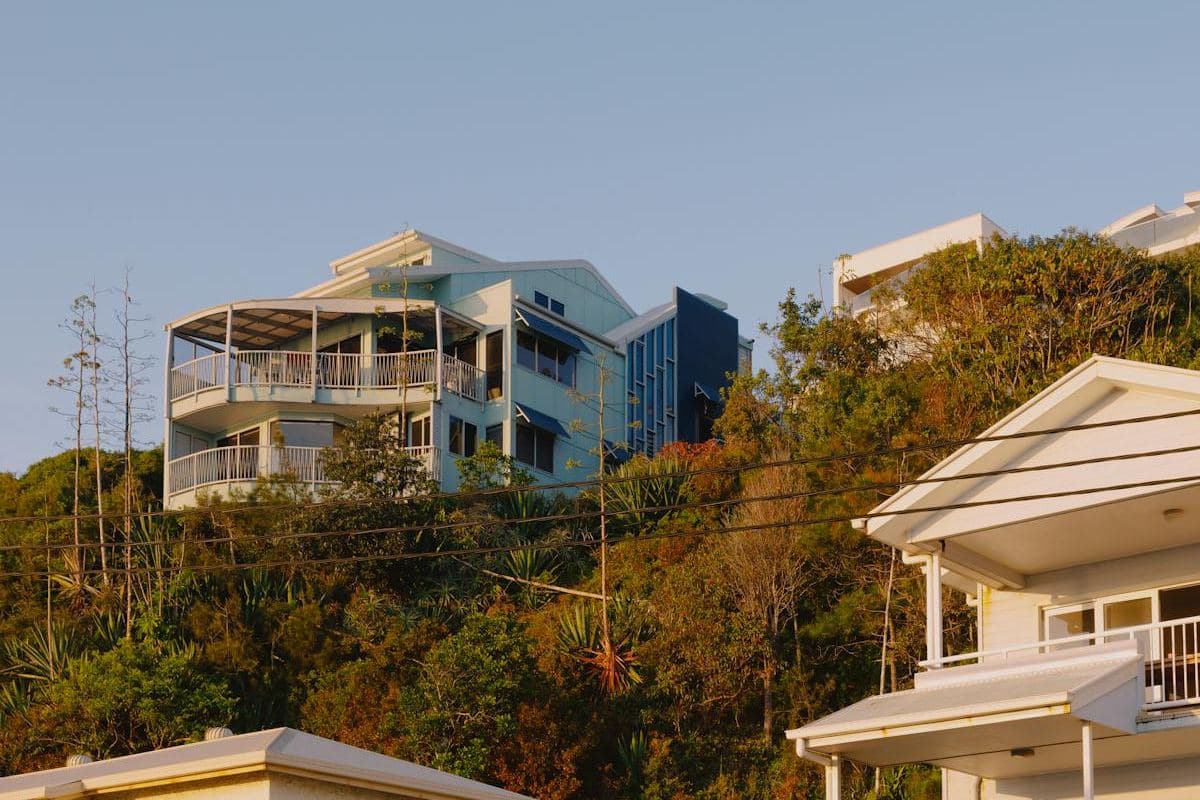
Hornsby sits on Hawkesbury sandstone, often on sloping blocks with mature trees. Rock makes a brilliant foundation and an expensive hole. Slope makes great views and complicated stormwater. A good Hornsby home is designed around both from the first sketch.
Short answer
What makes building a home in Hornsby different?
Sandstone and slope. Rock makes excellent footings, but excavating it for levels, garages or pools means saw-cutting and hammering, priced from a geotechnical report. Stepped or split-level designs reduce digging, stormwater needs a proper plan over rock, and trees and bushfire mapping shape approvals. Hornsby Shire assesses house DAs in 11 to 15 weeks; mid-spec builds cost about $2,200 to $2,650 per m².
Written and reviewed by Oliver Alameri
Licensed builder, NSW Contractor Licence 487805C · Founder, Buildana
Fact-checked
Rock: great to build on, costly to dig into
Sandstone is about the best thing a house can sit on. It doesn't swell or shrink like clay, so footings can be simple pads keyed into rock. That part is cheap.
Digging into it is not. Levelling a site, cutting a garage into a slope or excavating for a pool means saw-cutting and breaking rock with a hydraulic hammer. It's slow, noisy and the spoil costs money to truck away. On some sites the rock line is a metre down, on others it's at the surface.
So we don't guess. Test pits or boreholes tell us where the rock starts before the design is finished, and we shape the house to minimise how much of it we have to remove.
The best Hornsby designs dig as little as possible and let the house follow the ground.
Designing for the slope
A single flat slab on a sloping block means cutting deep at the top, filling at the bottom and building retaining walls on both. Expensive, and it fights the site.
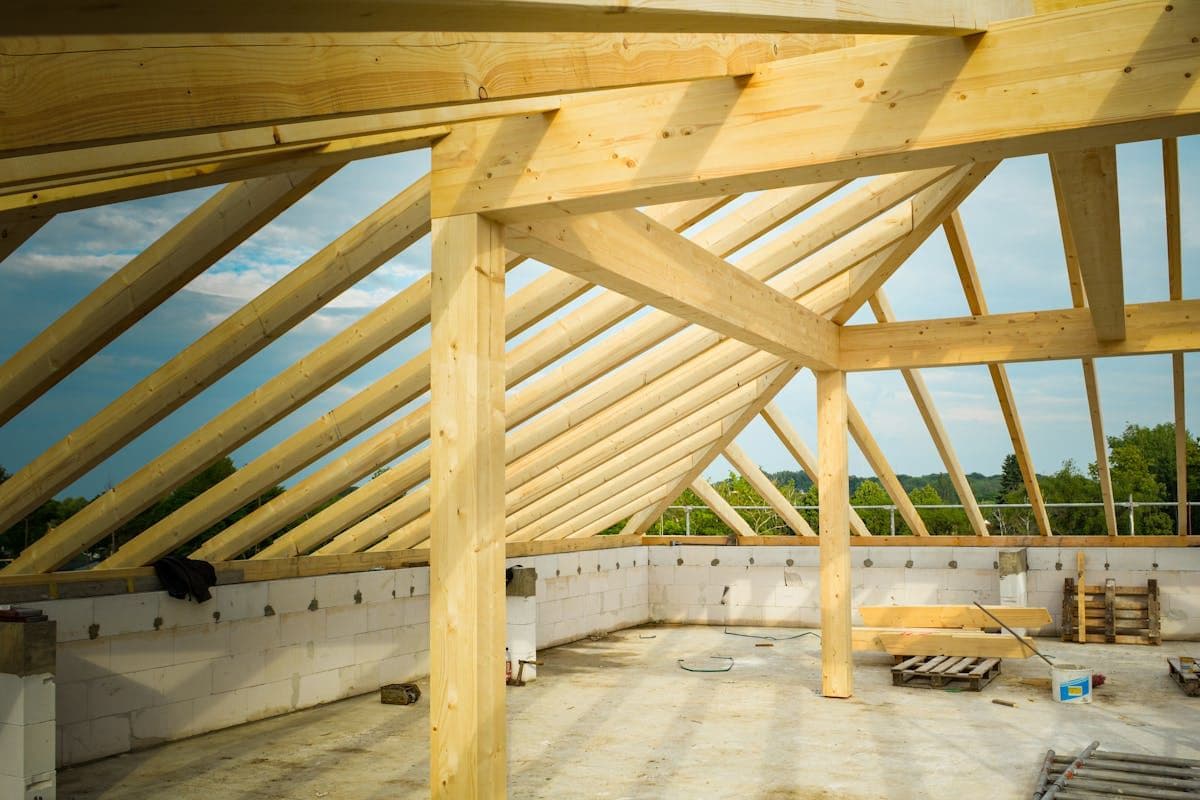
A split-level design steps the floors down the slope instead. Living areas open onto the garden at one level, bedrooms sit half a level up or down. Where the fall is steep, part of the house can sit on a suspended slab or framed floor over piers, with storage or a rumpus underneath.
It also helps with neighbours. A stepped house keeps the roofline lower and reduces overshadowing, which matters when council assesses the design.
- Split levels that follow the natural ground
- Suspended floors over piers on steeper sections
- Garage cut into the slope at street level where it makes sense
- Retaining kept to what's genuinely needed
Let's design with the ground, not against it
Send me your Hornsby address and a few photos showing the slope. I'll look at where the rock, trees and water are likely to be and talk you through a design approach that keeps excavation down.
0476 300 300Water goes somewhere. Make sure it's not your house.
On clay, some stormwater soaks into the ground. On shallow sandstone, it can't. It runs across the rock surface, often straight towards a house cut into the slope.
So every Hornsby design needs subsoil drainage behind retaining walls and along the uphill side of the house, with proper waterproofing on any wall below ground. Stormwater from the roof and paving has to reach the street or an easement, which on a downhill block isn't always simple.
Larger developments may also trigger on-site detention under Hornsby's stormwater rules. A detention tank on a sloping lot has to go somewhere sensible, so that question gets answered at concept stage.
Trees, bushfire and approvals
Hornsby protects its tree canopy firmly. Removing a significant tree needs a separate application, and the design often has to work around established gums. An arborist's report is usually part of the DA.
Much of the Shire is bushfire prone. Closer to the town centre it's less common, but lots backing onto bushland may need a BAL assessment and matching construction.
Council assessment of a house DA in the Shire usually runs 11 to 15 weeks. Build cost at mid-spec, using Rawlinsons for Sydney with no regional loading, is roughly $2,200 to $2,650 a square metre. Rock excavation, retaining and drainage come on top, priced from the site investigation.
Before designing on a Hornsby block
Six investigations that decide how the house sits on the land.
- 01
A detail survey with levels, trees and neighbouring buildings
- 02
Test pits or boreholes to find the depth of the rock
- 03
An arborist report on trees near the building area
- 04
Stormwater route to the street or an easement
- 05
Bushfire mapping and any BAL rating
- 06
Hornsby DCP controls for height, setbacks and landscaping
Building in Hornsby
Why does rock excavation cost so much in Hornsby?
Sandstone has to be saw-cut and broken with hydraulic hammers, which is slow, and the spoil has to be trucked away. Designing the house to follow the slope reduces how much rock needs removing.
Is a split-level house more expensive to build?
It can cost a little more in structure, but on a sloping Hornsby block it often saves money overall by cutting excavation and retaining walls.
Can I remove trees to build in Hornsby?
Significant trees are protected and need a separate application to remove. The design often keeps established trees, supported by an arborist's report.
What are Hornsby Council's requirements for a duplex?
Dual occupancy depends on the zone and on minimum lot area and frontage under the Hornsby controls, which are stricter than many other councils. We check your lot against the current rules before any design work.
Sources and references
Costs are from the Rawlinsons handbook with the local cost index applied; rules and timeframes are checked against the sources below.
Rock, slope and trees. Handled from the first sketch.
A Hornsby home designed around the land costs less to build and lives better. Let's look at your block.