
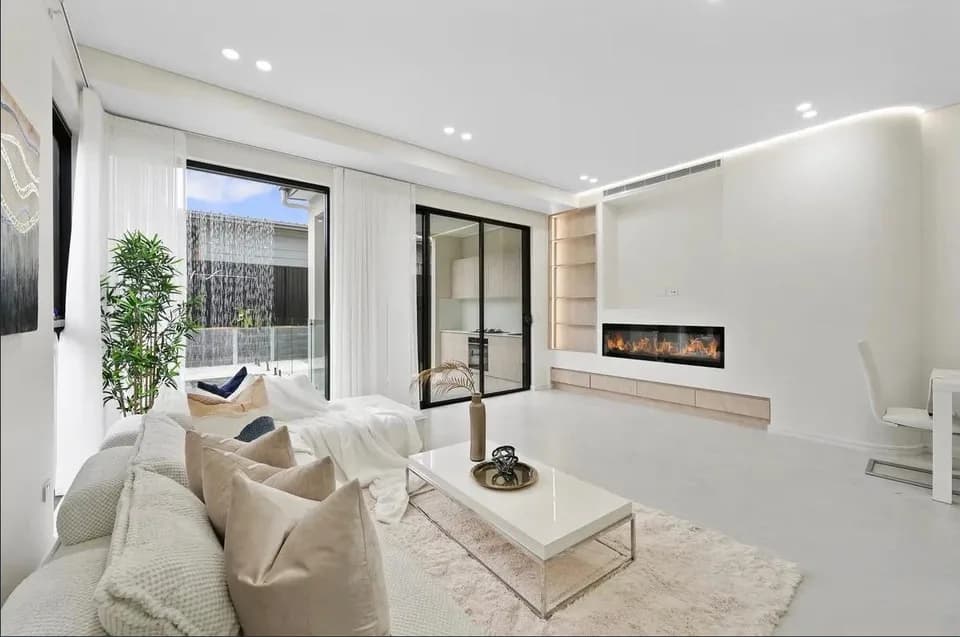
Baulkham Hills 2153 · The Hills Shire
Home Extensions Baulkham Hills
Most Baulkham Hills extensions start with a family that has grown, or one that's moving in.
Some owners need a bigger living area. Others want a parent or an adult child under the same roof, with space of their own. An extension can do either, and so can a granny flat. Which council's rules apply, what the lot can take and what the published rates say decide which one suits your house.
Short answer
How do I plan a home extension in Baulkham Hills?
Start with the planning certificate. It names the council, since most of Baulkham Hills is in The Hills Shire and a small part is in the City of Parramatta, and shows zoning and hazards. Then test the design against the Housing Code: if it complies, a certifier can approve it as a CDC. If not, it's a DA to that council.
Written and reviewed by Oliver Alameri
Licensed builder, NSW Contractor Licence 487805C · Founder, Buildana
Fact-checked
First, which council's rules apply
Baulkham Hills sits across two councils. Most of the suburb is in The Hills Shire. A small part is in the City of Parramatta. If your extension goes to council as a DA, it's assessed against that council's local environmental plan and development control plan, and the two councils' plans are different documents.
The section 10.7 planning certificate settles it. It names the council and the planning instrument for your lot, the zoning, and whether the land is affected by things like bush fire or flooding. Read it, and the title for any restrictions created under section 88B, before anyone draws a line.
If the design can meet the State Housing Code, the council question matters less. The Housing Code covers alterations and additions as well as new homes, on lots in the R1, R2, R3, R4 and RU5 zones of at least 200m² and 6m wide, and it's the same code in either council.
- Which council, from the planning certificate
- Zoning, bush fire and flood status
- Restrictions on the title
- Whether the design can meet the Housing Code
Room for a parent: an extension or a granny flat?
When a parent or an adult child is moving in, the first question is whether they'll live with you or beside you. An extension joins the house. It shares the kitchen and the front door, and it's one household. A granny flat, a secondary dwelling, is a small separate home on the same lot with its own kitchen and entry.
For a granny flat approved as complying development, the Housing SEPP standards need a lot of at least 450m² and cap the granny flat at 60m². An extension has no such cap, but it has to fit the house's setbacks and the yard you want to keep.
Think past the next few years too. A granny flat can be rented separately later on. A bedroom wing and ensuite added to the house becomes more house, which suits a family that's staying put.
Will they live with you, or beside you? That answer picks the building.
Making room for family in Baulkham Hills?
Send the address and who the space is for. Oliver will respond within 4 working hours for a free initial conversation about an extension, a granny flat or both.
0476 300 300Out the back or up a level
Rawlinsons publishes separate rates for each. A brick veneer ground floor addition of 75–125m² is $2,630–$2,840/m², and framed and clad is $2,360–$2,550/m². A smaller brick veneer addition of 50–75m² is $2,620–$2,820/m². Those are Sydney rates, excluding GST, escalated to the ABS September 2026 index.
A full first floor addition is $3,930–$4,230/m² for 75–100m² and $3,790–$4,090/m² for 100–150m², on the same basis. Going up also means an engineer's check of the footings and walls below, and a new stair cut into the ground floor plan.
Wet areas are priced on top. Rawlinsons gives $36,850–$41,800 for a bathroom fitted out in an addition and $30,800–$34,650 for a kitchen, both including GST. An ensuite for a parent's room is one of those, not an extra bedroom's worth of floor area.
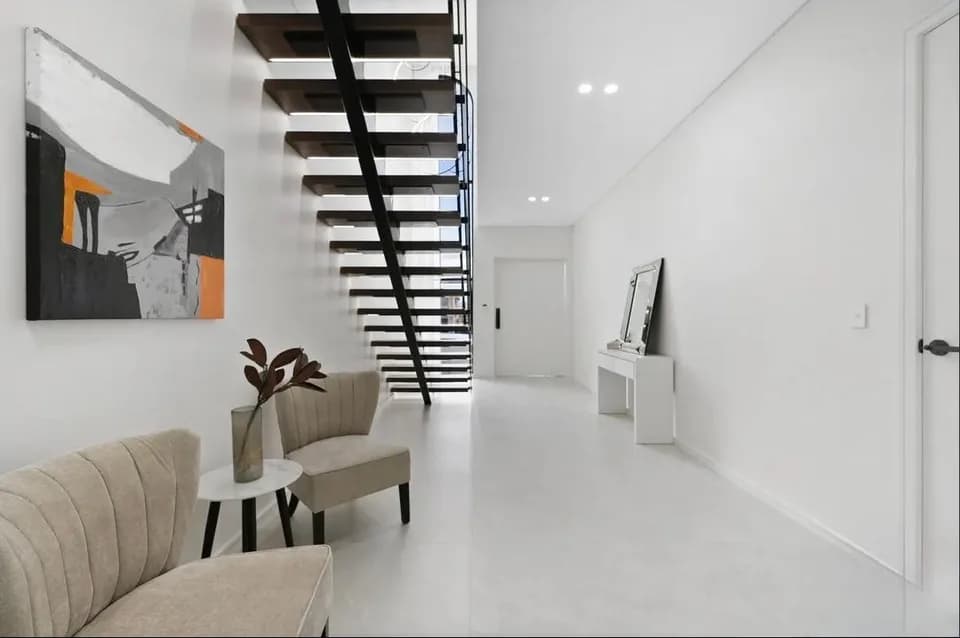
Making the new part look like it was always there
The hardest part of an extension to get right is where it meets the existing house. Bricks need matching, or a deliberate contrast. The new roof has to meet the old one at the same pitch or with a clean junction, and the gutters have to drain both.
Floor levels matter as much. If the new slab sits even a little off the existing floor, you get a step or a ramp at the doorway. A survey of the existing levels before design avoids that, and the engineer sets out how the new footings sit beside the old ones.
What I check first on a Baulkham Hills extension
These shape the design and the approval before we talk about rooms.
- 01
Which council the lot is in, from the planning certificate
- 02
Zoning, bush fire and flood status for the lot
- 03
Restrictions on the title under section 88B
- 04
Whether family needs an extension or a separate granny flat
- 05
Existing floor levels and how the new slab will meet them
- 06
Bricks and roof pitch the addition needs to match
Baulkham Hills extension questions
Do I need a DA for an extension in Baulkham Hills?
Not if the design meets the Housing Code and a certifier approves it as complying development. If it doesn't, it's a development application to whichever council the lot is in: The Hills Shire for most of the suburb, or the City of Parramatta for the small part inside its boundary.
How long does approval take?
A CDC must be decided within 20 days where neighbours are notified (10 days otherwise). For a DA, a DA has a 40-day assessment period, and the real time depends on how complete the application is and whether council asks for more information.
Is an extension or a granny flat better for an elderly parent?
If they'll share meals and want to be close, an extension with a bedroom and ensuite is usually simpler. If they want their own kitchen and door, or you may rent the space later, a granny flat suits better, provided the lot meets the standards.
What paperwork should I expect from a builder?
A written contract for residential building work over $5,000 in value. For work valued at $20,000 or more including GST, home building compensation cover before the builder takes money or starts, which you can check on Service NSW's HBC Check. The deposit is capped at 10%.
Do you build new homes in Baulkham Hills too?
Yes. If an extension stops making sense for the house, a new home designed for the lot may. We build Sydney-wide from our studio in Fairfield.
Sources and references
Costs are from the Rawlinsons handbook with the local cost index applied; rules and timeframes are checked against the sources below.
- The Hills Shire Council
- Rawlinsons Australian Construction Handbook, Rawlhouse Publishing
- Environmental Planning and Assessment Act 1979 (NSW)
- State Environmental Planning Policy (Exempt and Complying Development Codes) 2008
- State Environmental Planning Policy (Housing) 2021
- Building on bush fire prone land, NSW RFS
- Home Building Act 1989 (NSW)
- NSW Planning Portal Spatial Viewer (zoning, FSR and hazard maps)
- City of Parramatta
- Environmental Planning and Assessment Regulation 2021 (NSW)
Start with who the space is for
Send the address and a note on who'll use the new rooms. Oliver will respond within 4 working hours for a free initial conversation.