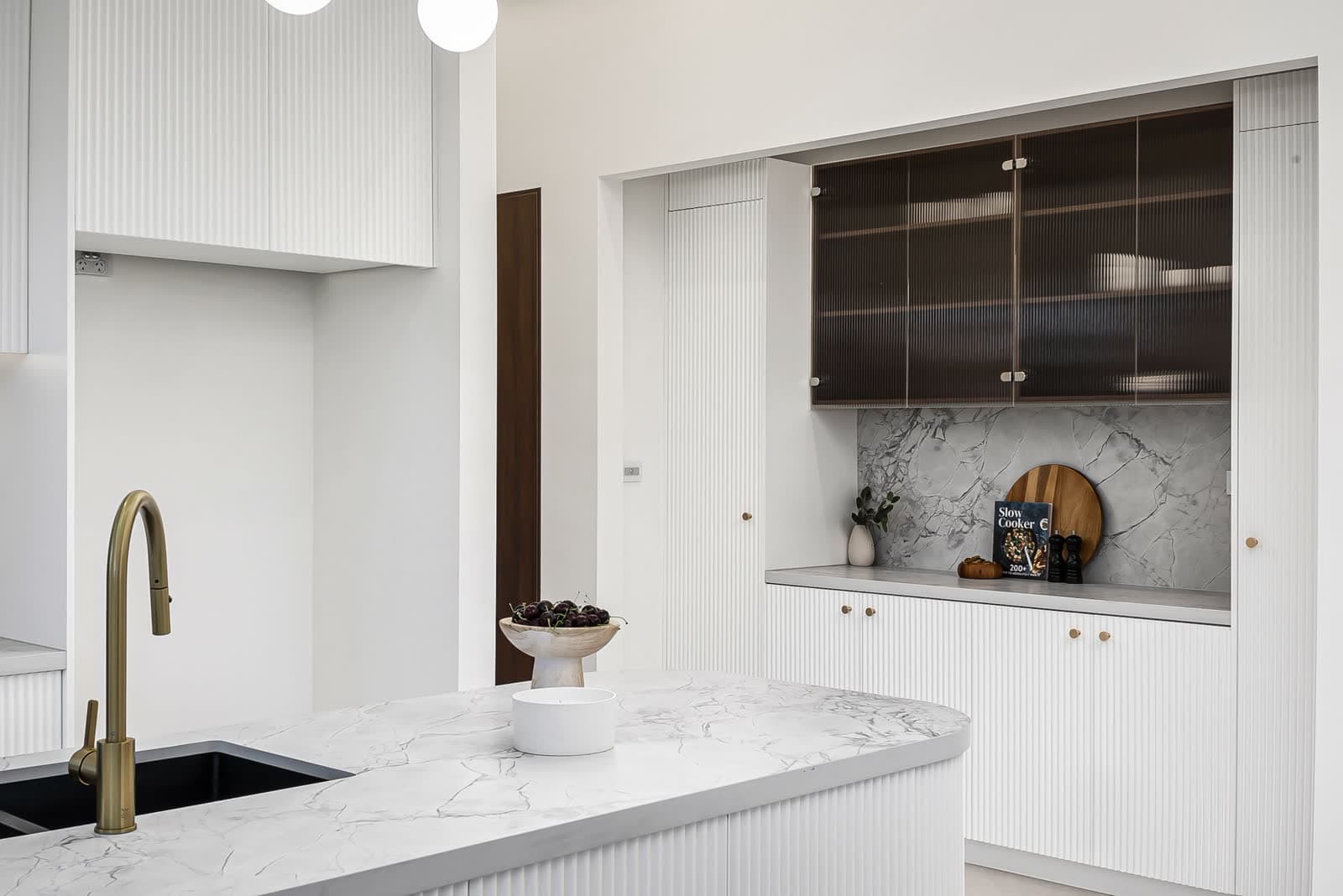
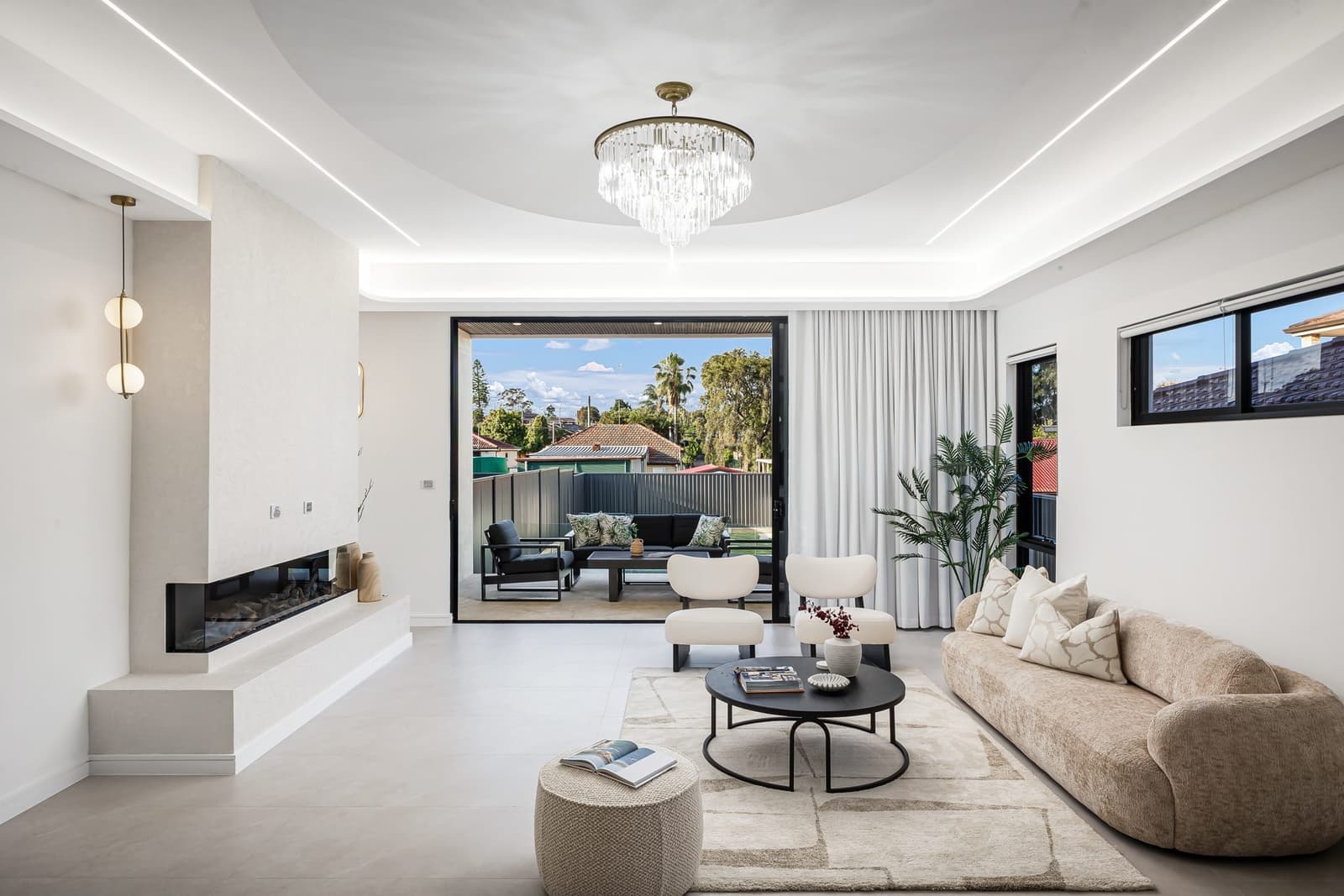
Home Extension Castle Hill — Design, Approval, Structural, Build
Full-service extensions in Castle Hill 2154: structural survey of existing 1970s–2000s home, design, The Hills Shire Council approval, engineering, weatherproofed construction, matched finish to original dwelling.

Quick Answer
A home extension in Castle Hill costs $150,000–$600,000+. Rear extension from $150K, second-storey addition from $300K. Buildana manages design, The Hills Shire Council approvals, and construction under one fixed-price contract.
Castle Hill Home Extensions — Fixed Price
Extension in Castle Hill is mid-tier to premium on 600–1,000m² R2 stock. Castle Hill Showgrounds heritage adjacency. Realistic budget $250K–$650K for 50–110m² addition.
On the ground in Castle Hill (2154), the practical numbers shape every home extension. Class M (Wianamatta Shale, suburban core) / H (Hawkesbury Sandstone, rural west + acreage belt) soil — moderately to highly reactive clay — pushes engineered foundation work into the $24,000–$42,000 bracket on most 600–1,000m² blocks. R2 Low / RU2 Rural Landscape (acreage belt) / R1/R3 (Sydney Metro Northwest precincts) zoning under The Hills Shire Council sets the building envelope, with R3 Medium Density pockets that open up dual occupancy options on qualifying lots. Median sale price across Castle Hill sits at $1.9M–$3.0M, which frames the build-versus-buy decision from the start. Castle Hill (Sydney Metro Northwest, in suburb) station services the suburb, and that proximity affects everything from rental demand to construction site access.
Buildana manages the complete home extension process in Castle Hill — from design consultation and structural engineering through to DA or CDC approval, and fixed-price construction to handover. Extend your home without the stress.
Read our Home Extension Cost Guide 2026 or explore extension approval pathways in NSW.
- Home extensions in Castle Hill from $150K
- The Hills Shire Council DA and CDC approvals managed
- Ground floor, rear and second-storey additions
- Class M (Wianamatta Shale, suburban core) / H (Hawkesbury Sandstone, rural west + acreage belt) soil — structural engineering included
- 1970s–2000s-era homes assessed for extension suitability
- Connect new to existing — clean, matched finish
- 6-year structural warranty
- Free design consultation — near Castle Hill (Sydney Metro Northwest, in suburb) station
Reviewed by Oliver Alameri
Licensed Builder (NSW 487805C) · Master of Property Development · PhD Student · Building across Western Sydney since 2010
Why Extend Your Home in Castle Hill?
Castle Hill is the Hills commercial and residential heart — 1970s–2000s brick on 600–1,000m² R2 lots; R3/R4 around Castle Hill Metro station and Castle Towers. Wianamatta Shale soil. Castle Hill Showgrounds heritage. Strong duplex and granny flat market. Top schools.
Castle Hill's rural-residential character and 600–1,000m² blocks set it apart from standard suburban development. R2 Low / RU2 Rural Landscape (acreage belt) / R1/R3 (Sydney Metro Northwest precincts) zoning means different controls apply — larger setbacks, on-site services, and site-specific engineering. Direct rail access from Castle Hill (Sydney Metro Northwest, in suburb) station adds genuine value to Castle Hill property. 1970s–2000s-era homes in Castle Hill often have good structural foundations worth building on. Extensions add living space at a fraction of the full rebuild cost. Class M (Wianamatta Shale, suburban core) / H (Hawkesbury Sandstone, rural west + acreage belt) soil (moderately to highly reactive) is standard for Castle Hill — Buildana includes engineered slab design in every quote.
Extension in The Hills is mid-tier to premium scope across the established suburban stock — 1970s–1990s brick homes on 600–1,200m² R2 lots in Baulkham Hills, Castle Hill, Beaumont Hills, Winston Hills, North Rocks, West Pennant Hills, Glenhaven, parts of Kellyville and Bella Vista. Second-storey additions, rear extensions, granny-flat-scale studios, garage conversions and acreage homestead extensions all common scope. Bushfire-prone overlays on rural west drive specs on extension scope above 50% of original floor area (BAL-29 minimum on most acreage). Tree Preservation Order strict — AS4970 root-zone protection plans routine. Acreage extensions on Kenthurst, Annangrove, Glenhaven, Middle Dural, Maraylya, South Maroota run premium homestead-grade work with sandstone retaining and bushfire spec compliance. Apartment renovations on Norwest, Bella Vista, Castle Hill, Kellyville and Rouse Hill Sydney Metro Northwest precinct R4 high-density stock — restricted by strata bylaws and common-property approval. Castle Hill Showgrounds, Bella Vista Farm and parts of Baulkham Hills heritage cottages carry heritage-grade work. Realistic budget $200K–$500K for thoughtful 50–110m² addition on suburban core; $400K–$900K on Bella Vista/Glenhaven/West Pennant Hills premium suburban; $600K–$1.5M on premium acreage homestead at Kenthurst/Annangrove/Middle Dural; $130K–$400K apartment-scale.
Planning Controls — The Hills Shire Council
The Hills LEP 2019 & The Hills DCP. The Hills is the largest LGA in Greater Sydney by area — spanning suburban core, North-West Growth Centre release land, and the rural acreage belt to the north. R2 Low Density covers established suburban streets: FSR 0.5–0.55:1, building height 9m, front setback 6–9m, landscaped area 45–60%. R3 Medium Density along station precincts (Castle Hill, Bella Vista, Norwest, Kellyville, Rouse Hill on the Sydney Metro Northwest line), Old Northern Road and town centres permits FSR up to 0.9:1. R4 High Density and B4 Mixed Use concentrated on Norwest Business Park, Castle Towers/Castle Hill Metro precinct, Bella Vista station precinct, Rouse Hill Town Centre and Kellyville station precinct. Hills DCP enforces 600m² R2 dual-occupancy minimum (700m² preferred for premium duplex outcomes). RU2 Rural Landscape covers the acreage belt — Annangrove, Kenthurst, Maraylya, Middle Dural, South Maroota, Cattai, parts of Glenhaven and Nelson — restricting subdivision to 2ha+ minimum and limiting secondary dwellings. Heritage Conservation Areas in pockets covering Castle Hill Showgrounds, Bella Vista Farm, Rouse Hill House and Farm (state-significant), parts of Baulkham Hills heritage cottages and Old Castle Hill Road. Tree Preservation Order LGA-wide and strict — significant remnant bushland on Castle Hill, West Pennant Hills, Glenhaven and the rural west. Wianamatta Shale soil predominant on the suburban core (Baulkham Hills, Castle Hill, Bella Vista, Kellyville, Rouse Hill, Beaumont Hills, Winston Hills, North Rocks, Box Hill, Kellyville Ridge, North Kellyville); Hawkesbury Sandstone soil on the rural west and acreage belt (Annangrove, Kenthurst, Glenhaven, Maraylya, Middle Dural, South Maroota, Cattai, parts of West Pennant Hills) — sandstone rock excavation $25K–$70K on basement/footing scopes. Bushfire-prone land overlays are LGA-defining on the rural west — BAL ratings BAL-12.5 to BAL-FZ on Annangrove, Kenthurst, Glenhaven (parts), Maraylya, Middle Dural, South Maroota, Cattai, parts of Box Hill and Nelson — drive specs (BAL-29 minimum on most acreage; non-combustible cladding, ember-screened openings, sprinklered eaves on BAL-FZ). Asset Protection Zone (APZ) requirements 10–40m+ reshape siting on bushfire-prone parcels. Sydney Water sewer connection extends across the suburban core but the rural acreage belt runs on-site sewer treatment (AWTS) under Council/NSW Health protocols. Riparian setbacks 20–60m on Cattai Creek, Cattai Creek tributaries and Hawkesbury River foreshore (South Maroota, Cattai). The Sydney Metro Northwest line (Tallawong–Chatswood) is the LGA-defining infrastructure event of the past decade, anchoring the R3/R4 redevelopment corridor through Bella Vista, Norwest, Castle Hill, Kellyville and Rouse Hill stations. The North-West Growth Centre at Box Hill, Nelson and the eastern fringe of Rouse Hill is the active master-planned new-release frontier under Department of Planning controls. Norwest Business Park anchors LGA employment and drives R3/R4 apartment demand. Hills T-Way bus corridor and M2 Motorway define the southern transport spine.
Home extension builder in Castle Hill — key facts
- Suburb
- Castle Hill, NSW 2154
- Council / LGA
- The Hills Shire Council (The Hills)
- Primary zoning
- R2 Low / RU2 Rural Landscape (acreage belt) / R1/R3 (Sydney Metro Northwest precincts)
- Typical lot size
- 600–1,000m²
- Soil class
- Class M (Wianamatta Shale, suburban core) / H (Hawkesbury Sandstone, rural west + acreage belt)
- Median house price
- $1.9M–$3.0M
- Home era
- 1970s–2000s
- Typical price range
- $150,000 – $600,000+
- Typical timeline
- 6–12 months design to handover
- Approval pathway
- CDC for most rear extensions, DA for second-storey
Building in Castle Hill — Local Context
Site & Ground Conditions in Castle Hill
Castle Hill sits on Class M (Wianamatta Shale, suburban core) / H (Hawkesbury Sandstone, rural west + acreage belt) soil — moderately to highly reactive clay. For a home extension, that rules out the cheapest off-the-shelf slab designs straight away. and pushes engineered footings into the $24,000–$42,000 range on most 600–1,000m² blocks here. Geotechnical testing isn't optional — every Buildana extension in Castle Hill starts with a borehole report so the slab and footings are sized to your actual block, not a generic spec. Skipping that step is how you end up with cracked cornices and sticking doors three years in. Drainage design matters too — overland flow paths on Castle Hill's topography can collect water against rear setbacks if the contour survey is sloppy.
Approval Timeline for Castle Hill
Realistic timeline for a extension in Castle Hill: 8–14 weeks for DA through The Hills Shire Council. Add 2–4 weeks before lodgement for documentation, BASIX certificate, geotech report, and survey if you don't already have one. Construction Certificate is issued separately before works commence.
Cost vs Value in Castle Hill
Median sale price in Castle Hill is $1.9M–$3.0M. For a extension, the decision tree runs through three numbers: build cost, expected post-completion value, and how long you plan to hold. Ground-floor extensions of 30–50m² typically return 1.1–1.3× their cost at sale in suburbs around $1.9M–$3.0M. Second-storey adds tend to outperform — 1.3–1.6× — because they unlock larger family layouts on standard blocks. We map this in feasibility before you commit.
Castle Hill Housing Stock & What That Means
Most homes in Castle Hill were built 1970s–2000s. Asbestos is possible in eaves, fences, and external sheeting on some homes from this era. Survey before demolition is standard, and Buildana includes licensed removal where required. Existing structures from 1970s–2000s usually need wiring, plumbing, and insulation upgrades to meet NCC 2025 — worth costing that into the extension scope upfront, not as a variation later.
The Hills Shire Council Processing & Castle Hill Activity
The Hills Shire Council processes thousands of residential applications a year across the The Hills LGA, and Castle Hill (2154) sits in the active end of that workload. For a home extension, the realistic clock from lodgement to DA determination is 8-14 weeks. The applications that move to the front of the queue are the ones where every required document is correctly named, drawn to scale, and matched against the SEPP or LEP clause it's claiming compliance with. Buildana lodges every project at that standard — not because it's required, but because it's how you avoid sitting in the RFI loop for an extra month.
Builder's Take on Castle Hill
Matching brick on a Castle Hill extension: 1970s–2000s brick is often discontinued. We specify a close-match or deliberately contrast with render or cladding so the extension reads as intentional, not as a failed match. Done well, an intentional contrast looks better than a forced match.
Extension or move? In Castle Hill, the maths usually favours extension once you factor in stamp duty ($40K–$60K), agent fees ($25K–$40K), and moving costs. An extension of $200K–$350K often delivers the space without the 12-week disruption of moving.
Castle Hill vs Nearby Suburbs
Castle Hill vs nearby suburbs — key metrics for extending.
| Suburb | Median Price | Typical Lot | Soil Class | Era | Station |
|---|---|---|---|---|---|
| Castle Hill2154this suburb | $1.9M–$3.0M | 600–1,000m² | Class M (Wianamatta Shale, suburban core) / H (Hawkesbury Sandstone, rural west + acreage belt) | 1970s–2000s | Castle Hill (Sydney Metro Northwest, in suburb) |
| Baulkham Hills2153 | $1.6M–$2.4M | 600–900m² | Class M (Wianamatta Shale, suburban core) / H (Hawkesbury Sandstone, rural west + acreage belt) | 1970s–1990s | Bus to Castle Hill Metro (3 km) / T-Way |
| Bella Vista2153 | $2.5M–$5M+ | 700–1,200m² | Class M (Wianamatta Shale, suburban core) / H (Hawkesbury Sandstone, rural west + acreage belt) | 1990s–2010s+ | Bella Vista (Sydney Metro Northwest, in suburb) |
| Glenhaven2156 | $2.5M–$5M+ | 1,500–4,000m² | Class M (Wianamatta Shale, suburban core) / H (Hawkesbury Sandstone, rural west + acreage belt) | 1970s–2000s | Bus to Castle Hill Metro (4 km) |
Median price, soil class, and lot size shape build feasibility and final cost. Buildana assesses every site against these and other constraints during the free feasibility stage.
Have a question about your project?
Talk to our team — free site assessment and fixed-price quote.
Cost Guide
| Item | Estimated Range |
|---|---|
| Simple rear extension (single wall removal, no roof change) | $95,000 – $210,000 |
| Moderate extension (multiple openings, roof extended) | $210,000 – $400,000 |
| Complex extension (structural steel portals, re-roofing) | $400,000 – $630,000 |
| Second-storey tie-in (existing house re-engineered) | $370,000 – $680,000 |
Prices are indicative for Western Sydney (2025). Actual costs depend on site, specifications, and approvals.
How It Works
From First Call to Final Key
The first job on an extension is finding out what you're extending onto. Castle Hill homes from the 1970s–2000s were built to different standards — we open walls, check footings, verify load paths. The existing house has to carry the new work.
⏱Design follows the existing roof. A bad extension looks like a bolt-on; a good one reads as original. Matched brickwork or contrasting render (whichever the architecture calls for), tied-in roofline, continuous flooring where it should be continuous.
⏱Construction happens while you live in the house. That means weatherproofing every night, staging the works so kitchens and bathrooms don't disappear on the same week, and keeping the site clean of debris that doesn't belong in a family home.
⏱Finish is seamless. Paint match, floor match, roofline match, brick match where possible. The only way to tell the extension is new is the date on the plans.
⏱Our Team
Oliver Alameri
Founder / Director / Builder · MPropDev · PhD Student
Ahmad Alameri
Accounts Manager
Claire Wendell
Project Manager
Estimate Your Build Cost
Use our free calculator to get an instant cost estimate for your project
Ready to take the next step?
Free consultation — no obligation, no pressure.
Frequently Asked Questions
“Buildana built our granny flat in just 12 weeks. Fast approvals, great communication, and a beautiful final product. Highly recommend.”
Fatima Al-Rashid
Liverpool, NSW
We Build Across Sydney
Buildana builds across greater Sydney — with deep roots in Western Sydney's Fairfield, Liverpool, Cumberland, Canterbury-Bankstown, and Blacktown LGAs.
Last updated: 1 April 2026
Explore Related Topics
Castle Hill Extension — Free Consultation
Free design consultation for Castle Hill 2154. We'll assess your home, design the extension, and provide a fixed-price quote.
Start Your Project