
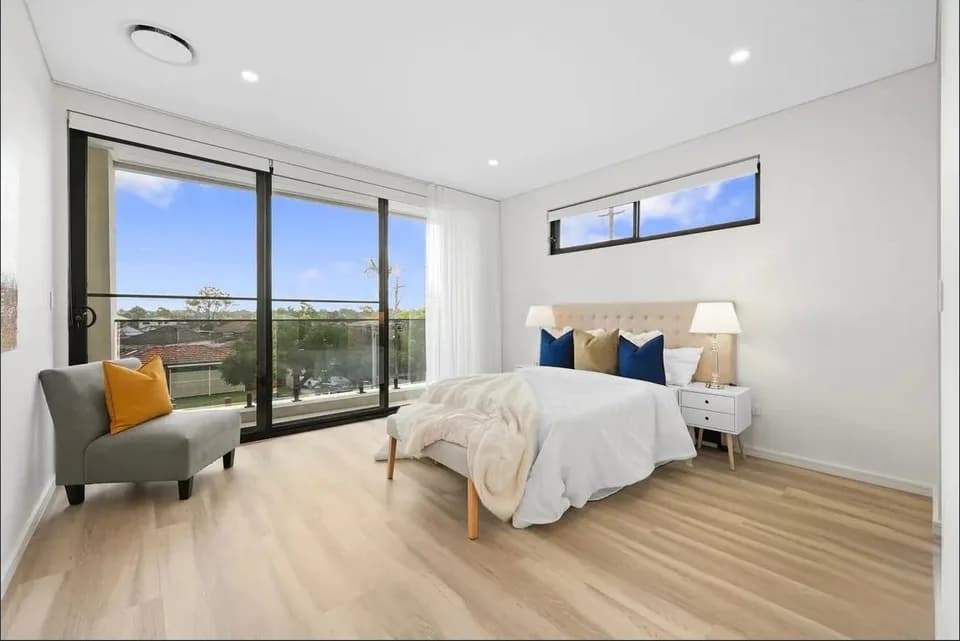
Bexley North 2207 · Bayside Council
Home Additions Builder Bexley North
When a Bexley North yard can't give up any more lawn, the extra rooms go up. Bayside's plan decides how.
Going up is where most Bexley North addition questions end up: a first floor over the house, or rooms tucked into the roof with dormers. The Bayside Development Control Plan 2022 has specific rules for both, from how far back the upper level sits to which windows need frosted glass. Here they are, in the order I check them.
Short answer
Can I add a second storey to my house in Bexley North?
Usually, within limits. Bexley North is in Bayside Council, and the Bayside DCP 2022 allows two storeys for a dwelling house but keeps the upper level towards the front of the lot, sets the side and rear setbacks, and controls windows, balconies and overshadowing. A design that meets the State's Housing Code can be approved by a certifier instead of a council DA.
Written and reviewed by Oliver Alameri
Licensed builder, NSW Contractor Licence 487805C · Founder, Buildana
Fact-checked
Which plan an addition answers to
Bexley North sits in Bayside Council's Ward 4, with Bexley, Kogarah, Carlton and Kingsgrove. The Bayside Development Control Plan 2022 was adopted on 22 March 2023 and took effect on 10 April 2023, replacing the Rockdale DCP 2011 for this side of the council area. It's read with the Bayside Local Environmental Plan 2021, which sets the zone, the height in metres and the floor space ratio.
Section 5.2.1 holds the controls for low-density housing: dwelling houses, dual occupancies and semi-detached dwellings. Alterations and additions are assessed against the same built form, setback, sunlight and privacy controls as a new house, and the DCP asks that the materials of an addition be compatible with the existing building or the streetscape's desired character.
That last point matters on a face brick house. The DCP says painting, rendering or bagging original unpainted masonry that contributes positively to the streetscape isn't permitted. If the plan was to render the whole house to hide the join between old and new, it needs a different answer.
Match the new to the old. Rendering over good original brick to hide the join isn't on the table.
A first floor: where it can sit
The DCP allows a dwelling house up to two storeys, with the height in metres set by clause 4.3 of the LEP. Two- and three-storey parts are only permitted towards the front of an allotment, and only for part of the site's depth measured from the front boundary. In other words, the upper level stays over the front and middle of the house, and the back of the lot stays low.
The setbacks are set out plainly. The rear setback is 5 metres. The side setback is 0.9 metres at ground floor and 1.5 metres for the first storey and above. To the street, it's the average of the dwellings on the adjoining lots, or 6 metres otherwise, with an articulation zone allowing a portico, verandah or bay window to come forward where the house is set back at least 3 metres.
Roofs follow the street. Where the streetscape's roofs are mostly pitched, the DCP asks for a pitch between 22.5 and 40 degrees, and every pitched roof needs eaves of at least 450mm, gutters excluded. Flat or skillion roofs can sit at the rear, but not on a corner where they'd read from the street.
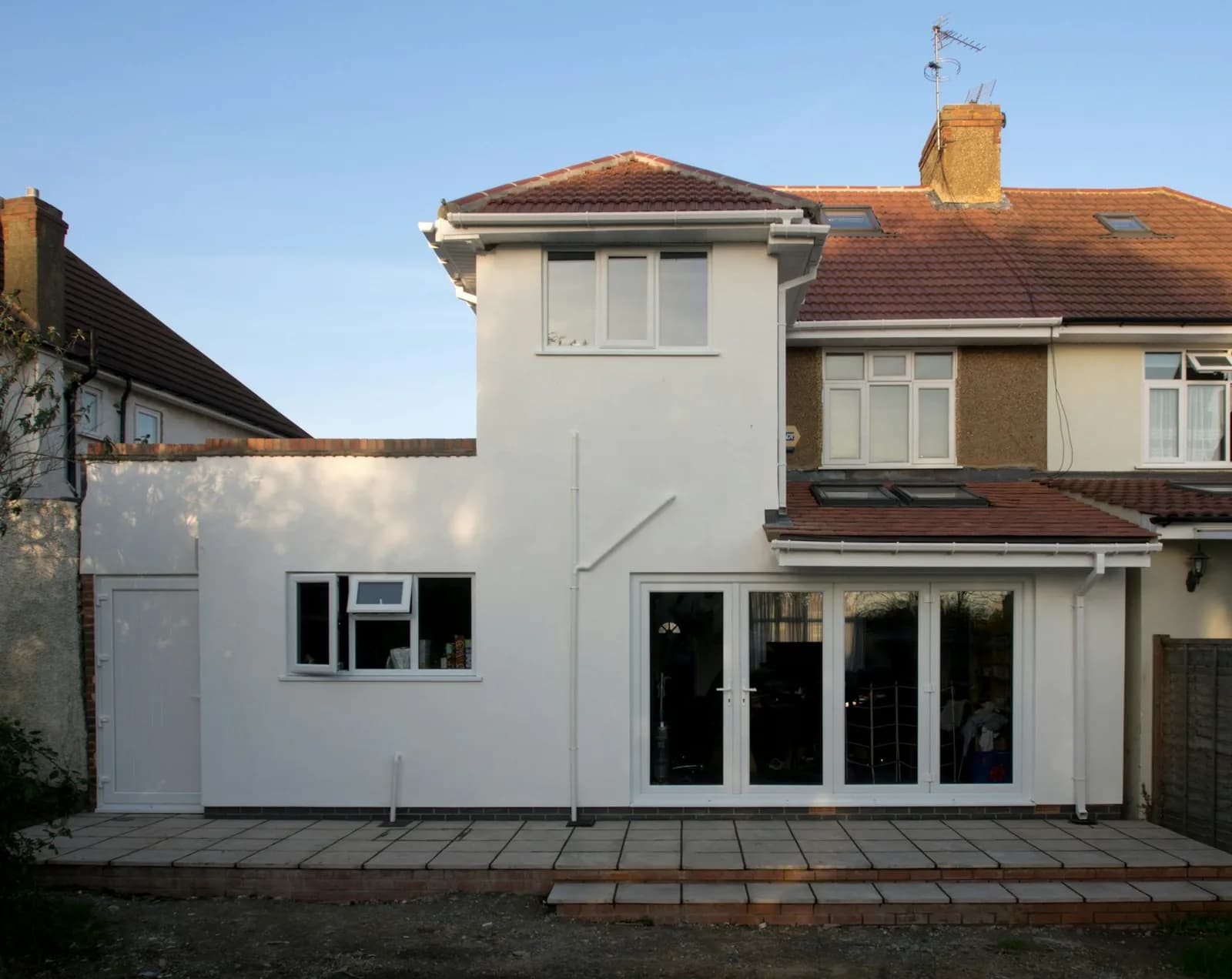
Thinking of going up in Bexley North?
Send the address and a photo of the front and the roof. Oliver will respond within 4 working hours for a free initial conversation about whether a first floor or an attic suits the house.
0476 300 300Rooms in the roof
If a full level is more than you need, the DCP allows an attic to be used as a habitable room. The conditions are specific: it has to be part of the dwelling immediately below, incapable of being used as a separate dwelling, contained wholly within the roof space above the ceiling of the storey below except for minor elements such as dormers, and lit by small dormer windows only.
Access has to be by internal stairs, not external ones, and the form and placement of attic windows must respect the neighbours' privacy. A stair takes floor area from the level below, so the first design question is where it lands, not how big the attic is.
Whether an attic works depends on the roof you have. A steep hipped roof can hold a bedroom and a bathroom. A low-pitched one may only hold storage unless it's rebuilt, at which point the pitch, eaves and height controls above apply to the new roof. I look at the framing from inside the roof space before suggesting either.
Windows, balconies and the neighbours' sun
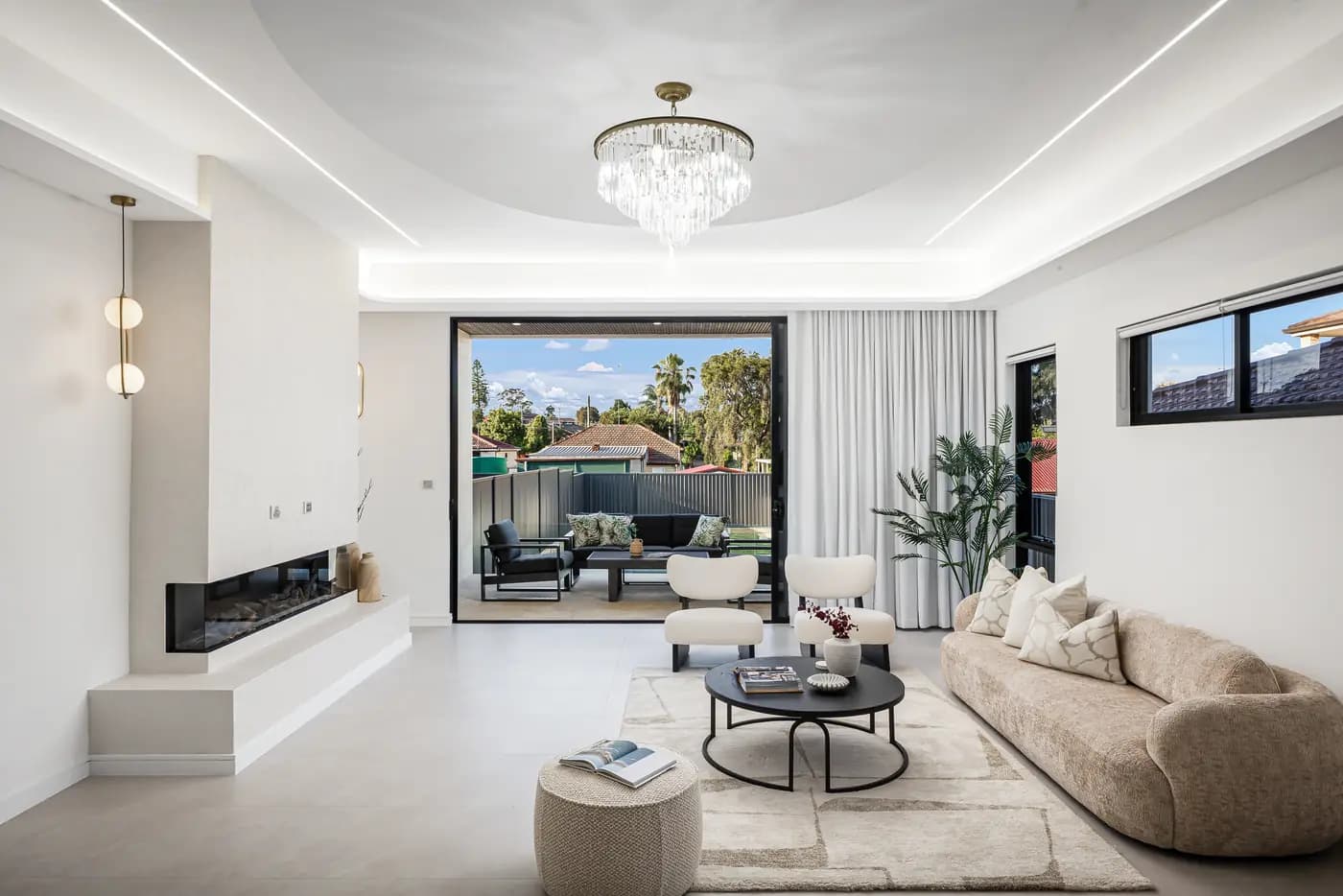
Upstairs windows to habitable rooms that face a side or rear boundary next to a house need one of four treatments under the DCP: offset from the neighbour's window, a sill 1.5 metres above the floor, opaque glazing below 1.5 metres, or fixed external screens. Balconies and terraces are to be placed to minimise overlooking, and a first floor rear balcony is only permitted next to a bedroom and must sit wholly above the ground floor's footprint.
For sunlight, the DCP asks that living areas and at least half the primary private open space of the house and its neighbours get 2 hours of direct sun between 9am and 3pm in mid-winter. Council can approve a design that falls short, but only once the applicant has addressed the Land and Environment Court's sunlight planning principle. Where the house is one half of a semi, the DCP says a first floor may need to step back so the other half keeps its sun.
Neighbours' solar panels count as well. The DCP asks that the loss of sun to them be considered. Shadow diagrams drawn from a survey answer most of these questions before the plans are lodged.
- Upstairs side and rear windows: offset, high sill, opaque glass or fixed screens
- First floor rear balcony only off a bedroom, within the ground floor footprint
- Two hours of mid-winter sun for living areas, yours and theirs
- Neighbouring solar panels considered in the shadow study
Map checks, approval and the rates
Three maps sit behind a Bexley North address. The planning certificate shows heritage: the DCP's heritage conservation areas include Bardwell Valley and the Ocean View Estate in Bexley, each with its own controls, and an addition in or near one is read against them. Bayside's aircraft noise controls apply to land inside the 20 ANEF contour for Sydney Airport, where a noise assessment shows the new rooms can meet the indoor sound levels in AS 2021, and the airport's prescribed airspace applies across the whole council area. Whether your lot is affected by any of them is a question for the certificate and the maps, not a guess.
If the design meets every standard in the State's Housing Code and the lot isn't excluded, a certifier can issue a complying development certificate, and a CDC must be decided within 20 days where neighbours are notified (10 days otherwise). Otherwise it's a development application to Bayside Council, and a DA has a 40-day assessment period.
Rawlinsons gives $3,930–$4,230/m² for a full first floor addition of 75–100m² and $3,790–$4,090/m² for 100–150m², Sydney, excluding GST, escalated to the ABS September 2026 index. If part of the space goes at ground level, a brick veneer addition of 50–75m² is $2,620–$2,820/m² and a framed one of 75–125m² is $2,360–$2,550/m². A new bathroom fitted out in the addition is $37k–$42k including GST. Strengthening the walls and footings below a new level is priced after an engineer has looked at them.
What I check first on a Bexley North addition
These decide whether the extra rooms go up, into the roof or out the back.
- 01
Heritage, ANEF and other mapping on the planning certificate
- 02
How far back the upper level can reach on your lot's depth
- 03
Side and rear setbacks against the survey
- 04
The roof pitch and framing, if an attic is the idea
- 05
Upstairs windows that would face a neighbour
- 06
Whether the walls and footings can carry a new level
Bexley North addition questions
Is a first floor or an attic conversion better for my house?
It depends on the roof and the rooms you need. An attic suits a steep roof and one or two rooms, with small dormers and an internal stair. A first floor gives more space but brings the setback, privacy and sunlight controls into play, and needs the house below checked by an engineer.
Can I have a balcony off the new upstairs living room?
Not at the rear. The Bayside DCP only permits a first floor rear balcony next to a bedroom, contained above the ground floor's footprint. A balcony elsewhere is placed and screened to limit overlooking.
Does Bexley North station change anything for an addition?
Not for the addition itself. Bexley North station is a listed Low and Mid-Rise Housing area, which changes what neighbours within 800m walk of it can build, such as a dual occupancy. Your addition is still assessed under the Bayside DCP or the Housing Code.
Can we stay in the house during a second storey addition?
Sometimes, for parts of the job. When the roof comes off and the new floor goes on, the house below is protected from the weather, but it's usually easier to be elsewhere for that stage. The program is set out in the contract once the design is settled.
Who does the work?
Oliver Alameri, the licensed builder behind Buildana, NSW contractor licence 487805C, with more than 15 years' building experience. We work across Sydney from a studio in Fairfield.
Sources and references
Costs are from the Rawlinsons handbook with the local cost index applied; rules and timeframes are checked against the sources below.
- Bayside Council
- Rawlinsons Australian Construction Handbook, Rawlhouse Publishing
- Environmental Planning and Assessment Act 1979 (NSW)
- State Environmental Planning Policy (Exempt and Complying Development Codes) 2008
- National Construction Code, ABCB
- Search heritage databases, NSW Environment and Heritage
- NSW Planning Portal Spatial Viewer (zoning, FSR and hazard maps)
- Australia Post postcode search
Start with the roof you already have
Tell me what rooms you need and send a few photos. Oliver will respond within 4 working hours for a free initial conversation, and the price follows the design.