
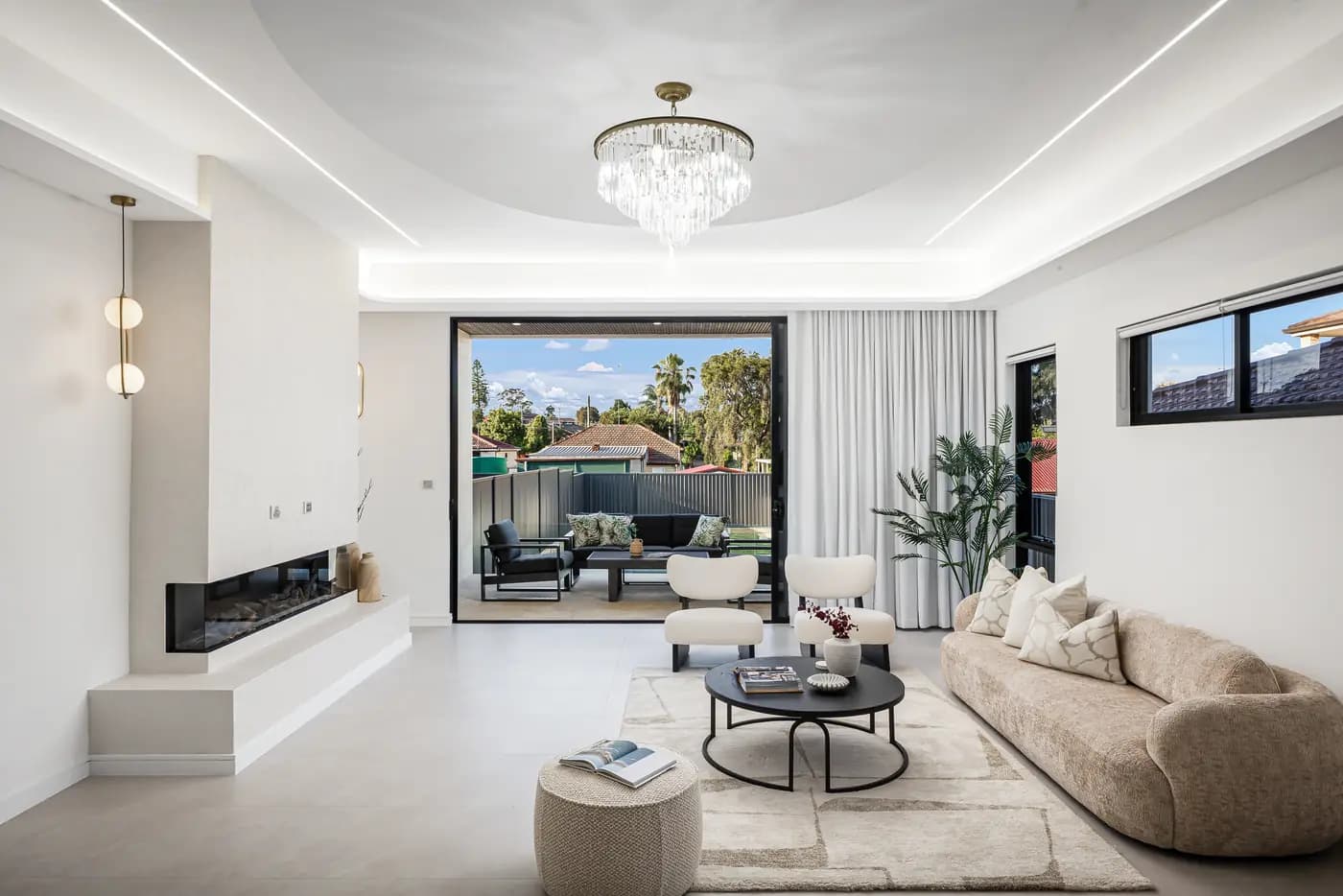
Burwood Heights 2136 · Burwood Council
Home Additions Builder Burwood Heights
A first floor in Burwood Heights starts 9 metres back from the front of the house.
Burwood Council's development control plan is specific about additions. It says where an upper level can sit, how tall its rooms can be, how long its southern wall can run and what a balcony is allowed to open off. Read those first and the design almost draws itself. Ignore them and the DA comes back with questions.
Short answer
How big can a home addition be in Burwood Heights?
Burwood Heights is in Burwood Council's area, so the Burwood LEP 2012 and the Burwood DCP apply. Under the DCP, a second storey sits at least 9 metres behind the front building line, 1.5 metres from the sides and 6 metres from the rear, with the whole house under 8.5 metres. A design that meets the State's Housing Code can take the complying development path instead.
Written and reviewed by Oliver Alameri
Licensed builder, NSW Contractor Licence 487805C · Founder, Buildana
Fact-checked
Which Burwood controls an addition answers to
Burwood Council lists Burwood Heights among the suburbs of its area, so the Burwood Local Environmental Plan 2012 sets the zone, the height and floor space ratio maps and the heritage schedule. The Burwood Development Control Plan adds the design controls. The version in force is Amendment No. 14, adopted on 17 February 2026 and effective from 5 March 2026.
Section 4.5 of that plan covers development applications for dwelling houses, attached and semi-detached dwellings and the structures that go with them, demolition included, and its controls speak to alterations as well as new houses. Part of it, the Building Appearance and Streetscape provisions, applies only to the streets and sites shown on a map in Section 8.2 of the DCP. Whether your street is on that map changes how much the front of the house can change.
There's a separate route. The DCP says it doesn't apply to exempt development or to complying development certificates. If the house and the addition meet every standard in the State's Housing Code, a certifier can issue a CDC without the DCP being the test. That path has no room to argue a variation, so it suits simple additions on regular lots best.
Find out whether your street is on the Section 8.2 map before you sketch the front.
Going up: the 9-metre rule and the main roof
Table 3 of the DCP sets the setbacks. For the second-storey part of a house, it's 9 metres from the front, 1.5 metres from each side and 6 metres from the rear. Single-storey parts keep 900mm to the sides and 3 metres to the rear, with the front set by the average of the nearby building line. Every house also needs an eave overhang of at least 450mm, gutter included.
On streets covered by the streetscape provisions, the DCP goes further. Where the surrounding houses are mostly single storey, it says a full two-storey house isn't appropriate, but a part two-storey one may be considered if the first floor is set at least 9 metres behind the ground floor's front building line and sits behind the main roof form. It suggests lower ceilings, raked ceilings and attic rooms with well-proportioned dormers to keep the new level's bulk down.
Height is capped at 8.5 metres from natural ground to the ridge, and at two storeys. Ceilings are limited too: no more than 2.6 metres on the first floor and 2.7 metres on the ground floor of new work. On a first floor that's a real constraint on how a room feels, so I design the ceiling lines early rather than discover them at the DA.
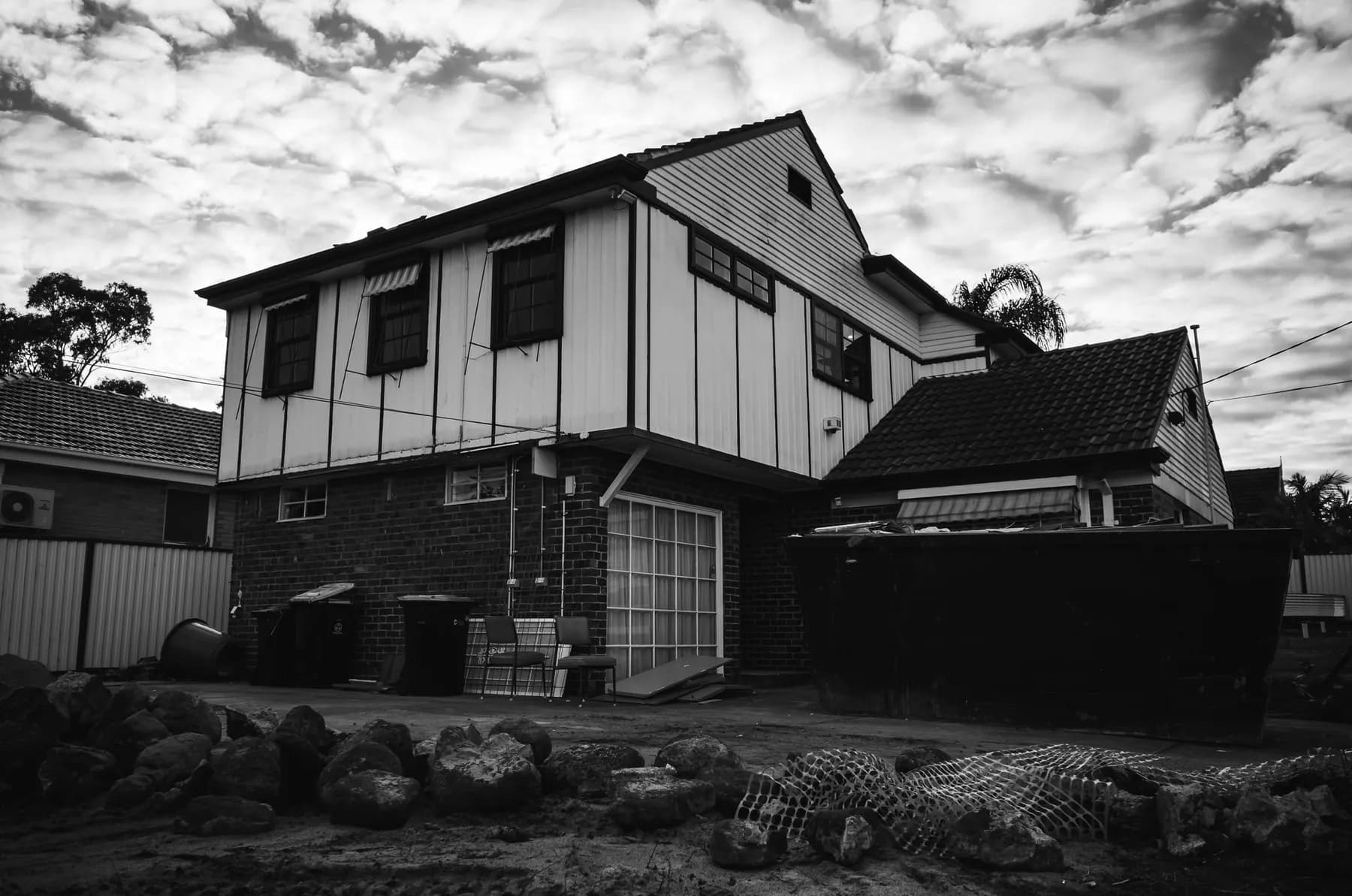
Adding to a house in Burwood Heights?
Send the address, a photo of the front and one of the back. Oliver will respond within 4 working hours for a free initial conversation about where an addition can sit and which approval path fits.
0476 300 300The neighbours' sun and privacy
The DCP asks that all building work minimise overshadowing of neighbours, particularly to the south, and that a two-storey house not eliminate solar access to smaller houses next door. Its practical control is the southern wall. A first-floor elevation on the minimum side setback can run 10 metres along the southern side as one continuous wall. Any length beyond that has to step in a further 2 metres.
Privacy controls shape the windows. Living areas and studies on the first floor need raised sill heights or translucent glazing where they'd look into a neighbour's house, and bathrooms, ensuites, toilets and stairwells need translucent or opaque glass. Balconies aren't permitted on the side of the house, except on the secondary street side of a corner lot, and first-floor balconies are for bedrooms only, at a maximum width of 1.5 metres.
If you were picturing a big upstairs living room opening to a deck, this is the conversation to have before anything is drawn. A modest bedroom balcony at the front or rear can work, screened where it would overlook a neighbour's yard. A side-facing entertaining deck can't.
- Southern first-floor wall: 10 metres, then step in a further 2 metres
- Raised sills or translucent glazing to first-floor living rooms and studies
- No side balconies, except to a corner lot's secondary street
- First-floor balconies off bedrooms only, no wider than 1.5 metres
Out the back instead
A single-storey rear addition is often simpler. The side setback drops to 900mm and the rear to 3 metres, and the DCP says a reduced setback that reuses existing foundations may be acceptable for single-storey work. That can matter on a narrow lot where the original house sits close to one boundary.
Size has a ceiling of its own. The DCP measures built area across every building on the lot, external walls included, along with garages, carports, verandahs and balconies. It says council doesn't generally favour single dwellings with a built area over 450m², whatever the lot size, and asks for written justification for anything larger. Adding up the existing house first tells you how much room an addition really has.
On the ground floor, Rawlinsons puts a brick veneer addition of 50–75m² at $2,620–$2,820/m², one of 75–125m² at $2,630–$2,840/m² and a framed addition of 75–125m² at $2,360–$2,550/m². They're Sydney rates, excluding GST, escalated to the ABS September 2026 index.
Heritage, approval and the upper-level rates
If the house is a heritage item, or sits in a heritage conservation area, section 4.7 of the DCP applies as well. An addition needs a heritage impact statement from a qualified heritage professional lodged with the DA, it must not dominate the existing building, and the first-floor ceiling height drops to 2.4 metres. The planning certificate shows whether any of that applies to your address.
When the design meets the Housing Code and nothing excludes the lot, a CDC must be decided within 20 days where neighbours are notified (10 days otherwise). When it needs the DCP's merit assessment, it's a development application to Burwood Council, and a DA has a 40-day assessment period.
A full first floor addition runs $3,930–$4,230/m² for 75–100m² and $3,790–$4,090/m² for 100–150m², Sydney, excluding GST, escalated to the ABS September 2026 index. A new bathroom fitted out in the addition is $37k–$42k and a kitchen $31k–$35k, including GST. Engineering for the existing walls and footings comes before either number is final.
What I check first on a Burwood Heights addition
These decide where the new rooms can go before we talk about finishes.
- 01
Whether the street is on the DCP's Section 8.2 streetscape map
- 02
Heritage item or conservation area on the planning certificate
- 03
Where 9 metres behind the front building line lands on the existing roof
- 04
Length of the southern first-floor wall
- 05
Built area of everything already on the lot
- 06
Whether the walls and footings can carry an upper level
Burwood Heights addition questions
Can I build a full second storey in Burwood Heights?
Under the DCP, a second storey sits 9 metres back from the front, 1.5 metres from the sides and 6 metres from the rear. On streets covered by the streetscape provisions where most houses are single storey, council prefers a part second storey behind the main roof.
How high can the ceilings be in a first floor addition?
No more than 2.6 metres on the first floor under the DCP, or 2.4 metres for a house in a conservation area or an addition to a heritage item. The ground floor of new work is capped at 2.7 metres.
Can I put a balcony on my addition?
Yes, off a bedroom, at the front or rear, no wider than 1.5 metres, and screened if it would overlook a neighbour's outdoor living area. Side balconies aren't permitted except to the secondary street of a corner lot.
I searched for home extensions in Burwood. Is this the same?
Burwood Heights and Burwood are both in Burwood Council's area and share the same DCP. The Burwood home extensions page covers the suburb next door.
Who would build the addition?
Oliver Alameri, the licensed builder behind Buildana, NSW contractor licence 487805C, with more than 15 years' experience. We work across Sydney from a studio in Fairfield.
Sources and references
Costs are from the Rawlinsons handbook with the local cost index applied; rules and timeframes are checked against the sources below.
- Rawlinsons Australian Construction Handbook, Rawlhouse Publishing
- Environmental Planning and Assessment Act 1979 (NSW)
- State Environmental Planning Policy (Exempt and Complying Development Codes) 2008
- Search heritage databases, NSW Environment and Heritage
- NSW Planning Portal Spatial Viewer (zoning, FSR and hazard maps)
- Burwood Council
- Australia Post postcode search
Start with the 9 metres and the southern wall
Tell me the address and what the new space is for. Oliver will respond within 4 working hours for a free initial conversation, and a price follows once the house has been seen and the design is settled.