Why Blacktown CDC Is the Fastest Pathway in Western Sydney
If you want a duplex or KDR approved quickly in Western Sydney, Blacktown is where you build it. The LGA's combination of larger lot sizes, less-layered DCP, active certifier ecosystem, and clean application of the July 2024 reform delivers real 10–14 business day CDC turnarounds on compliant sites. Compared to Cumberland (often 18+ days with scrutiny) or Canterbury-Bankstown (12–18 days with higher compliance bar), Blacktown is measurably faster.
This isn't an accident. It's a combination of factors that are worth understanding if you're deciding between Blacktown and a neighbouring LGA for a new development.
Larger Lots, Simpler Compliance
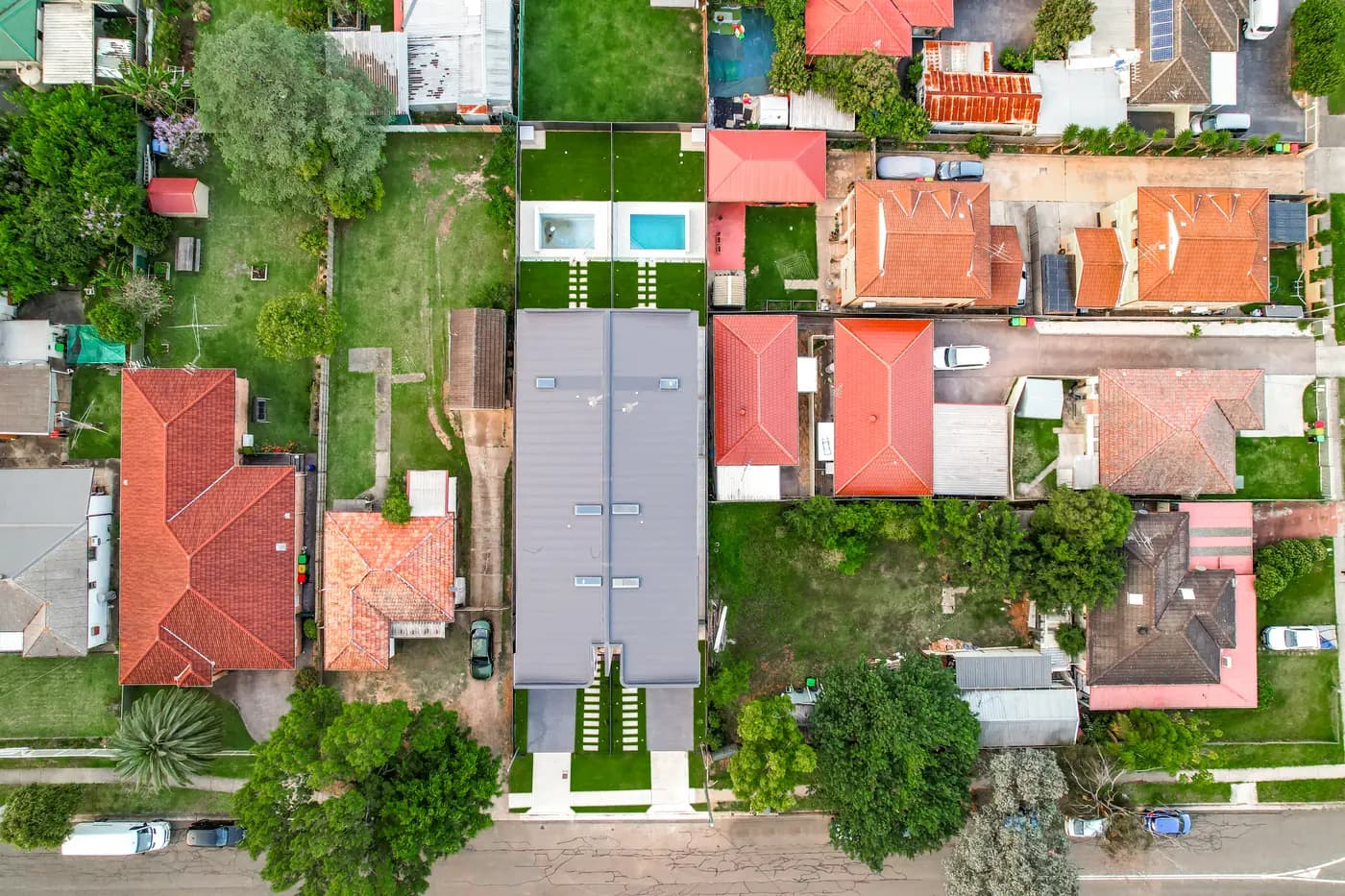
Blacktown's R2 zoning covers a lot of 700sqm+ typical lot size territory. Seven Hills, Kings Park, Quakers Hill, Marayong, Toongabbie, Blacktown proper — these are genuinely sized for contemporary duplex and KDR development without contorting setbacks.
When the lot is 750sqm rather than 550sqm: • Setback compliance is automatic • Landscaped area compliance is automatic (you easily hit 35–45%) • Deep soil is easy to deliver in a contiguous rear zone • Shadow diagrams against neighbours pass without design gymnastics
Compare to a 520sqm duplex in Greenacre where every setback, every 100mm of landscape, every tree counts against you. The certifier's compliance review on a 750sqm Blacktown lot takes a third of the time because there's nothing marginal to review.
Less-Layered DCP
Blacktown DCP 2015 (current) is not a short document, but it's structured cleanly. Sub-precinct controls are limited to identifiable areas (Riverstone older heritage, Mount Druitt precincts, the T-way overlay zone). Outside those zones, the DCP reads as a straightforward application of the state's Low-Rise Housing Diversity and the 2024 Housing SEPP reform.
Compare this to: • Cumberland — layered deep soil + tree canopy + streetscape + heritage overlays applied LGA-wide • Canterbury-Bankstown — detailed solar access rules + landscape + sub-precinct character controls • Fairfield — heavy landscaped area calcs (45% for single dwelling) + secondary dwelling specifics
Blacktown's default state is 'apply the state rules'. That's a good thing for speed.
Stuck on approvals?
We've taken hundreds of projects through CDC and DA. Tell us your address and approval pathway — we'll map the realistic timeline.
Active Certifier Ecosystem
Blacktown has a deep pool of experienced private certifiers who do duplex and KDR CDC work daily. Turn-around on a straightforward site averages: • Lodgement to queries: 3–5 business days • Queries answered to approval: 5–8 business days • Total: 10–14 business days for a clean site
Compare to LGAs where certifiers work across mixed categories (commercial, strata, etc) and your duplex might be their first of the week — each query back takes longer because the certifier has context-switched.
Practical point: when you choose your certifier, choose one who specialises in the LGA. A Blacktown-native certifier will know the pain points, know which clauses the assessors actually check, and will pre-empt queries before they're raised.
Where Blacktown Doesn't Run Smoothly
Three zones where CDC speed drops:
1. Mount Druitt sub-precincts. Parts of the suburb have specific planning controls around urban renewal zones. Jobs in these areas typically go DA because the CDC certifier can't certify sub-precinct-specific compliance.
2. Riverstone older heritage sections. Around the older Rickard Road and Riverstone Parade pocket — heritage DA required.
3. T-way corridor buffer. Lots within 200m of the Liverpool-Parramatta T-way have transport overlay compliance requirements. Typically adds acoustic treatment specs and sometimes requires DA.
Outside these three: Blacktown's CDC works at genuine 10–14 business day pace.
Fixed-price estimate
Get a real number for your block
Two minutes now saves the guesswork. Oliver or one of the team calls back with a realistic range for your suburb and block, then books a free site walk if you want a fixed price.
- Priced off your block, not a brochure — soil, slope and council read first
- NSW licensed builder 487805C. HBCF insured. Fixed-price HIA contract.
- Reply within 4 working hours. No sales pressure, ever.
Blacktown vs Penrith vs Blacktown — Which LGA to Choose
Quick comparison for developers weighing up Western Sydney LGAs for a duplex play:
Blacktown • Lot size: 700sqm+ typical • CDC turnaround: 10–14 days • DCP complexity: Low • Duplex feasibility: Strong • Verdict: Fastest LGA
Fairfield • Lot size: 550–650sqm typical • CDC turnaround: 10–14 days • DCP complexity: Moderate (45% landscape tight) • Duplex feasibility: Strong on reform-compliant lots • Verdict: Fast but tighter landscape calcs
Liverpool • Lot size: 600–700sqm typical • CDC turnaround: 14+ days • DCP complexity: Moderate + OSD • Duplex feasibility: Workable but OSD $30k+ adds • Verdict: Slower due to OSD and flood overlays
Cumberland • Lot size: 500–600sqm typical • CDC turnaround: 18+ days • DCP complexity: High • Duplex feasibility: Tight on most lots • Verdict: Slowest CDC, most scrutinised
Canterbury-Bankstown • Lot size: 550–700sqm typical • CDC turnaround: 12–18 days • DCP complexity: High (solar, deep soil, heritage) • Duplex feasibility: Works on right lots • Verdict: Fast when site is clean, slow when marginal

How to Maximise Blacktown CDC Speed
Practical steps to genuinely hit 10–12 day CDC turnaround:
1. Certifier appointed before lodgement. Your builder's pre-lodgement review with the certifier can pre-empt 80% of queries.
2. Plans signed by consultants before lodgement. Structural engineer, hydraulic, energy. Council wasn't waiting on anyone.
3. BASIX certificate lodged from day one. Don't lodge incomplete and amend.
4. Landscape plan with numeric tables, not just hatched diagrams.
5. Acoustic detail for attached party walls if duplex. Referenced AS/NZS 1276 system, not 'to be confirmed on site'.
6. Waste Management Plan. Single page, but required. Missing this costs 2 days.
7. Soil classification from geotech. Not 'assumed Class M'. Actual report.
A complete lodgement package typically costs $3,500–$5,500 above the fees, but saves 2–3 weeks versus an incomplete lodgement. For a 12-week duplex build, that's a 15-20% time saving at the front end.
To scope a Blacktown duplex or KDR — feasibility, certifier engagement, and fixed-scope build pricing — visit /advisory/development-feasibility or call 0476 300 300.