Fairfield Secondary Dwelling Playbook — How to Get One Approved
Fairfield City Council is one of the more pragmatic LGAs for secondary dwellings in NSW. The policy settings under State Environmental Planning Policy (Affordable Rental Housing) 2009 apply, but Fairfield's DCP adds local controls that matter — and navigating them well is the difference between a 14-day CDC approval and a 12-week DA with three RFIs.
I've built roughly 25 secondary dwellings (granny flats) through Fairfield in the last four years. The playbook below is what I'd tell a client starting from scratch — it's the practical application guide, not the DCP reprint.
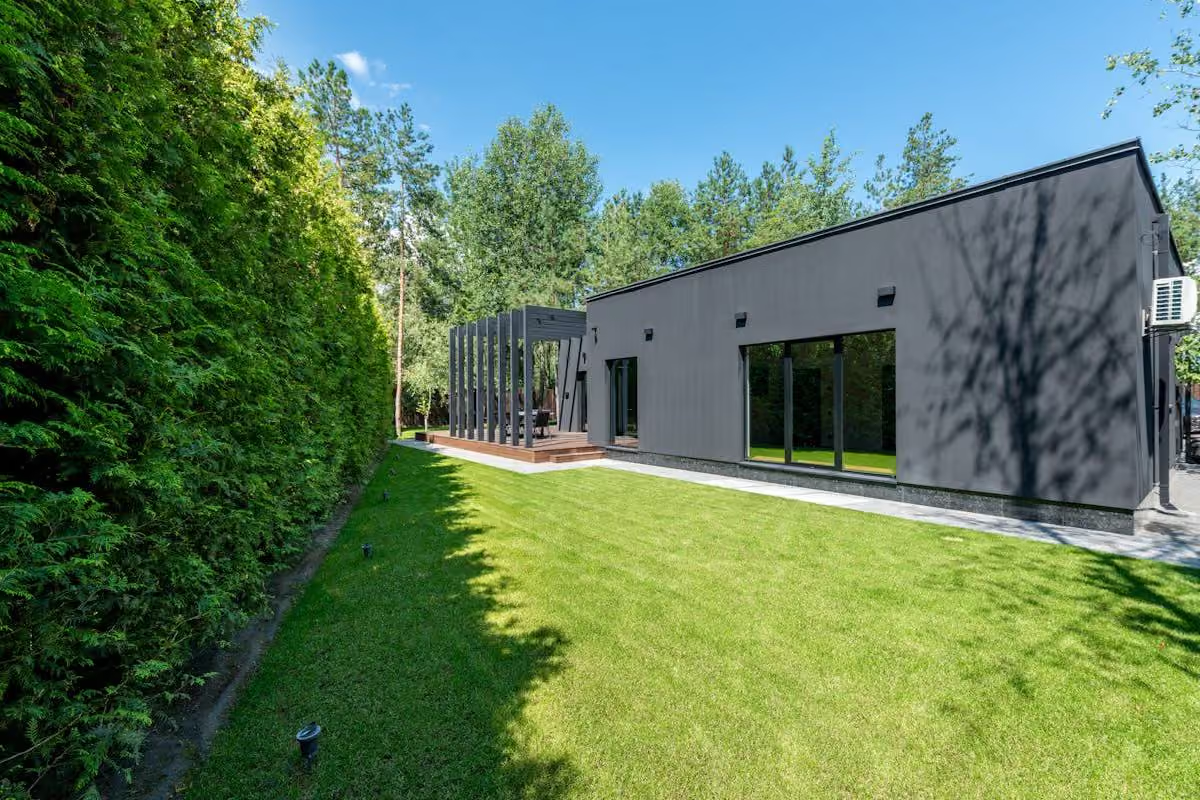
The 60sqm Rule and Why It Actually Matters
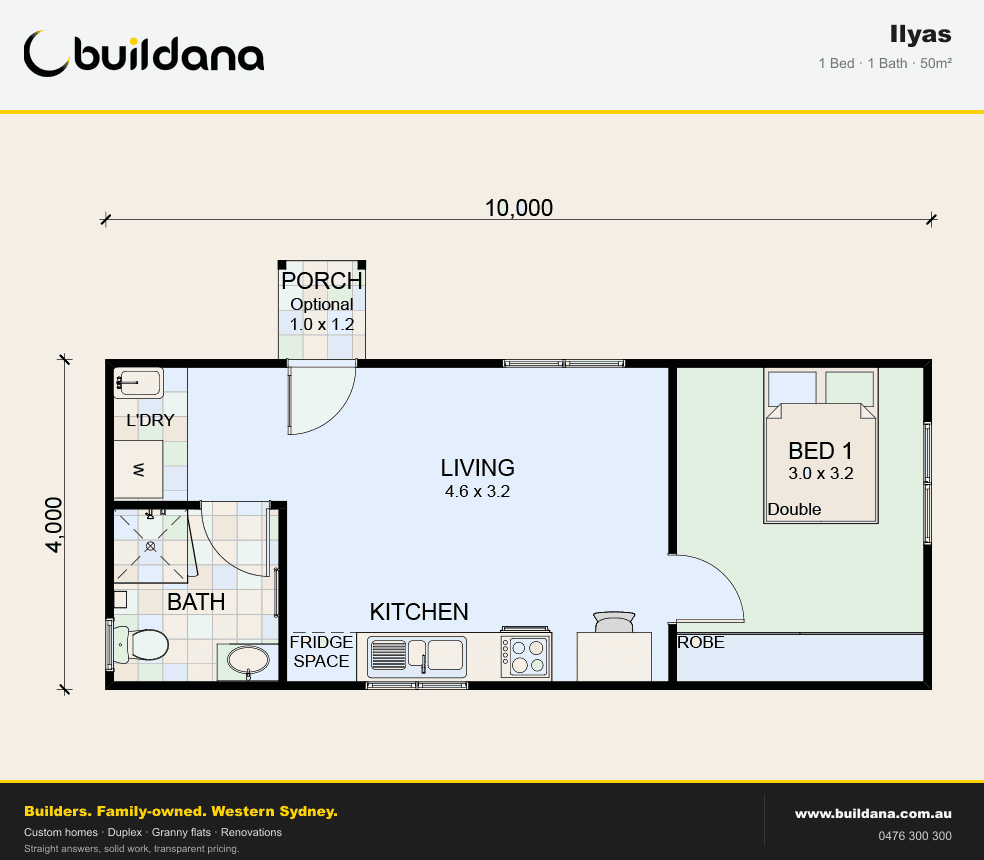
Under the SEPP, secondary dwellings have a 60sqm maximum internal floor area cap. This includes all living spaces, bathrooms, kitchen, bedrooms. It excludes the carport, the veranda roof (if unenclosed), and the storage shed if separately constructed.
Why the 60sqm matters more than people think: • It's the CDC threshold — go over it and you're in DA territory • Council measures to the inner face of external walls, not the outer • A 62sqm design will fail certifier review — you can't just 'round down' • The 60sqm can't be extended later without a full new DA
Practical planning: design to 57–58sqm so you have margin. Drafters who push 60.0sqm exact are gambling on measurement tolerance.
Also: if your block is in a zone that allows SEPP ARH (most R2 and R3 in Fairfield), you get the 60sqm. If council's LEP zones your block differently (some R5 large lot, some RU2, some SP2), the SEPP might not apply — check first.
Fairfield DCP Local Add-Ons
Beyond the SEPP, Fairfield's DCP adds:
Minimum lot size: 450sqm for secondary dwelling under SEPP ARH. Below this, council requires DA and will likely refuse.
Landscaped area: 45% of the lot minimum. Your primary dwelling + secondary dwelling + driveway + paved surfaces combined must leave 45% landscaped. On a 500sqm lot with an existing 180sqm primary dwelling, that's 225sqm of landscape already required. Add a 60sqm secondary + 20sqm driveway extension + 10sqm paved courtyard and you're at 270sqm of hard surface — leaving 230sqm landscape (46%). Marginal.
Minimum rear yard: 3m depth from secondary dwelling to rear boundary. Standard.
Carparking: 1 car space for secondary dwelling, stackable in front of primary garage permitted. This is actually lenient — saves you relocating the driveway.
Separation from primary dwelling: nil required, but most clients want 1–2m separation for acoustic and privacy.
The 45% landscape calc is the one that catches most applicants. Run it honestly before committing.
Want a real granny flat price for your backyard?
Fixed-price granny flats from Buildana. We'll price YOUR block — not a generic range.
CDC vs DA — Which Pathway, When
CDC under SEPP ARH works when: • Lot is 450sqm+ in R2 or R3 • Primary dwelling is lawfully-approved • Secondary dwelling is ≤60sqm and meets all SEPP controls • Site is not heritage-listed or in a conservation area • No flood, contamination, or bushfire overlay triggers that aren't addressed
DA required when: • Site is in a heritage conservation area (Old Fairfield sections, parts of Canley Vale) • Flood overlay applies (Lansvale, parts of Carramar) • Lot under 450sqm (rare but happens on older subdivisions) • Design requires variations to setbacks or landscape rules • Primary dwelling has unresolved unauthorised structures (fix those first)
CDC speed: 10–14 business days if lodged complete. DA speed: 45–70 days clean, 90–140 days with RFIs.
Default to CDC where you can. Don't try to force a CDC on a marginal site — rejected CDC sets a bad record with council.
Cost to Build — 2026 Fairfield Numbers
For a turnkey secondary dwelling in Fairfield LGA as of April 2026:
• 1-bed, 35–45sqm: $150k–$190k • 2-bed standard, 50–60sqm: $195k–$245k • 2-bed premium finishes, 50–60sqm: $245k–$300k
These include: construction, site costs (driveway extension, fencing, stormwater), services connections, BASIX, CDC fees, certifier, surveyor, landscaping.
These exclude: demolition of existing structures (if required, +$6k–$12k), asbestos removal (if applicable, +$8k–$15k), upgrades to the primary dwelling's existing services (if needed, +$4k–$10k).
Rawlinsons rates (Section 13.1.3, Sydney, 50/75sqm bracket) support the construction component: $1,690–$2,060 per sqm for framed-to-full-brick. Multiply out to 55sqm = $93k–$113k pure construction, which aligns with the 2-bed range when site, services, landscape, and fees are added.
Rental Returns — What Fairfield Pays
Fairfield secondary dwelling rents at April 2026:
• 1-bed: $360–$430/week • 2-bed standard: $450–$510/week • 2-bed near Fairfield station or Cabramatta: $500–$550/week
Vacancy in Fairfield LGA is running ~2.2% for the last 18 months — very tight. Secondary dwellings near stations, schools, and shops turn over in under 10 days typically.
Net yield math on a 2-bed at $230k build, $500/week, modelled at 50 weeks rented, with proper deductions (rates uplift, insurance, management 7.7%, 1% maintenance, land tax depending on portfolio): • Gross: $26,000 • Net operating: ~$20,000 • Yield on build cost: 8.7%
Still one of the cleanest yield plays in Western Sydney on a lot you already own.
Fixed-price estimate
Get a real number for your block
Two minutes now saves the guesswork. Oliver or one of the team calls back with a realistic range for your suburb and block, then books a free site walk if you want a fixed price.
- Priced off your block, not a brochure — soil, slope and council read first
- NSW licensed builder 487805C. HBCF insured. Fixed-price HIA contract.
- Reply within 4 working hours. No sales pressure, ever.
Five Lodgement Mistakes That Cost 4–6 Weeks
Patterns I see on Fairfield secondary dwelling lodgements that go wrong:
1. Measuring to outer wall face for the 60sqm. It's inner face. A 60sqm outer-face design is ~57sqm inner, which is fine. A 62sqm inner-face design fails outright.
2. Forgetting the landscape calc includes the primary dwelling. You're doing a combined calc. Existing driveway, existing pool, existing alfresco all count against the 45%.
3. No survey showing existing structures. Council wants confirmation the primary dwelling is lawful. An old pergola the previous owner built without approval becomes your problem.
4. Stormwater not addressed. Secondary dwelling needs its own stormwater solution — typically charged rainwater tank or connection to existing legal point. Missing spec = RFI.
5. No BASIX certificate at lodgement. Costs $90 and 3 days to generate. Applicants who skip it and 'add it in RFI' lose 2 weeks.
All five preventable with a proper pre-lodgement review. Costs $500–$800 of designer time. Saves 4–6 weeks of council time.
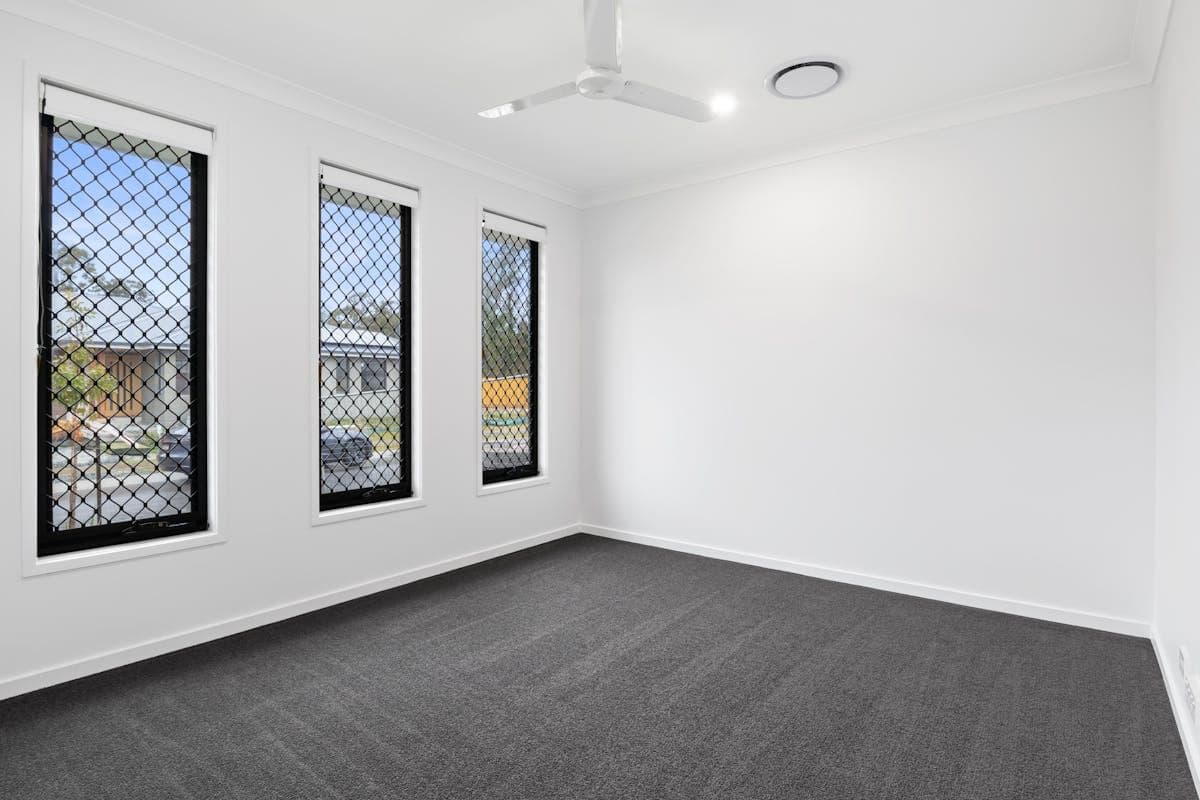
The 12-Week Playbook From Contract to CDC Approval
Typical Fairfield secondary dwelling timeline if you run it cleanly:
Week 1–2: Site survey ($1,200), soil test ($650), 149 planning certificate ($110), check heritage/flood/bushfire maps (free).
Week 3–5: Designer engagement, concept plans, BASIX modelling, landscape calc, CDC pre-lodgement review. Cost: $3,500–$5,500.
Week 6: CDC lodgement with private certifier. Certifier fee: $2,800–$4,500.
Week 7–9: Certifier queries (typically 1 round), amendments, approval. 10–14 business days from lodgement.
Week 10–12: Construction contract signing, pre-construction admin, commencement.
Total elapsed time to commencement: ~12 weeks. Construction then runs 14–18 weeks typical for a 2-bed, 50–60sqm dwelling. Total from signed contract to rented: ~28 weeks (7 months).
This is achievable. I've done it repeatedly. The compressed variant where people try to 'speed it up by skipping pre-lodgement' consistently ends up slower because of RFIs.
For a fixed-scope Fairfield secondary dwelling feasibility, CDC pathway confirmation, and build quote — call 0476 300 300 or visit /advisory/development-feasibility. We'll tell you whether your block works on the first call.