The Complete Knockdown Rebuild Checklist for 2026
A knockdown rebuild (KDR) is one of the most complex residential construction projects you can undertake. There are dozens of steps, multiple approval stages, and potential pitfalls at every turn. Missing even one item can add weeks to your timeline or thousands to your budget.
This checklist covers every stage of a KDR project — from initial feasibility through to final handover. Use it as your master reference whether you're working with Buildana or any other licensed builder.
Buildana (Lic. 487805C) manages every item on this checklist as part of our fixed-price KDR contracts. Nothing is left for you to coordinate — one builder, one contract, one point of contact.
Pre-Construction Checklist
Before any design work begins, confirm these items:
☐ Zoning check: Confirm your lot is zoned R2 (Low Density Residential) or higher. R3, R4 zones also support KDR ☐ Lot size verification: Measure and confirm with a registered survey if boundaries are unclear ☐ Title search: Check for easements, covenants, or restrictions that affect building location ☐ Heritage check: Confirm no heritage overlay or conservation area listing ☐ Flood and bushfire mapping: Check with your council — affects approval pathway and construction requirements ☐ Contamination check: Previous commercial or industrial use may require environmental assessment ☐ Existing services: Locate sewer, stormwater, water, gas, electrical, and telecommunications on your lot ☐ Tree assessment: Significant trees may be protected — arborist report may be required ☐ Neighbour notification: Not mandatory at this stage, but good practice to inform neighbours early ☐ Budget confirmation: Total budget including demolition, construction, approvals, landscaping, and 10% contingency
Considering a knockdown rebuild?
Send us your block — we'll come back with a real cost estimate (demo + new build) within 48 hours.
Demolition Checklist
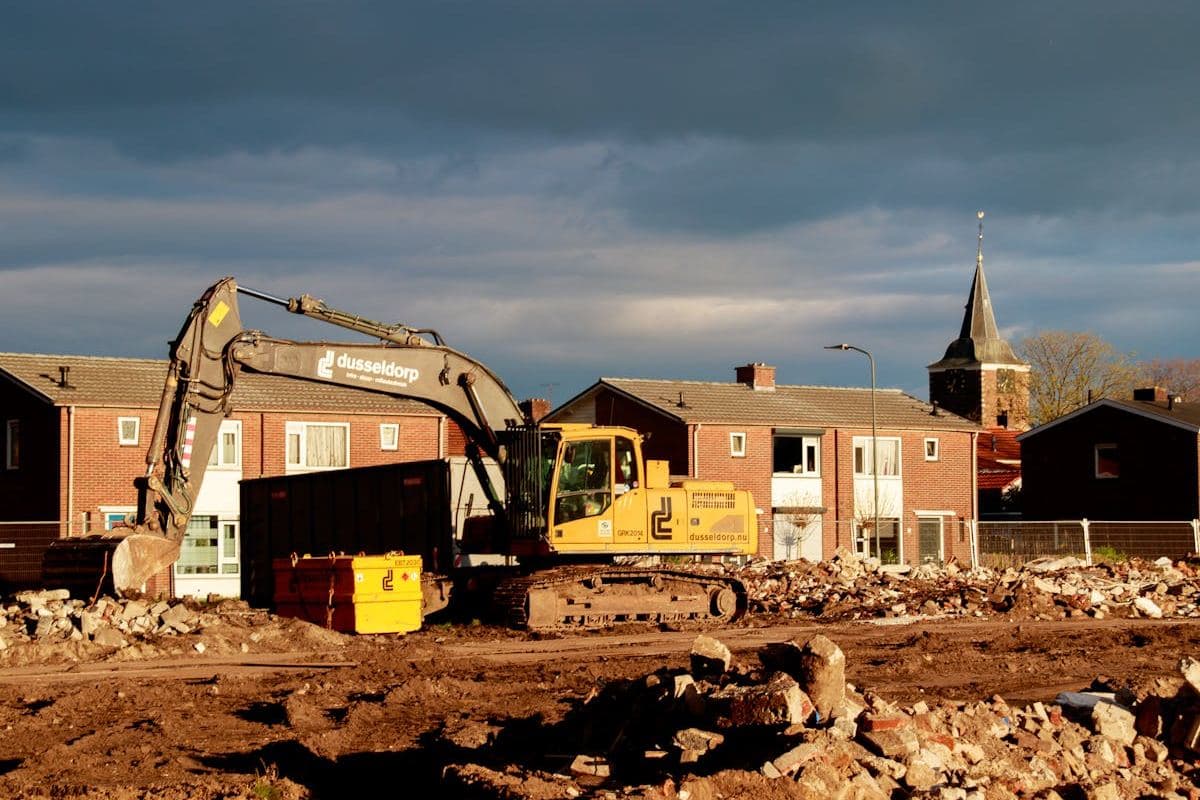
Demolition is the first physical stage of a KDR. Don't underestimate the planning required:
☐ Asbestos inspection: Professional asbestos assessment of existing home (mandatory). Homes built before 1990 commonly contain asbestos in eaves, wall cladding, bathroom linings, and roof sheeting ☐ Asbestos removal: Licensed asbestos removalist if found. Cost: $5,000–$25,000 depending on extent ☐ Demolition DA or CDC: Some councils require separate demolition approval. Buildana lodges combined demolition + construction approval where possible ☐ Utility disconnections: Arrange disconnection of electricity (Ausgrid/Endeavour Energy), gas (Jemena), water (Sydney Water), and telecommunications before demolition ☐ Demolition contractor engaged: Licensed demolition contractor with appropriate insurance ☐ Skip bins and waste management: Sorted demolition waste — concrete, timber, metal, general waste. Recycling reduces costs ☐ Temporary fencing: 1.8m temporary fencing around demolition site with lockable gate ☐ Neighbour protection: Dilapidation reports on adjoining properties (photographs documenting existing condition) ☐ Tree protection: Fencing around any retained trees per arborist recommendations ☐ Sewer/stormwater capping: Cap existing sewer and stormwater connections at the boundary
Design and Approval Checklist
With the site cleared, design and approval run in parallel:
☐ Soil test: Geotechnical report classifying soil type (A, S, M, H, or P). Cost: $500–$1,000 ☐ Site survey: Registered survey showing boundaries, levels, and existing services. Cost: $1,500–$3,000 ☐ Concept design: Floor plans, elevations, and 3D renders for client review ☐ Design finalisation: Locked-in floor plan and specifications before documentation ☐ Structural engineering: Slab design, frame engineering, wind bracing. Cost included in design fee ☐ BASIX certificate: Energy, water, and thermal comfort compliance. Lodged online ☐ CDC or DA preparation: Full application package — plans, BASIX, Schedule 1 checklist (CDC) or SEE (DA) ☐ CDC lodgement: To private certifier. Determination in 10–15 business days ☐ DA lodgement: To council if CDC not available. Determination in 40–90+ business days ☐ Construction Certificate (CC): Required before construction starts. Often issued by the same certifier as CDC ☐ Long-lead material orders: Windows, kitchen, bathroom fixtures ordered during approval waiting period ☐ Fixed-price contract signed: Buildana's contract covers demolition through to handover — no variations for approved scope
Construction and Handover Checklist
During construction, these items are tracked and completed:
☐ Site setup: Temporary fencing, site shed, portaloo, power connection ☐ Excavation and footings: As per structural engineering drawings ☐ Slab pour: Reinforced concrete slab (waffle pod, raft, or strip footing) ☐ Frame stage: Wall frames, roof trusses, bracing ☐ Frame inspection: Certifier inspection before lining ☐ Roof: Sheeting, sarking, gutters, downpipes ☐ External cladding: Brick, render, weatherboard, or panel ☐ Windows and external doors: Installed and sealed ☐ Lock-up stage: Building is weather-sealed — progress payment triggered ☐ Electrical rough-in: Wiring, switch locations, data points ☐ Plumbing rough-in: Hot/cold water, drainage, gas ☐ Insulation: Walls, ceiling, underfloor (as per BASIX) ☐ Internal wall linings: Plasterboard, cornice, set and sand ☐ Wet area waterproofing: Bathroom, laundry, shower recesses ☐ Tiling: Bathroom, laundry, splashbacks ☐ Kitchen installation: Cabinetry, benchtops, appliances ☐ Painting: Internal and external ☐ Flooring: Tiles, timber, carpet — as specified ☐ Final fix: Tapware, towel rails, mirrors, door hardware, power points, light fittings ☐ Landscaping: Driveway, paths, turf, garden beds, fencing ☐ Final inspection: Certifier issues Occupation Certificate ☐ Defect walkthrough: Client and builder walk the home together ☐ Handover: Keys, manuals, warranty documents, maintenance guide
Download Buildana's complete KDR checklist at /contact or read our full cost breakdown at /insights/knockdown-rebuild-cost-sydney.