Narrow Lot Homes in Sydney: How to Build Beautifully on a Small Block
Sydney's land prices have pushed lot sizes steadily downward. In the 1970s, a standard suburban block was 700–900sqm with 18–20m frontage. Today, new lots in Western Sydney's growth areas average 300–450sqm with frontages as narrow as 7–10 metres. Even in established suburbs, subdivisions and battle-axe lots create narrow-frontage building sites.
Building on a narrow lot (typically defined as 7–12.5m wide) requires specialist design knowledge. Standard project home plans don't work on narrow lots — the proportions are wrong, setback requirements eat into living space, and privacy becomes a challenge with neighbours just metres away.
But narrow doesn't mean compromised. With smart design, a narrow lot home can feel spacious, light-filled, and functional. Some of the most architecturally striking homes in Sydney are built on lots under 10m wide.
This guide covers design strategies, floor plan ideas, council rule considerations, and real costs for building narrow lot homes across Western Sydney's five LGAs.
Council Set-Back Rules for Narrow Lots Across Western Sydney
Setback requirements are the single biggest constraint on narrow lot design. Every council specifies minimum distances between your home and the side, front, and rear boundaries. On a narrow lot, side setbacks have the largest impact.
Fairfield City Council: • Front setback: 5.5–6.5m (consistent with street character) • Side setback: 0.9m minimum each side (single storey), 1.2m minimum (two storey upper level) • Rear setback: 6m minimum for primary living areas • On a 10m-wide lot with 0.9m + 0.9m side setbacks: 8.2m usable building width • On a 7.5m-wide lot: 5.7m usable width — feasible but tight
Liverpool City Council: • Front setback: 5.5m standard, 4.5m for battle-axe lots • Side setback: 0.9m each side (ground floor), 1.5m (upper floor) • Rear setback: 6m • Zero-lot-line provisions available in some new release areas (Edmondson Park, Austral) • On a 10m lot: 8.2m ground floor width, 7.0m upper floor width
Cumberland City Council: • Front setback: 6m standard • Side setback: 0.9m each side (single storey), 1.2m (two storey) • Rear setback: 6m • Heritage areas (Granville): May require larger setbacks • On a 10m lot: 8.2m ground floor, 7.6m upper floor
Canterbury-Bankstown Council: • Front setback: 6m–7m (varies by street) • Side setback: 0.9m minimum each side • Rear setback: 6m • Special provisions for TOD precincts near metro stations may allow reduced setbacks • On a 10m lot: 8.2m usable width
Blacktown City Council: • Front setback: 4.5m (new release areas) to 6m (established suburbs) • Side setback: 0.9m each side, except lots under 10m wide may have 0m on one side (zero-lot-line) • Rear setback: 4m–6m (varies by lot depth) • Zero-lot-line provisions in Marsden Park (The Elara estate), Schofields, Box Hill allow building to one boundary • On a 7.5m lot with zero one side: 6.6m usable width — very generous for a narrow lot
Zero-lot-line design: Zero-lot-line (building wall on the boundary) is a major advantage for narrow lots. Only available in specific areas (mainly new release estates in Liverpool and Blacktown), it effectively adds 0.9m of width to the building envelope. The boundary wall must be fire-rated (typically 60-minute FRL concrete block or fire-rated cladding) and cannot have windows or openings.
Design + build under one roof.
One contract, one team, one accountability. From concept to keys — Buildana handles all of it.
Design Strategies for Narrow Lot Homes
Great narrow lot design maximises the sense of space despite physical constraints. Here are the strategies top architects use:
1. Go up, not out — double and triple storey designs: • On a 7.5m-wide lot with 5.7m building width: a single-storey home is limited to approximately 100–120sqm. Going to two storeys doubles this to 200–240sqm • Three-storey designs are permitted in some zones (9.5m height limit) and can achieve 250–320sqm • Staircase design is critical — a straight-run stair takes the least width (900mm) versus a U-return (1,800mm)
2. Front-to-back living zones: • Avoid side-by-side room layouts (which create dark, narrow rooms) • Stack rooms front-to-back with the living area at the rear, opening to outdoor space • Kitchen in the middle as the hub, connecting front formal zones to rear informal zones
3. Courtyards and light wells: • Internal courtyards (2m x 3m minimum) bring light and ventilation into the centre of the home • Light wells between ground and upper floors create visual connection and prevent the ground floor feeling basement-like • Clerestory windows (high windows above eye level) bring light without sacrificing privacy
4. Outdoor living maximisation: • Rear courtyard with full-width bi-fold or stacking doors lets the living area open out to the paving with a flush threshold and no visible step • Even a 5.7m x 6m rear courtyard (34sqm) feels generous when directly connected to the kitchen/living • Vertical gardens and green walls on side fences add greenery without taking floor space • Rooftop terrace (if two storey) provides outdoor space without using ground-level area
5. Smart storage solutions: • Under-stair storage: 3–6sqm of hidden storage • Built-in window seats with storage underneath • Full-height wardrobes — using ceiling height (2.7m) instead of floor space • Garage with mezzanine storage level
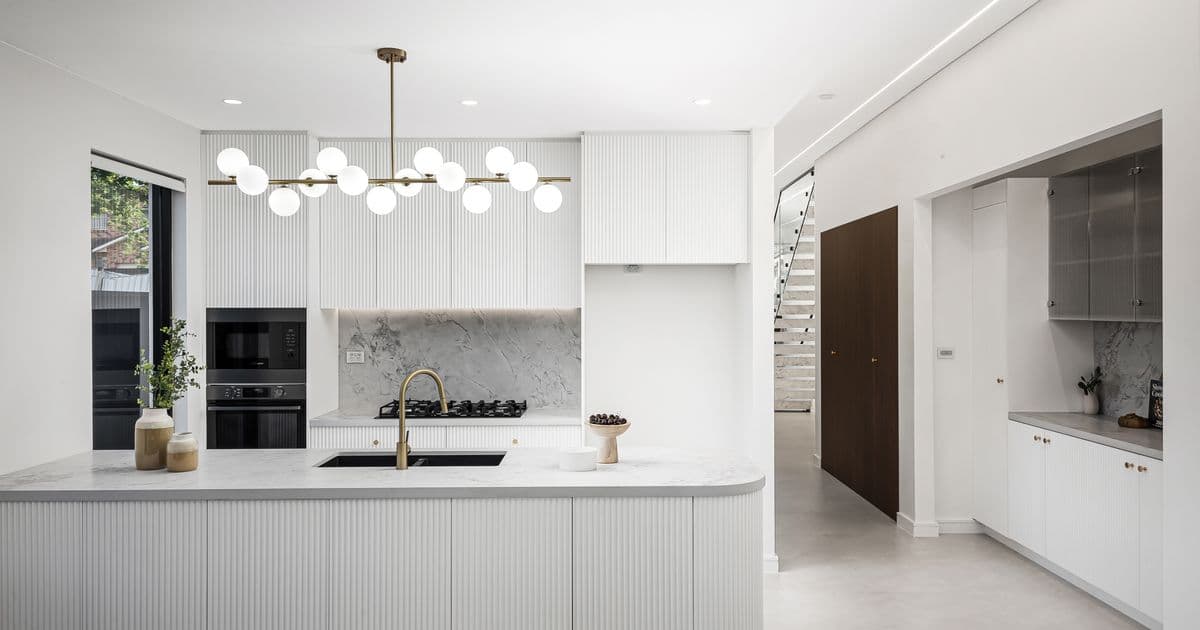
6. Material and colour choices: • Light-coloured internal walls and floors make rooms feel larger • Consistent flooring throughout (no transitions) creates visual flow • Large-format tiles (600x600mm or 600x1200mm) reduce grout lines and make spaces feel bigger • Floor-to-ceiling windows on the rear elevation maximise light and garden views
Popular narrow lot floor plan configurations:
3-bedroom narrow lot (7.5m-wide lot, 2 storeys, 160sqm): Ground: Single garage, entry, powder room, open-plan kitchen/living/dining opening to rear courtyard First: Master bedroom with ensuite and WIR, 2 secondary bedrooms, main bathroom, small study nook
4-bedroom narrow lot (10m-wide lot, 2 storeys, 220sqm): Ground: Double garage, entry, study, powder room, large open-plan kitchen/living/dining opening to covered alfresco First: Master with ensuite and WIR, 3 secondary bedrooms, main bathroom, upstairs living/rumpus
4-bedroom narrow lot (8m-wide lot, 3 storeys, 260sqm): Ground: Double garage, laundry, small courtyard First: Open-plan kitchen/living/dining, powder room, balcony Second: Master with ensuite and WIR, 3 secondary bedrooms, main bathroom
Narrow Lot Home Costs and Construction Considerations
Building on a narrow lot introduces specific construction challenges that affect cost.
Cost per sqm for narrow lot homes (2026): • Standard narrow lot build: $2,000–$2,800/sqm • Mid-range with quality finishes: $2,800–$3,500/sqm • Premium/architectural: $3,500–$4,500/sqm • Average is 5–15% higher than equivalent standard-lot build due to access constraints
Why narrow lots cost more per sqm: • Crane access: Standard cranes may not fit on site. A mini-crane or manual handling is slower and more expensive. Add $3,000–$8,000 • Scaffold on narrow gaps: Setting scaffold in 900mm side setbacks is difficult. Specialised narrow scaffold systems cost $2,000–$5,000 more than standard • Material delivery: Long materials (steel beams, roof trusses) may not fit through narrow access. Pre-cutting or angled delivery adds labour time • Neighbour management: Construction on narrow lots requires careful protection of neighbouring properties. Temporary barriers, vibration monitoring, and dilapidation reports add $2,000–$5,000 • Fire-rated boundary walls: If building on or near the boundary, fire ratings (BCA requirements) add $3,000–$10,000 per wall
Narrow lot construction by LGA — specific considerations:
Fairfield: Many existing narrow lots (8–10m) from 1960s subdivisions. Access via narrow driveways. Common issue: shared driveways with unclear easement rights — always get a survey and title search before buying
Liverpool: Newer narrow lots in Austral, Edmondson Park, and Leppington (7.5–10m) are designed for narrow lot builds. Infrastructure is modern. Easiest LGA for narrow lot construction
Cumberland: Older narrow lots in Merrylands and Guildford (10–12m). Some heritage constraints in Granville limit modifications. Good narrow lot stock in Lidcombe and Berala
Canterbury-Bankstown: Traditional Canterbury has narrow-frontage lots (8–10m) from the Federation era. These have deep setbacks and mature gardens. Bankstown suburbs have wider lots — narrow lots mainly from subdivisions
Blacktown: New estates (Elara, Stonecutters Ridge, Marsden Park) designed specifically for narrow lots with zero-lot-line provisions. Best infrastructure for narrow lot building. Older suburbs have standard-width lots
Total project costs — narrow lot homes: • 3-bed narrow lot home (160sqm, standard): $370,000–$500,000 • 4-bed narrow lot home (220sqm, mid-range): $530,000–$770,000 • 4-bed narrow lot home (260sqm, premium): $780,000–$1,170,000 • Add demolition ($20,000–$40,000) if it's a KDR
Choosing a Builder for Your Narrow Lot Home
Not every builder can deliver a quality narrow lot home. Here's what to look for and avoid:
Essential builder qualifications for narrow lots: • Demonstrated portfolio of completed narrow lot projects (ask for addresses you can drive by) • In-house or partnered architectural design capability — not just plan modifications from a catalogue • Experience with your specific council's narrow lot provisions • Established relationships with specialist narrow lot trades (scaffolders, crane operators) • Ability to provide detailed construction methodology showing how they'll manage tight access
Red flags — builders to avoid for narrow lots: • Volume builders offering their standard plans 'adapted' for narrow lots — these rarely work well. The proportions are wrong and you end up with dark, corridor-like rooms • Builders who haven't done a narrow lot project before — your home shouldn't be their learning experience • Builders who can't explain how they'll get materials and equipment onto a narrow site • Builders who quote the same per-sqm rate for narrow lots as standard lots — they haven't accounted for the access challenges and will likely hit you with variations later
Questions to ask a narrow lot builder: 1. How many narrow lot homes have you built in the last 3 years? 2. Can I visit a completed narrow lot project or speak to a previous client? 3. What's your approach to side setback construction — how do you scaffold and work in 900mm gaps? 4. Do you do custom narrow lot designs or adapt standard plans? 5. Have you worked with [specific council] before? Do you know their narrow lot DCP provisions? 6. What's your approach to natural light in narrow lot homes? 7. Will you provide a fixed-price contract including all access and crane costs?
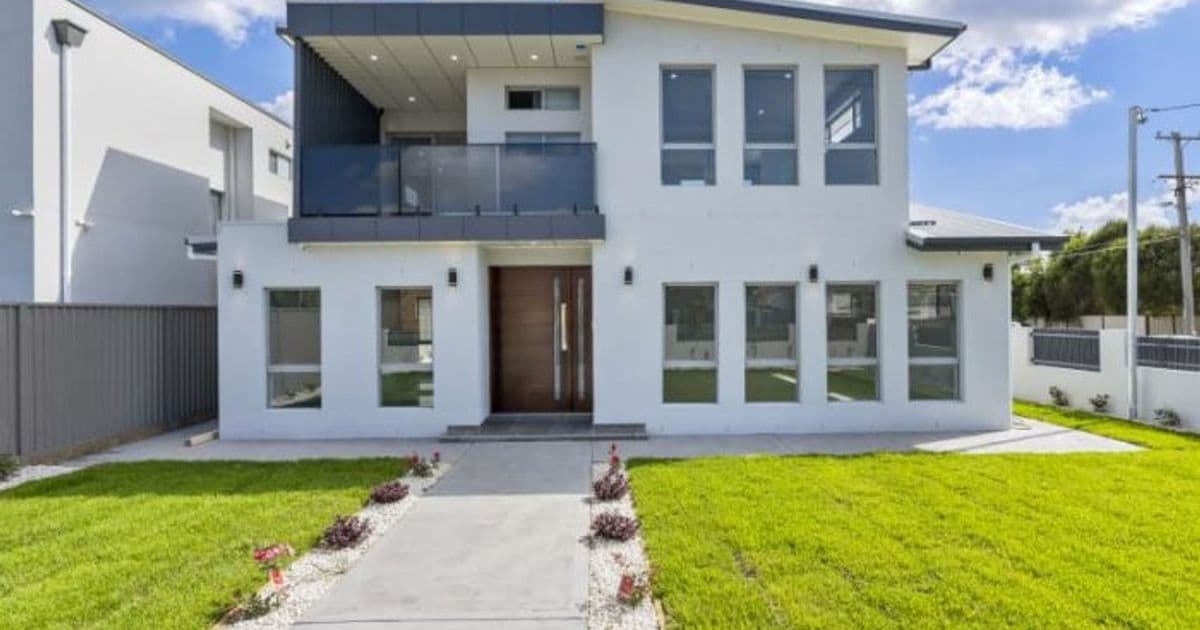
Narrow lot design inspiration in Western Sydney: • Edmondson Park: Some of Sydney's best contemporary narrow lot homes, built in the last 5 years on 7.5–10m lots. Clean lines, flat roofs, rendered facades with timber accents • Marsden Park: Zero-lot-line homes maximising every millimetre. Modern Australiana designs work well • Merrylands: Clever KDR narrow lot homes replacing 1960s fibro. Brick and render with smart use of internal courtyards
Buildana has extensive experience building on narrow lots across all five Western Sydney LGAs. We design homes specifically for narrow blocks — not adapted standard plans. Our narrow lot homes use light wells, internal courtyards, and strategic window placement to create homes that feel significantly larger than their footprint. Call 0476 300 300 for a free narrow lot design consultation.
Buildana builds across Sydney. Visit /homes/custom-homes to learn more or /contact to discuss your project.