
Hunters Hill Council · postcode 2111
Home Renovations in Boronia Park: The 1960s House Advantage
In a street full of heritage cottages, the plain brick house has the most freedom.
Boronia Park mixes Federation and inter-war homes with 1960s to 90s brick houses that went up on the gaps. Inside a conservation area, those later houses are often classed as non-contributory. That label is the most useful thing a renovator here can find on a planning document.
Short answer
Can I renovate a 1960s house in a Boronia Park heritage conservation area?
Usually with more freedom than you'd expect. Council's heritage planners care mainly about houses that contribute to the area's character; a later brick home is often non-contributory, so interiors are largely your call and external changes are judged on streetscape, scale and materials rather than preservation. Exterior work still needs a DA with Hunters Hill Council, usually 14 to 20 weeks.
Written and reviewed by Oliver Alameri
Licensed builder, NSW Contractor Licence 487805C · Founder, Buildana
Fact-checked
Contributory or not: find out first
Conservation areas protect the character of a whole streetscape, not every building in it equally. Heritage studies usually sort houses into those that contribute to that character and those that don't. A 1910 cottage with its verandah intact contributes. A 1972 brick veneer with aluminium windows usually doesn't.
Where does the label live? In council's heritage study, the DCP maps or a heritage consultant's assessment of your property. Ask before you design. It changes what's worth attempting.
- Contributory: original fabric protected, changes judged closely
- Non-contributory: new work judged mainly on its impact on the street
- Heritage item: individually listed, strictest controls of all
- Neutral or intrusive: sometimes council welcomes improvement
A house that doesn't contribute can be improved. That's an opportunity, not an insult.
What that freedom looks like
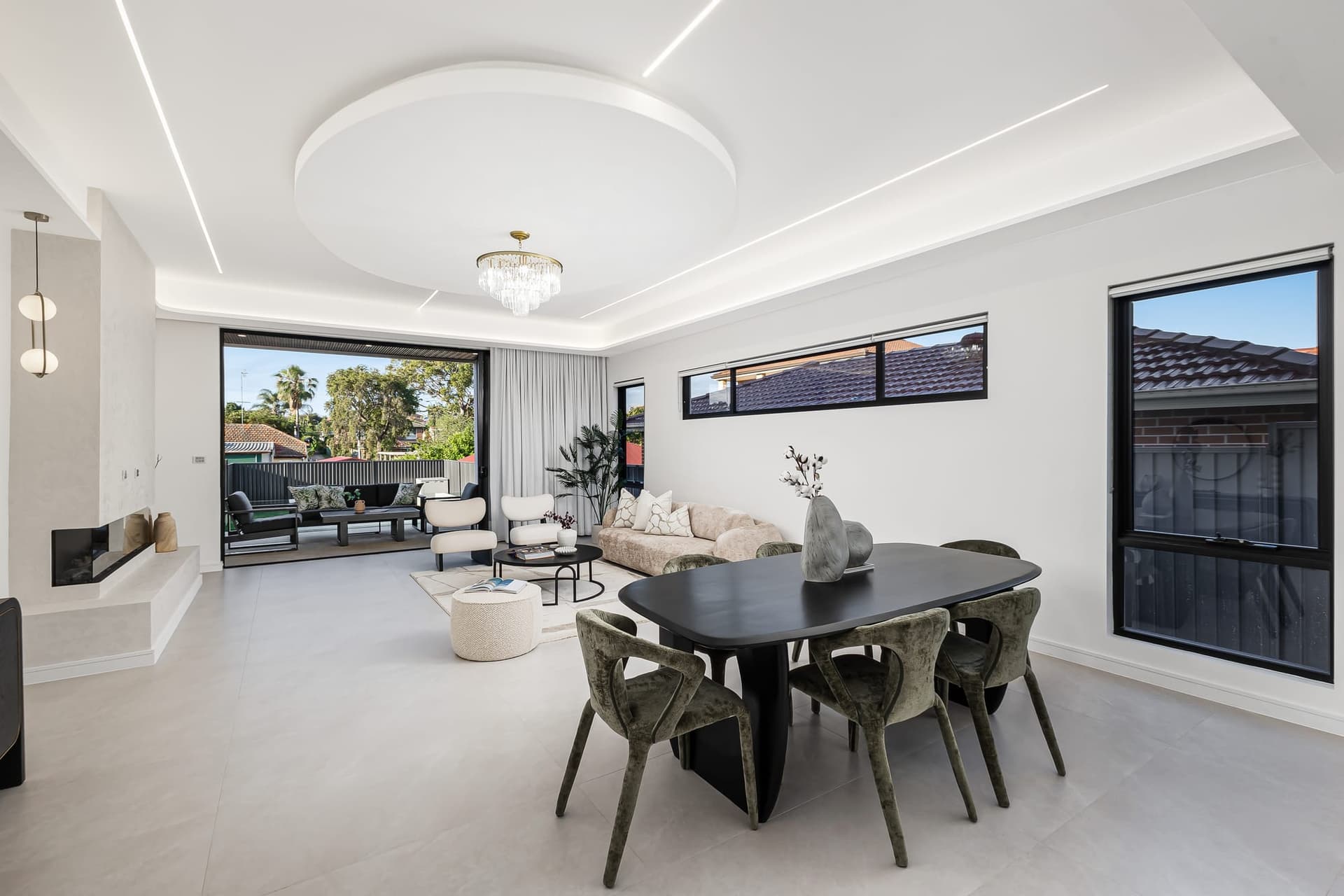
Inside, it's largely yours. Knock out walls, move the kitchen, reconfigure bedrooms. Interiors of non-listed homes aren't generally controlled by heritage rules, though the building code and structural engineering still apply.
Outside is where the conservation area still counts. A new facade, roof or front fence will be assessed against the neighbours: height, bulk, roof form, materials and colours that sit comfortably beside Federation brick and sandstone. Council may even prefer a sympathetic makeover of a 1970s front to leaving it alone.
What rarely flies is demolition to build something bigger than the street can take. Scale is the line.
Not sure how your house is classed?
Send me the Boronia Park address. I'll check how it sits in the conservation area and tell you what that means for the renovation you have in mind.
0476 300 300Bush, rock and the older services
Plenty of Boronia Park backs onto bushland reserves. Some lots are bushfire mapped, which affects new windows, decks and cladding on the bush side, and tree rules here are among the strictest in Sydney.
The houses themselves are usually sound double brick or veneer on sandstone. The weak points after fifty years are wiring, galvanised plumbing and hot water, so a serious renovation budgets for them from the start.
Approval and cost
Purely internal, non-structural changes are frequently exempt. Anything external goes to Hunters Hill Council as a development application; complying development is rarely available in conservation areas. Assessment usually takes 14 to 20 weeks, with heritage referral standard.
For wet areas and kitchens, Rawlinsons' Sydney figures are $19,500 to $22,000 for a mid-range kitchen and $23,500 to $26,500 per bathroom. New floor area, if the plan grows, sits near $2,200 to $2,650 a square metre before heritage detailing and rock work.
Before you brief a designer
Questions to answer on any Boronia Park renovation.
- 01
Is the house contributory, non-contributory or a heritage item?
- 02
Which changes are internal only, and which touch the outside?
- 03
Is the lot bushfire mapped on the reserve side?
- 04
Are there significant trees near any new work?
- 05
When were the wiring and plumbing last replaced?
- 06
Would council welcome a more sympathetic street frontage?
Renovating in Boronia Park
What does non-contributory mean?
It means the building isn't considered part of the heritage character the conservation area protects, usually because it's much later or heavily altered.
Do heritage rules control my interior?
Generally not, unless the property is an individually listed heritage item. Interiors of other houses in conservation areas are mostly unregulated by heritage controls.
Can I change the front of my 1970s house?
Yes, with a DA. Council assesses how the new facade sits in the streetscape, and a sympathetic update is often viewed favourably.
Is complying development possible in Boronia Park?
Rarely for external work, because conservation areas are excluded from most complying development codes.
Sources and references
Costs are from the Rawlinsons handbook with the local cost index applied; rules and timeframes are checked against the sources below.
- Hunters Hill Council
- Rawlinsons Australian Construction Handbook, Rawlhouse Publishing
- Environmental Planning and Assessment Act 1979 (NSW)
- State Environmental Planning Policy (Exempt and Complying Development Codes) 2008
- National Construction Code, ABCB
- Building on bush fire prone land, NSW RFS
- Search heritage databases, NSW Environment and Heritage
Make the most of the house nobody's protecting.
A Boronia Park renovation that uses every bit of freedom the rules allow.