Why most duplex builders in Sydney will quietly cost you $150k
Picking a duplex builder in Sydney is not the same as picking a project home builder. The mistakes are bigger, the variations are bigger, and the people pitching for the work are not the same people who will end up running the site. That is the part nobody tells you up front.
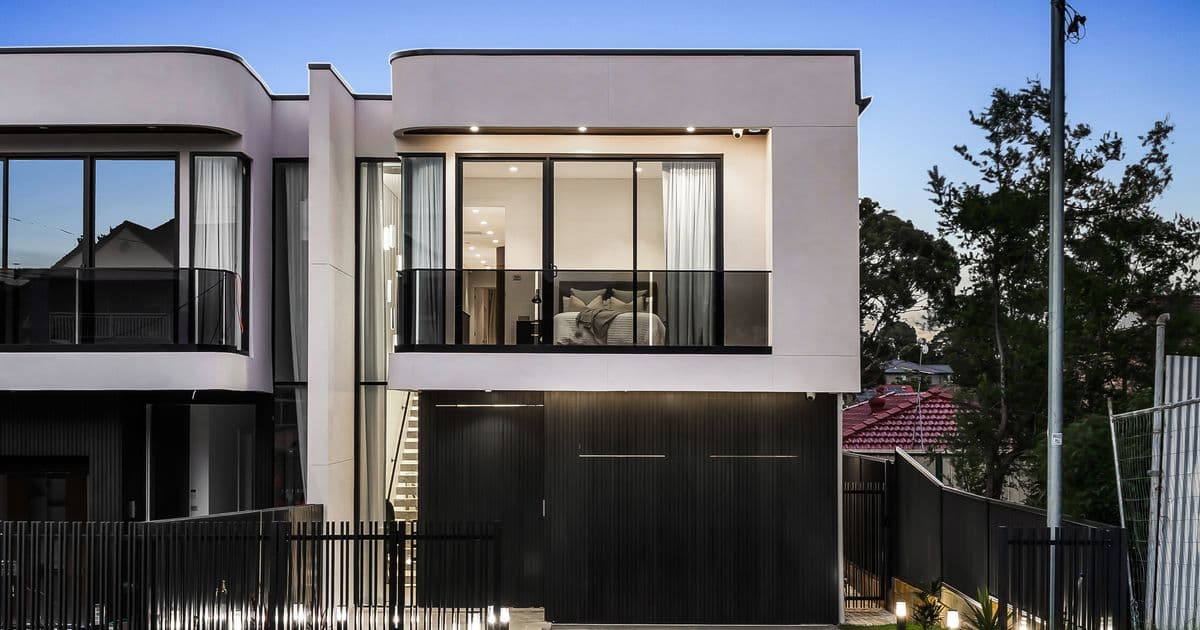
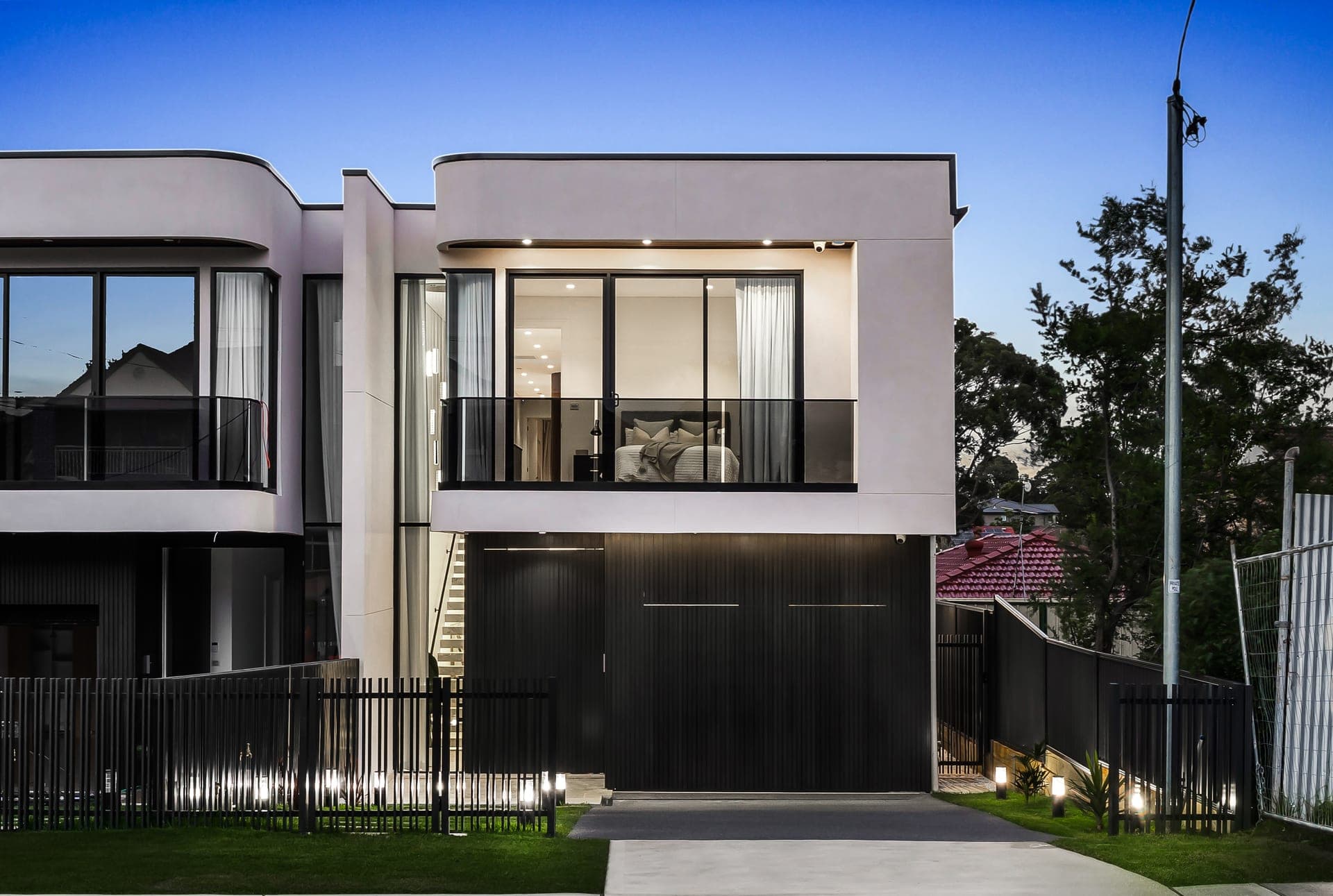
A duplex is two dwellings on one title — usually attached, sometimes detached — sitting on a lot that until very recently held a single house. Everything about the build doubles: two slabs, two frames, two roofs, two electrical heads, two stormwater connections, two driveways. Everything except the land. That compression is where the money is made and where it gets lost.
In 2026 the average two-storey 4+4 attached duplex in Western Sydney is delivering at $735,000–$895,000 per side turnkey, depending on inclusions and site conditions. End values across Liverpool, Fairfield, Blacktown, Cumberland and Camden LGAs are sitting between $1.05m and $1.45m per side. The margin is real — but only if the builder you choose doesn't burn it on the way through.
Most owners pick the wrong builder for two reasons: they take the cheapest quote without reading the exclusions schedule, or they pick a project home builder who has never actually run a duplex and assume two-of-the-same costs the same as one bigger one. It doesn't.
What a real Sydney duplex builder actually does differently
A builder who runs duplexes properly does five things differently to a single-home builder. If your shortlist can't articulate these five things in plain English, they are not a duplex specialist — they are a project home builder hoping to do a duplex.
1. Subdivision planning is locked in before contract. Torrens vs strata is decided pre-DA, the surveyor is briefed at design, and the subdivision certificate path is timetabled into the construction program. A non-specialist builds the duplex first and figures out subdivision later. That mistake costs 4–9 months at the back end.
2. Two-of-everything trade ordering. Frame, truss, brick, electrical rough-in and hydraulic are ordered as a paired delivery, not two single-house orders. Done properly this saves 6–11% on materials. Done badly — two separate orders weeks apart — costs the same as building two completely separate houses.
3. Party wall and acoustic detailing. AS/NZS 1276.1 acoustic compliance, fire-rated separating walls, services penetrations sealed properly. A duplex without proper party wall detailing fails handover inspection and creates 12-month defect liability claims that eat margin three years down the line.
4. Dual heads on services. Two electrical mains, two water meters, two gas meters, two NBN entries. Each one needs to be coordinated with Sydney Water, Ausgrid, Jemena, NBN Co. on different timelines. A single-home builder treats these as afterthoughts. A duplex specialist has the application pack lodged before slab pour.
5. Two end-clients, one program. If the duplex is being built for an investor (one owner, both sides retained) the program is simple. If two siblings are sharing — different finishes per side, different inclusions, different settlement dates — the program needs to handle two clients with one site supervisor. Project home builders cannot do this.
The numbers that actually matter on a Sydney duplex quote
Quotes between Sydney duplex builders in 2026 swing wildly — sometimes $200k–$280k between low and high on the same brief. Most of that swing is in five line items, and most of those line items are buried in exclusions. Here is where to look.
Site preparation and demolition. Range: $32,000–$78,000 depending on existing improvements, asbestos presence and tree removal scope. Cheap quotes show $18,000 here. That number is fictional in 2026. If your quote has site prep under $30k on a knockdown-rebuild duplex, the rest of the variations are already loaded.
Substructure (twin slab + footings). Range based on AS 2870 classification. Class M: $58,000–$72,000 across both sides. Class H1: $74,000–$92,000. Class H2: $94,000–$118,000. Class E (problem soil): $125,000+. If your quote doesn't name the AS 2870 classification it was priced against, the substructure number is meaningless.
Frame, truss and external envelope. $128,000–$165,000 across both sides for 4+4 attached, depending on brick vs render-on-blueboard, roof pitch and architectural feature complexity. Builder margin on this line is typically 14–18%.
Internal fit-out and joinery. $185,000–$285,000 across both sides for a mid-tier inclusions package. This is where finishes drive cost: 20mm reconstituted stone benchtops vs 40mm natural; tiles at $50/m² vs $180/m²; standard tapware vs Phoenix or Astra Walker. Two of everything — so the per-unit selection matters double.
Subdivision, surveying and approvals. $24,000–$48,000 for Torrens subdivision (including surveyor, draftsman, Section 88B instrument, subdivision certificate). Strata subdivision is cheaper at $14,000–$28,000 but limits your sale strategy. Project home quotes often exclude this entirely — treat the exclusion as an automatic +$30k to whatever they quoted.
For a free duplex quote comparison and exclusions audit on any Sydney brief, call 0476 300 300 or visit /tools/feasibility-check.
Planning a duplex in Sydney?
Free site review — we'll assess zoning, feasibility and likely build cost before you commit to design fees.
The seven-question shortlist test
When you're down to three duplex builders in Sydney, ask each one the same seven questions. The answers separate specialists from pretenders inside ten minutes.
Q1: How many duplexes have you delivered to lockup in the last 18 months? Real answer for a specialist: 4–15. Project home builder hoping to do a duplex: 0–1. If they need to call the office to find out, that is your answer.
Q2: Torrens or strata for this site — what would you advise and why? A specialist gives you a 90-second answer that touches on resale strategy, lender appetite, and council subdivision processing times for your specific LGA. A non-specialist says 'whatever your conveyancer recommends'.
Q3: What AS 2870 classification was this quote priced against, and what is the price differential for each class up or down? A specialist hands you the footing pricing schedule on a single page. A non-specialist says 'we'll know after the soil report'. The second answer means you have no fixed price on substructure.
Q4: Who is the actual site supervisor and how many active jobs do they run? Specialist: named individual, 2–4 active jobs maximum. Non-specialist: 'we'll allocate one before commencement' or 'our project manager oversees 8–12 jobs'. Eight jobs per supervisor means your duplex gets six hours of attention per week.
Q5: Can I see your last three completed Sydney duplexes and the timeframe from slab to handover? Specialist hands you addresses and dates. Realistic timeframe for a 4+4 attached duplex: 10–14 months from slab to dual handover. Non-specialist quotes you 8 months. That timeframe doesn't exist in Sydney in 2026 — it's a sales line.
Q6: What is the variations schedule for the most common council conditions in this LGA? A specialist has a single-page schedule covering driveway upgrades, stormwater diversion, tree replacement bonds, landscaping deeds, BASIX upgrades. Non-specialist treats each one as a free-form variation that gets priced when council issues the conditions.
Q7: Show me a typical handover defect list from your last completed duplex. A specialist hands you an honest list of 18–35 minor items, all closed inside 90 days. A non-specialist either won't show you, or hands you a 4-item list that is obviously sanitised. Defect transparency is the single best indicator of a builder you can trust.
Insurance, licensing and HBCF — the three documents to verify before signing
Three documents need to be on your desk before you sign a duplex contract in NSW. If the builder hesitates on any one of them, the answer is no.
1. NSW Fair Trading licence in the builder company's name. Verify it at https://www.service.nsw.gov.au/transaction/check-licence-or-find-tradesperson. The licence class must be 'Building work' and unrestricted. A builder operating under a subcontractor's licence on a duplex is not legal. If the licence is in the director's personal name but the contract is being signed by the company — that's a different problem; the contract is unenforceable for HBCF purposes.
2. HBCF (Home Building Compensation Fund) eligibility certificate for the project. This is per-project, not per-builder. Issued by iCare. The certificate covers the duplex up to $340,000 per dwelling for incomplete or defective work if the builder dies, disappears or becomes insolvent. On a duplex that means up to $680,000 of protection. If your builder cannot produce the eligibility certificate for your specific job before contract signature, walk. This is the single most common point at which underqualified Sydney builders are exposed — they have a builder's licence but they can't get HBCF cover, because iCare has assessed them as too risky.
3. Public liability and contract works insurance, current certificates of currency, with the project address listed. Minimum $20m public liability for a Sydney duplex. Contract works insurance for full replacement cost of the in-progress build. Certificates dated within the last 60 days, naming the project address. A certificate from January when you're signing in June is not valid evidence.
All three documents take a competent builder 24 hours to produce. If you've been waiting three weeks for any of them, you have your answer about the builder.
Fixed-price estimate
Get a real number for your block
Two minutes now saves the guesswork. Oliver or one of the team calls back with a realistic range for your suburb and block, then books a free site walk if you want a fixed price.
- Priced off your block, not a brochure — soil, slope and council read first
- NSW licensed builder 487805C. HBCF insured. Fixed-price HIA contract.
- Reply within 4 working hours. No sales pressure, ever.
Liverpool, Fairfield, Blacktown, Cumberland, Camden — what changes by LGA
Duplex construction in Sydney is not uniform across LGAs. Council planning controls, infrastructure contribution rates, and subdivision processing times vary materially. A builder who works across all five major Western Sydney LGAs will tell you which ones are duplex-friendly in 2026 and which ones are punishing.
Liverpool LGA. Currently the most duplex-friendly LGA in the Sydney basin. Section 7.11 contributions sit at $24,000–$31,000 per dual occupancy. CDC pathway viable on R2 zoning where lot is 600m²+ and 15m+ frontage. Council subdivision certificates issuing in 12–18 weeks. End values $1.15m–$1.40m per side in suburbs like Edmondson Park, Carnes Hill, Austral, Leppington.
Fairfield LGA. Strong fundamentals but slower approvals. Section 7.11 around $19,000–$26,000 per dual occupancy. DA pathway dominant — CDC is technically available but Fairfield's planning controls on driveway and landscape often kick CDC duplexes back to DA. Subdivision certificates 18–28 weeks. End values $1.08m–$1.32m per side.
Blacktown LGA. Biggest LGA in NSW by population, so the variability is widest. Subcontracted council planning means processing times swing 14–34 weeks depending on which planner is allocated. Section 7.11 around $22,000–$28,000. End values $1.10m–$1.45m depending on suburb — Riverstone, Marsden Park, The Ponds, Schofields all sit in the higher band; Mount Druitt, Doonside in the lower.
Cumberland LGA. Mixed picture in 2026 after the council restructure. Heritage and character controls in older suburbs (Granville, Auburn) make duplex DA hard work. Newer release areas (Lidcombe pockets) are more straightforward. Section 7.11 $25,000–$33,000. Subdivision 16–24 weeks.
Camden LGA. The growth LGA. Greenfield duplex work in Oran Park, Gledswood Hills, Catherine Field. Section 7.11 contributions are the highest of the five at $31,000–$42,000 per dual occupancy because the infrastructure burden is being recovered on new lots. End values strongest at $1.20m–$1.48m per side. Best LGA in 2026 for owner-investors with capital and patience.
A Sydney duplex builder who can't tell you the Section 7.11 contribution for your specific LGA off the top of their head has not done a duplex in your LGA recently. That is the test.
Final pre-engagement checklist
Before you engage any Sydney duplex builder in 2026, you should have, on paper:
1. NSW Fair Trading licence verified online, unrestricted, in the building company's legal name.
2. HBCF eligibility certificate issued for the specific project address.
3. Public liability ($20m+) and contract works insurance certificates of currency, dated within 60 days, naming the project address.
4. Three completed duplex addresses with dates, viewable in person if you want.
5. Fixed-price contract pricing the substructure against a specific AS 2870 classification, with footing pricing schedule attached.
6. Subdivision strategy (Torrens vs strata) decided in writing, with timeline integrated into the construction program.
7. Section 88B instrument draft (if Torrens) or strata management statement draft (if strata) for review by your conveyancer pre-signature.
8. Inclusions schedule itemised to the SKU level for major finish categories — tiles, tapware, benchtops, joinery, flooring, appliances, doors and door hardware.
9. Exclusions schedule itemised — every item not in the contract listed in plain English, including realistic budgets for each.
10. Site supervisor named, with their concurrent job count disclosed.
If any one of these ten is missing or vague at the contract review stage, the answer is not 'sign and hope'. The answer is fix it first or pick a different builder. Buildana runs all ten on every duplex we contract. For a free pre-signature review of any Sydney duplex quote, call 0476 300 300 or visit /tools/feasibility-check.