The Knockdown Rebuild Process: A Complete Step-by-Step Guide for NSW
A knockdown rebuild (KDR) is the process of demolishing an existing house and building a brand-new home on the same block. It's become the preferred option for thousands of Sydney families who love their location but have outgrown their home — or inherited a property with structural issues that make renovation uneconomical.
In 2026, KDR projects account for approximately 35–40% of all new detached home builds in Greater Sydney, according to HIA data. In Western Sydney's established suburbs — Merrylands, Fairfield, Bankstown, Liverpool, and Blacktown — that figure is closer to 50%, as ageing 1960s–1980s housing stock reaches end of life.
The total process from initial decision to moving into your new home typically takes 10–18 months. However, the range is wide — a straightforward CDC-approved project on a flat, unconstrained site can be completed in 8–10 months, while a complex DA-pathway project with demolition complications can extend to 18–24 months.
This guide walks through every step, with realistic timelines, costs, and tips specific to Western Sydney councils.
Phase 1: Pre-Construction Planning (8–16 Weeks)
The planning phase is where most KDR projects succeed or fail. Rushing this stage leads to costly changes during construction.
Week 1–2: Site Assessment and Feasibility • Engage a builder for a free site assessment • Review existing property survey (or commission a new one — $2,000–$4,000) • Check zoning and council controls — lot coverage, setbacks, height limits, landscaping requirements • Identify constraints: heritage overlay, flood mapping, bushfire, contamination, easements • Assess services: sewer, water, gas, power, NBN connections • Preliminary budget estimate based on site conditions
Week 3–6: Design Phase • Architectural design — either custom or select from a range and modify • Typical design fee for custom KDR: $8,000–$20,000 • Interior design selections — if doing detailed design upfront • Structural engineer engagement for complex sites ($3,000–$8,000) • Energy assessor (BASIX certificate): $500–$1,500 • Geotechnical (soil) report: $2,000–$4,000 (essential — determines foundation type)
Soil classifications in Western Sydney: • Fairfield LGA: Predominantly Class M (moderately reactive clay) with pockets of H (highly reactive) around creek corridors. Some P (problem) sites near Prospect Creek • Liverpool LGA: Mix of Class M and H. Sandy soils in Holsworthy area (Class S). Clay in Moorebank, Casula • Cumberland LGA: Generally Class M with some H in Merrylands/Guildford. Rock sites in Greystanes area • Canterbury-Bankstown LGA: Class M dominant. Some sandy/gravel in Canterbury near Cooks River • Blacktown LGA: Variable — Class S and M in newer western suburbs (Marsden Park), Class H in older eastern suburbs (Seven Hills, Toongabbie)
Soil classification directly affects foundation costs: • Class A (rock/sand): Slab on ground — $15,000–$25,000 • Class S (slightly reactive): Standard waffle slab — $20,000–$30,000 • Class M (moderate): Engineered waffle slab — $25,000–$40,000 • Class H (highly reactive): Deep pier and beam — $35,000–$60,000 • Class P (problem): Engineered solution — $40,000–$80,000+
Week 6–12: Approval Pathway Two options:
Option A — CDC (Complying Development Certificate): • Timeline: 3–6 weeks from lodgement to certificate • Cost: $2,500–$5,000 (private certifier fee) • Requirements: Must strictly comply with State codes, flat or gently sloping site, no heritage/flood/bushfire constraints • Advantage: No neighbour notification, no council assessment delays • Best for: Standard KDR on unconstrained lots in Blacktown, Liverpool (newer suburbs), and non-heritage parts of Cumberland
Option B — DA (Development Application): • Timeline: 8–20 weeks (varies hugely by council) • Cost: $5,000–$15,000 (council fees + planner fees) • Average DA processing times by council: – Fairfield City Council: 60–90 days – Liverpool City Council: 50–80 days – Cumberland City Council: 55–85 days – Canterbury-Bankstown Council: 60–100 days – Blacktown City Council: 45–75 days • Requirements: DA is needed for heritage areas, flood-prone land, sites with tree preservation orders, or designs that don't meet CDC codes • Advantage: More design flexibility, can push council controls • Disadvantage: Neighbour notification, potential objections, longer timeline
Considering a knockdown rebuild?
Send us your block — we'll come back with a real cost estimate (demo + new build) within 48 hours.
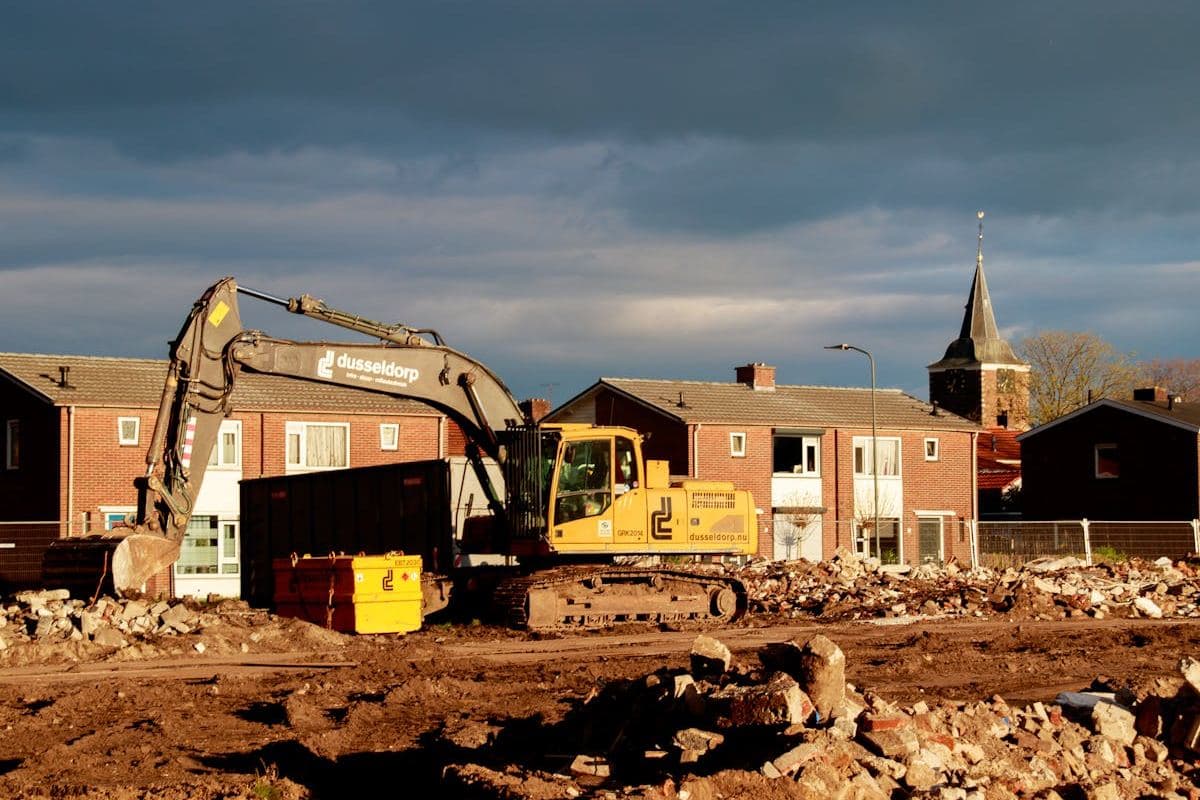
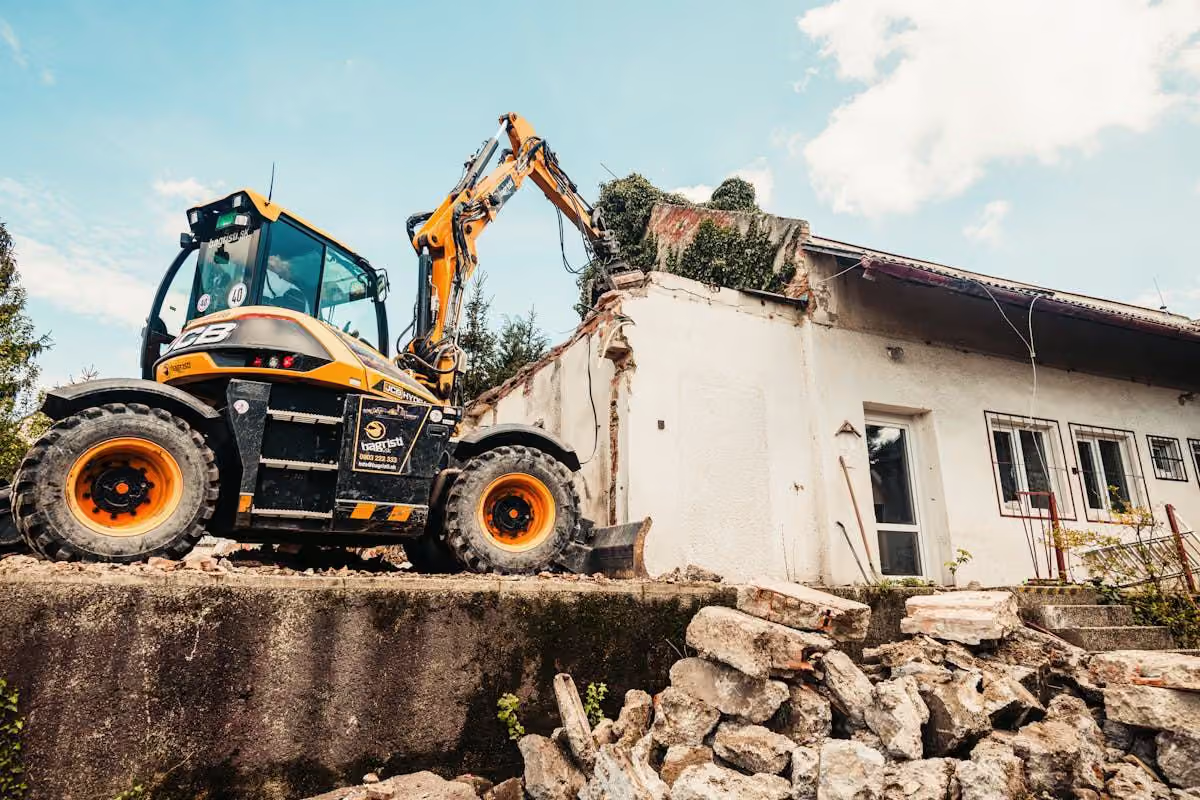
Phase 2: Demolition (2–6 Weeks)
Once approval is in place, demolition can proceed. This phase has its own approval requirements and costs.
Pre-demolition requirements: • Demolition Development Application or CDC — separate from the build approval • Demolition DA is typically fast (2–4 weeks processing) • Some councils allow demolition under the same CDC as the build • Asbestos survey — mandatory for any building built before 1990 ($250–$500) • Service disconnections — arrange with Ausgrid (power), Jemena (gas), Sydney Water, NBN ($500–$2,000 total) • Neighbour notification — required by demolition contractor • Bond lodgement — some councils require damage bonds for adjoining paths/driveways ($2,000–$5,000)
Demolition costs: • Standard single-storey fibro home (no asbestos): $15,000–$25,000 • Single-storey brick home: $18,000–$30,000 • Double-storey home: $25,000–$45,000 • Asbestos removal adds: $5,000–$25,000 depending on extent – Eaves and soffit only: $5,000–$8,000 – Wall cladding: $8,000–$15,000 – Roof and walls: $15,000–$25,000
Asbestos prevalence by LGA: • Fairfield: Very high — 60–70% of pre-1990 homes contain asbestos (fibro construction dominant) • Cumberland: High — 50–60% (mix of fibro and brick veneer with asbestos eaves) • Canterbury-Bankstown: Moderate–high — 45–55% (older western suburbs worst affected) • Blacktown: Moderate — 35–45% (newer suburbs largely asbestos-free) • Liverpool: Moderate — 30–40% (newer suburbs like Edmondson Park, Austral are asbestos-free)
Demolition timeline: • Permits and service disconnections: 2–3 weeks • Actual demolition: 2–5 days for single storey, 3–7 days for double storey • Site clearance and disposal: 1–2 days • If asbestos: Add 3–10 days for licensed removal • Council final inspection of cleared site: 1–2 days
Tree removal: Most Western Sydney councils have tree preservation orders. Removing trees over 3m height requires council approval. • Tree removal permit: $0–$200 (some councils free if DA approved) • Arborist report (if required): $500–$1,500 • Tree removal cost: $500–$5,000 per tree depending on size and access • Stump grinding: $200–$500 per stump
Important tip: Schedule demolition to start as soon as approval is granted. Every week of delay is a week added to your overall timeline. Coordinate service disconnections 3–4 weeks before demolition date — Ausgrid and Jemena can take 2–3 weeks to schedule disconnections.
Phase 3: Construction (24–40 Weeks)
Construction is the longest phase and follows a predictable sequence of stages. Here's a realistic week-by-week breakdown:
Weeks 1–3: Site Preparation and Slab • Set out by surveyor ($800–$1,500) • Excavation and site levelling ($3,000–$15,000 depending on slope) • Termite treatment — pre-slab chemical barrier ($2,000–$4,000) • Plumbing underslab — sewer and stormwater pipes ($3,000–$6,000) • Slab pour — waffle raft or strip footing ($20,000–$60,000) • Slab curing: 7–10 days minimum before brickwork can start
Weeks 3–8: Frame and Brickwork • Timber or steel frame erection ($15,000–$40,000) – Timber frame is standard for most KDR projects – Steel frame recommended for bushfire zones (BAL-29+) and termite-prone areas • Wall ties and bracing • External brickwork or cladding ($15,000–$40,000) – Brick veneer is most common in Western Sydney – Rendered finish increasingly popular — adds $3,000–$8,000 over standard brick • Window and door installation ($8,000–$25,000)
Weeks 8–12: Roof and Lockup • Roof trusses delivery and installation ($8,000–$20,000) • Roof sheeting — Colorbond ($5,000–$15,000) • Fascia, gutters, and downpipes ($3,000–$8,000) • Garage door installation ($1,500–$4,000) • Building is now 'locked up' — weather-protected • Lockup stage inspection by building certifier
Weeks 12–20: Internal Fit-Out (First Fix) • Electrical first fix — wiring, switch plates, power points ($5,000–$15,000) • Plumbing first fix — hot/cold water, gas ($4,000–$10,000) • HVAC installation — ducted air conditioning ($8,000–$18,000) • Insulation — walls and ceiling ($3,000–$8,000) – R2.5 walls minimum for BASIX compliance – R5.0–R6.0 ceiling recommended for Western Sydney's extreme summer heat • Internal wall framing and plasterboard ($8,000–$20,000) • Tiling — bathrooms, laundry, kitchen splash ($5,000–$15,000) • Waterproofing wet areas ($2,000–$5,000)
Weeks 20–30: Internal Fit-Out (Second Fix) • Joinery — kitchen cabinets, wardrobes, vanities ($15,000–$45,000) • Benchtops — stone or laminate ($3,000–$12,000) • Electrical second fix — switches, power points, lights ($2,000–$5,000) • Plumbing second fix — tapware, toilets, sinks ($2,000–$6,000) • Painting — interior and exterior ($8,000–$20,000) • Floor coverings — tiles, timber, carpet ($8,000–$25,000) • Staircase (if double storey) — timber or steel ($5,000–$15,000)
Weeks 30–36: External Works and Finishing • Driveway — concrete or paved ($4,000–$12,000) • Fencing — Colorbond perimeter ($3,000–$10,000) • Landscaping — turf, garden beds, trees ($3,000–$15,000) • Letterbox, clothesline, external taps • Final electrical — external lights, garden power • Pool installation if applicable ($30,000–$80,000 — adds 4–6 weeks)
Common delays and how to mitigate them: • Rain — Western Sydney averages 8–12 rain days per month in summer (Jan–Mar). Slab pours and brickwork are most weather-sensitive. Building in autumn/winter for slab, spring/summer for fit-out is optimal • Material supply — timber and steel frames are generally readily available in 2026, but specialty items (imported stone, custom windows) can take 8–16 weeks to arrive. Order early • Trades availability — Western Sydney has strong building demand. Book electrical, plumbing, and tiling trades 4–6 weeks ahead of when they're needed • Council inspections — allow 3–5 business days for inspection bookings with private certifiers, 5–10 days for council • Variations — changes during construction add time and cost. Lock in selections before construction starts
Phase 4: Handover and Moving In (2–4 Weeks)
The final phase covers inspections, certification, and preparation for occupation.
Pre-handover inspections: • Practical Completion Inspection (PCI) — conducted by builder with homeowner – Walk through every room, check every surface, fitting, and fixture – List all defects on a PCI report – Builder has 7–14 days to rectify defects before handover – Common defects: paint touch-ups, tile grout, door adjustments, scratched glass, plumbing adjustments
• Occupation Certificate (OC) — issued by the Principal Certifying Authority (PCA) – Final building inspection confirms compliance with approval – Must have OC before legally occupying the dwelling – Timeline: 1–2 weeks after PCI defects resolved
Service reconnections: • Electricity reconnection: Contact Ausgrid/Endeavour Energy — allow 5–10 business days • Gas reconnection: Contact Jemena — allow 5–10 business days • Water: Usually remains connected during construction (temporary metered supply) • NBN new connection: Allow 2–4 weeks — book early • Solar panel installation and grid connection: If installing solar, allow 2–4 weeks after power connection for meter upgrade
Post-handover protections: • NSW Home Building Compensation Fund (HBCF) insurance — covers structural defects for 6 years, non-structural for 2 years • Defects liability period — typically 6 months from handover. Builder must rectify any defects that appear • Structural warranty — 6 years under NSW Home Building Act • Key maintenance items: re-stain timber decking at 12 months, check external caulking at 12 months, service HVAC at 12 months
Complete timeline summary:
Fastest realistic KDR timeline (CDC pathway, no complications): • Planning and design: 6 weeks • CDC approval: 4 weeks • Demolition: 3 weeks • Construction (single storey): 24 weeks • Handover: 2 weeks • Total: 39 weeks (approximately 9 months)
Average KDR timeline (DA pathway, normal conditions): • Planning and design: 10 weeks • DA approval: 14 weeks • Demolition: 4 weeks • Construction (double storey): 32 weeks • Handover: 3 weeks • Total: 63 weeks (approximately 15 months)
Worst-case KDR timeline (DA with complications): • Planning and design: 12 weeks • DA approval with amendments: 24 weeks • Demolition with asbestos: 6 weeks • Construction with rain delays: 40 weeks • Handover with defect remediation: 4 weeks • Total: 86 weeks (approximately 20 months)
Total KDR costs — quick reference: • Single-storey 3-bed KDR: $380,000–$550,000 (excluding land) • Double-storey 4-bed KDR: $480,000–$750,000 • Premium double-storey 5-bed KDR: $650,000–$1,000,000+ • These include demolition, approvals, construction, landscaping, and all fees
Buildana manages the entire KDR process — from initial site assessment through design, approvals, demolition, construction, and handover. We provide a fixed-price contract before demolition begins, so you know exactly what your new home will cost. Our average KDR timeline across Western Sydney is 11 months from contract signing to key handover. Call 0476 300 300 to start planning your knockdown rebuild.
Buildana builds across Sydney. Visit /homes/knockdown-rebuilds to learn more or /construction/site-earthworks to discuss your project.