What Is BASIX and Why Does It Matter for Your New Home?
Every new home, duplex, or major renovation in NSW requires a BASIX (Building Sustainability Index) certificate before construction can begin. BASIX is a NSW Government initiative that sets minimum standards for water efficiency, thermal comfort, and energy use. Without a valid BASIX certificate, your CDC or DA application will not be accepted.
As of 2026, BASIX requirements have tightened significantly. The energy target has increased from 50 to 60 points for new single dwellings in most climate zones, and the thermal comfort target now requires compliance with NatHERS 7-star ratings in many areas. For homeowners and developers in Western Sydney, understanding BASIX is essential to avoiding costly redesigns. Buildana (Lic. 487805C) designs every home for BASIX compliance from the concept stage — not as an afterthought.
The Three BASIX Targets Every Home Must Meet
BASIX assesses three sustainability categories, each with a numerical target your design must achieve:
1. Water — Minimum 40-point reduction in potable water use compared to the NSW benchmark home. This means installing water-efficient fixtures (minimum 4-star WELS rated taps, showerheads, toilets), connecting to a rainwater tank (minimum 2,000–5,000 litres depending on lot size), and using the tank for toilet flushing, laundry, and outdoor irrigation.
2. Energy — Minimum 50–60 point reduction depending on your climate zone. Western Sydney falls primarily in Climate Zone 28 (warm temperate). You achieve points through insulation levels (R2.5+ walls, R4.0+ ceiling), glazing performance (double glazing or high-performance single), efficient hot water (heat pump or solar), LED lighting throughout, and ceiling fans.
3. Thermal Comfort — Your home's heating and cooling loads must meet NatHERS thresholds. Western Sydney's hot summers and cool winters make this challenging. North-facing living areas, eaves for summer shade, cross-ventilation, and appropriate window-to-wall ratios are critical design strategies.
Buildana's design team models BASIX compliance during the concept phase. We test multiple configurations to find the most cost-effective combination of measures — ensuring you meet the targets without over-spending on unnecessary upgrades.
Got questions about your project?
Free 30-min consultation with Oliver — bring your block, your brief, your budget. No sales pitch, just honest advice.
What BASIX Compliance Costs in Practice
BASIX compliance adds cost to every new build. The question is how much — and which measures offer the best value.
Typical BASIX-driven costs for a 220 sqm home in Western Sydney (2026):
• Rainwater tank (3,000–5,000L): $2,500–$5,000 supplied and installed • Water-efficient fixtures upgrade: $500–$1,500 above standard • Wall insulation (R2.5 batts): included in standard construction • Ceiling insulation (R4.0–R6.0): $1,500–$3,000 • Double glazing or high-performance windows: $8,000–$15,000 above standard aluminium • Heat pump hot water system: $3,500–$5,500 (compared to $1,500 for electric storage) • LED lighting package: $500–$1,000 • Ceiling fans (4–5 rooms): $1,500–$2,500
Total BASIX compliance cost: approximately $18,000–$33,000 above a non-BASIX build. However, most of these measures deliver ongoing savings — a heat pump hot water system saves $400–$600/year in electricity. Double glazing reduces cooling and heating costs by 20–30%. Over 10 years, the energy savings often exceed the upfront cost.
Buildana includes all BASIX requirements in our fixed-price contracts. No surprises, no variations for 'BASIX upgrades' during construction.
Common BASIX Mistakes That Delay Approvals
We see these errors regularly from other builders and owner-builders:
1. Specifying a rainwater tank but not plumbing it to toilets and laundry. BASIX requires the tank to actually connect to these fixtures — not just sit in the backyard. If the plumbing connection is missing from the plans, the certificate will not be issued.
2. Under-sizing the rainwater tank. In Western Sydney, a 2,000L tank is the minimum for a detached house, but larger homes or duplexes often need 3,000–5,000L to meet the water target.
3. Excessive west-facing glazing. Large windows facing west cop brutal afternoon sun in Western Sydney summers. This dramatically increases cooling load and makes the thermal comfort target nearly impossible without expensive mitigation (external shutters, deep eaves, high-performance glass).
4. Choosing the wrong hot water system. An electric storage hot water system will almost always fail the energy target. Heat pump, solar thermal, or instantaneous gas are the practical options for BASIX compliance.
5. Not accounting for shading from neighbouring buildings. BASIX thermal modelling assumes your home receives certain solar gains. If neighbours have two-storey homes blocking winter sun, your heating load increases — and the thermal target becomes harder to meet.
Buildana runs BASIX modelling during the design phase and adjusts the design before lodging. We do not lodge an application that will fail — saving weeks of redesign and re-lodgement.
BASIX for Duplexes and Multi-Dwelling Projects
Duplexes and multi-dwelling projects require a separate BASIX certificate for each dwelling. This is not simply doubling the single-dwelling assessment — each dwelling is modelled individually based on its orientation, glazing, insulation, and services.
Key considerations for duplex BASIX:
• Party walls count as insulated walls (they adjoin a conditioned space), which helps the thermal target. • Each dwelling needs its own rainwater tank OR a shared tank with divided capacity and separate connections. • South-facing dwellings (common in side-by-side duplexes) receive less winter sun, making the thermal comfort target harder. Compensate with additional insulation or better glazing. • Each dwelling needs its own hot water system — shared systems are not permitted under BASIX for Torrens title developments.
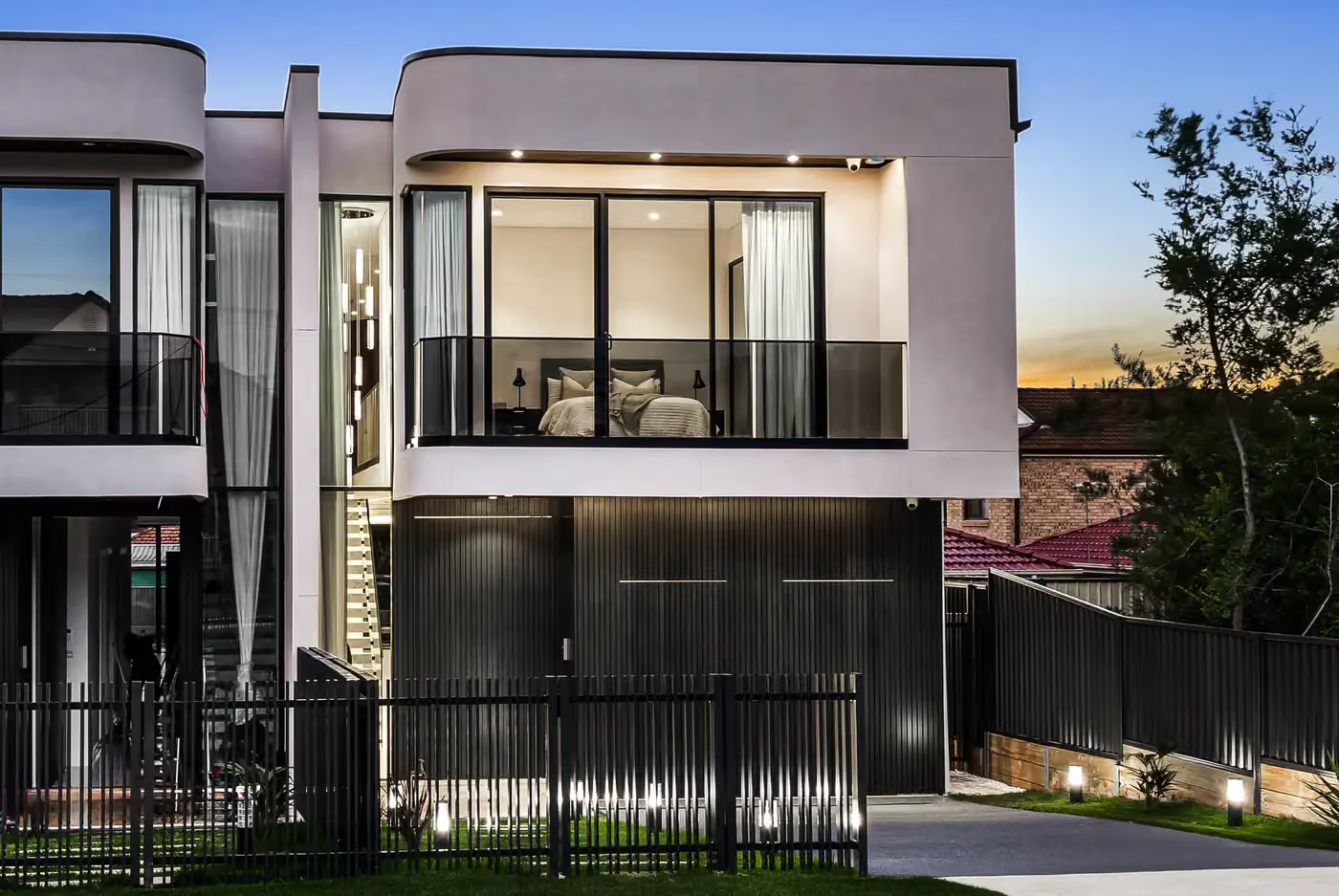
Buildana designs duplexes with BASIX compliance built into the architectural concept. Both dwellings are optimised simultaneously — not designed separately and then retro-fitted with sustainability measures.
For more on duplex design and approvals, see /duplex/duplex-developments. For energy-efficient home design strategies, visit /design-build/design-selections. Ready to start your project? Contact Buildana at /contact for a free site assessment.