Duplex Home Designs Sydney: Layouts That Maximise Value and Liveability
The design of your duplex determines everything — construction cost, rental yield, resale value, council approval speed, and liveability for occupants. In Sydney's competitive property market, a well-designed duplex can be worth $100,000–$200,000 more than a poorly designed one on the same lot.
Across Western Sydney's five key LGAs, duplex design has evolved dramatically. The boxy, symmetrical duplexes of the 2000s have given way to architecturally considered designs that look like premium single homes from the street. Councils now demand higher design quality through their Development Control Plans (DCPs), and buyers and tenants expect modern open-plan living with quality finishes.
This guide covers the major duplex design typologies, floor plan configurations, architectural styles, and how design decisions affect both cost and return. Whether you're building to sell, rent, or live in one side and rent the other, design is where your duplex project succeeds or fails.
Duplex Layout Types: Side-by-Side, Over-Under, and Detached
There are three fundamental duplex layouts, each with distinct advantages for different lot shapes and sizes:
1. Side-by-Side (Attached) Duplex Two mirror-image (or variation) dwellings sharing a central party wall, each facing the street.
• Minimum lot width: 15m (most councils require 7.5m effective width per dwelling) • Minimum lot size: 450–600sqm depending on council • Floor plates: Each dwelling typically 6–8m wide x 12–18m deep • Typical configuration: 2 storeys, 3–4 bedrooms per dwelling • Strata or Torrens subdivision: Both available
Advantages: • Both dwellings have street frontage — higher value • Equal exposure, equal value — easier to sell or rent • Single shared wall reduces construction cost • Each dwelling can have a side setback/yard • Most familiar design — broadest buyer/tenant appeal
Disadvantages: • Requires wide lot (15m+) • Party wall requires Rw 50 acoustic rating • Mirror-image designs can look repetitive (councils increasingly reject simple mirror plans)
2. Front-and-Back (Tandem) Duplex One dwelling fronts the street, the second sits behind with driveway access.
• Minimum lot width: 12m (can work on narrower lots) • Minimum lot depth: 35m+ recommended • Floor plates: Front dwelling 8–10m wide, rear dwelling similar • Typical configuration: Front — 2 storey, 3–4 bed. Rear — 2 storey, 3 bed • Subdivision: Usually strata (shared driveway), Torrens possible with battle-axe lot
Advantages: • Works on narrower lots (12–14m) • Front dwelling maintains streetscape character • Rear dwelling gets more backyard/privacy • Better for sloping sites — stagger levels
Disadvantages: • Rear dwelling has no street frontage — 10–15% lower value • Shared driveway can cause disputes if not properly managed • Rear dwelling access and address can feel secondary • Some councils resist tandem duplexes in established streets
3. Detached Duplex (Two Separate Houses) Two completely separate, freestanding dwellings on the same lot.
• Minimum lot size: 600–700sqm (councils generally require larger lots for detached) • Each dwelling has setbacks on all sides • No party wall — complete acoustic and structural independence • Always Torrens title subdivision (each dwelling on independent lot)
Advantages: • Maximum value — each dwelling is effectively a freestanding house • Torrens title = no strata fees, no body corporate • Complete independence — ideal for selling both • Highest resale value per dwelling
Disadvantages: • Requires larger lot • Higher construction cost (two separate foundations, two separate roofs) • More total setback area = less building footprint • 10–15% more expensive to build than equivalent attached duplex
Which layout for which lot? • Wide lot (15m+), standard depth: Side-by-side attached • Narrow lot (12–14m), deep (40m+): Front-and-back tandem • Large lot (650sqm+), wide: Detached duplex for maximum value • Corner lot: Treat as two separate addresses — each dwelling fronts a different street
Floor Plan Configurations: 3-Bed, 4-Bed, and 5-Bed Options
The bed count and internal layout of each duplex dwelling must balance market demand, construction cost, and council requirements.
3-Bedroom Duplex Dwelling (120–150sqm per dwelling) The most common and most versatile configuration.
Typical layout (2 storey): Ground (65–80sqm): Open-plan kitchen/living/dining, powder room, laundry, single or double garage First (55–70sqm): 3 bedrooms (master with ensuite and WIR), main bathroom
Market demand: Strong. Suits couples with 1–2 children, downsizers, and investors (broadest tenant pool) Rental yield: $550–$750/week across Western Sydney Sale value: $700,000–$1,000,000 per dwelling Construction cost: $280,000–$400,000 per dwelling
4-Bedroom Duplex Dwelling (150–180sqm per dwelling) Premium family configuration — increasingly popular in Western Sydney.
Typical layout (2 storey): Ground (80–100sqm): Open-plan kitchen/living/dining, powder room, laundry, study/guest room, double garage First (70–80sqm): 4 bedrooms (master with ensuite, WIR, and balcony), main bathroom, upstairs linen
Market demand: Very strong in family suburbs — Fairfield, Liverpool, Cumberland, Blacktown Rental yield: $650–$850/week Sale value: $800,000–$1,200,000 per dwelling Construction cost: $350,000–$500,000 per dwelling
5-Bedroom Duplex Dwelling (180–220sqm per dwelling) Premium/luxury configuration for large families.
Typical layout (2 storey): Ground (100–120sqm): Open-plan kitchen/living/dining, butler's pantry, powder room, laundry, 1 bedroom/study, double garage with internal access First (80–100sqm): 4 bedrooms (grand master with ensuite, WIR, and private balcony), main bathroom, upstairs living/rumpus
Market demand: Niche but strong in Western Sydney's larger-family communities Rental yield: $750–$1,000/week Sale value: $900,000–$1,400,000 per dwelling Construction cost: $420,000–$600,000 per dwelling
Multi-generational duplex configuration (live in one, parents in another): Dwelling A: 4-bed family home (180sqm) Dwelling B: 2-bed parent/in-law home (100sqm) This asymmetric design maximises the family side while providing a comfortable, manageable home for elderly parents. Both dwellings share a central courtyard or garden.
Construction cost for asymmetric: $550,000–$800,000 total
What sells best in each LGA: • Fairfield: 4-bed per dwelling most popular — large family sizes, multi-generational interest • Liverpool: 4-bed dominant, 5-bed in premium suburbs (Cecil Hills, Green Valley) • Cumberland: 3-bed and 4-bed equally popular — investor and family mix • Canterbury-Bankstown: 3-bed for investor market, 4-bed near metro stations • Blacktown: 4-bed dominant — family demographic with 3+ children common
Planning a duplex in Sydney?
Free site review — we'll assess zoning, feasibility and likely build cost before you commit to design fees.
Architectural Styles and Street Presentation
Council DCPs increasingly mandate design quality for duplexes — gone are the days of cookie-cutter mirror-image boxes. Here are the styles that achieve both council approval and market appeal:
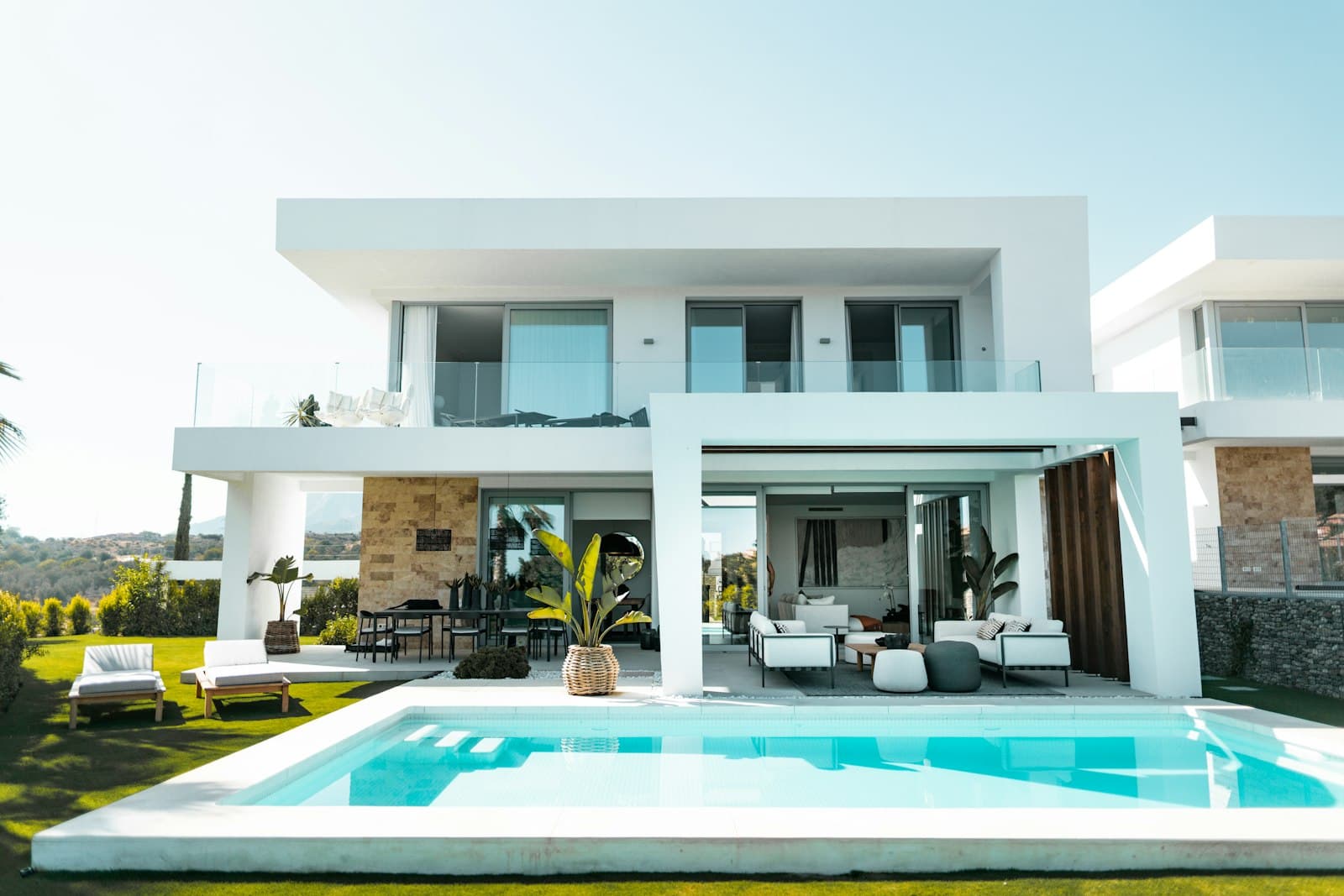
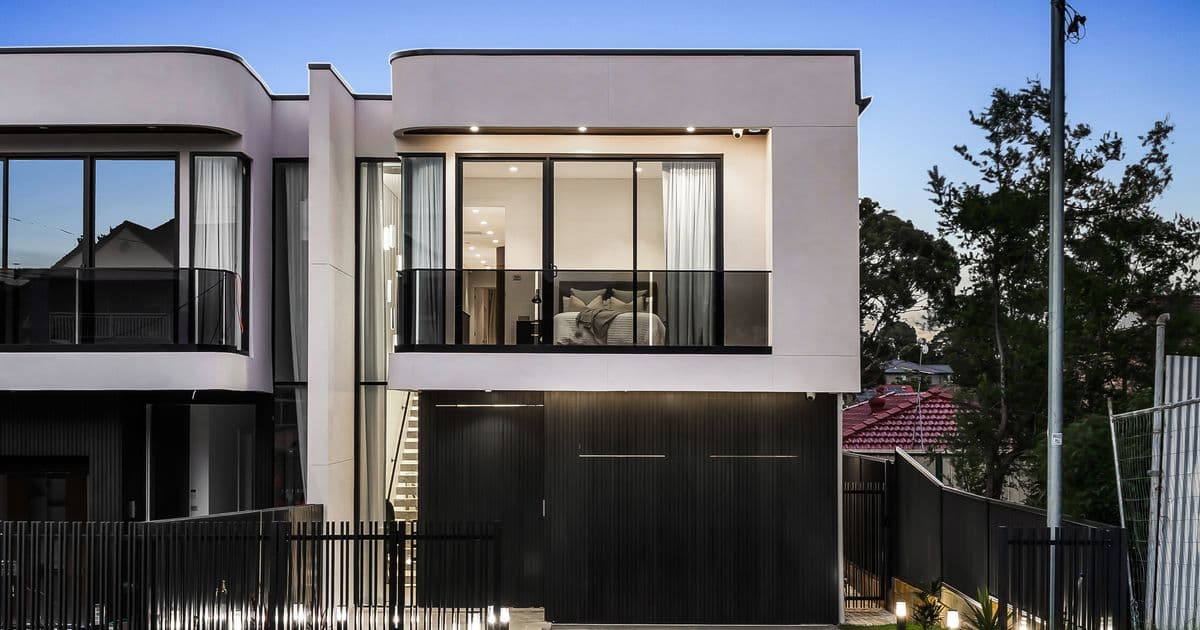
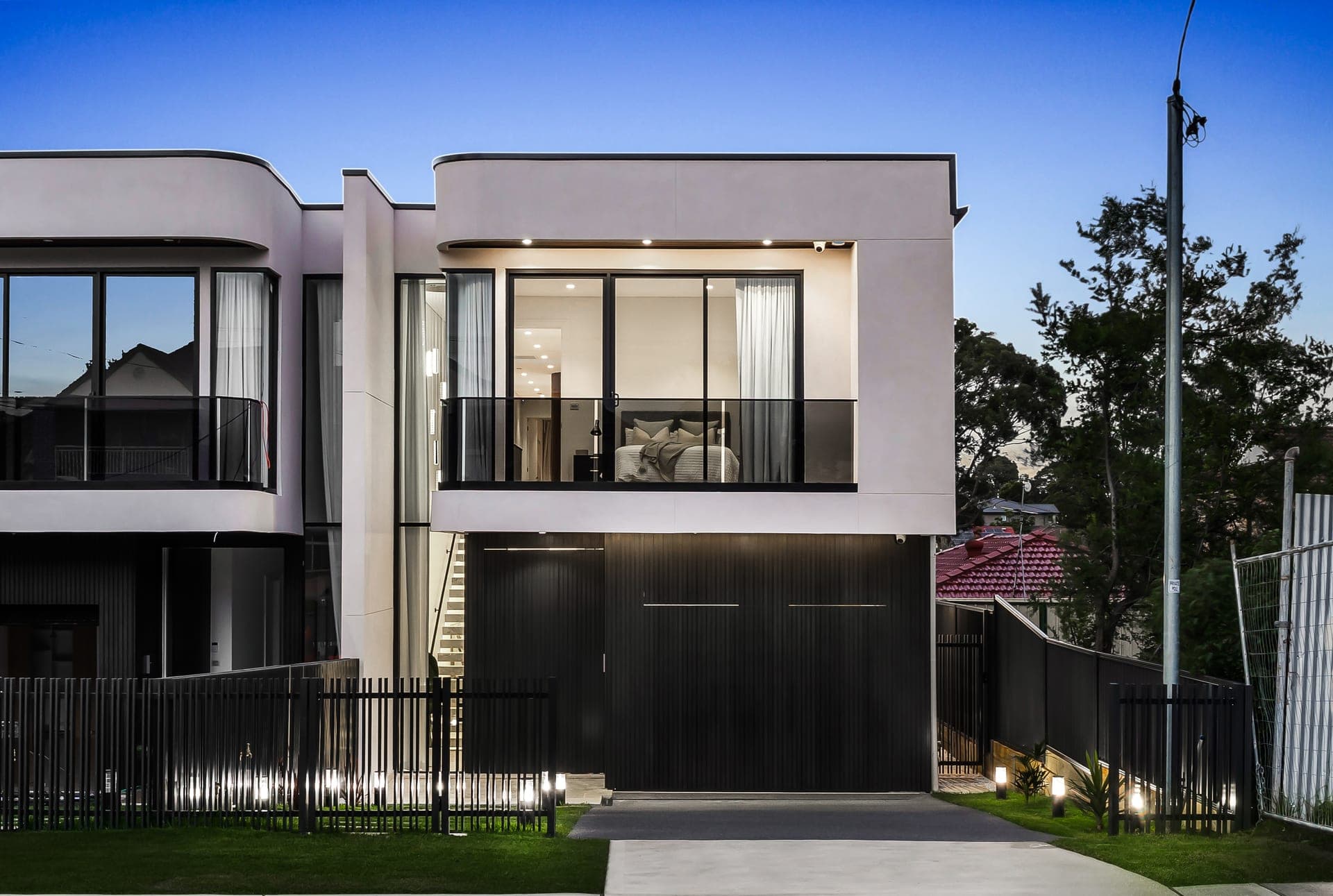
Contemporary Modern Clean lines, rendered walls, flat or skillion roof, large windows, mixed cladding (render + timber + stone). • Most popular style in new release areas (Edmondson Park, Marsden Park, Austral) • Cost premium: None — this is the baseline style for 2026 • Council reception: Excellent — matches desired modern streetscape character • Features: Parapet walls hiding flat roof, aluminium window frames, LED strip lighting to facade
Modern Farmhouse Gabled roof, Linea board or weatherboard cladding, covered verandah, muted colour palette. • Growing in popularity, particularly in Blacktown and Cumberland LGAs • Cost premium: 5–10% (cladding costs more than standard brick render) • Council reception: Very good — council planning officers appreciate the residential character • Features: Standing seam metal roof, timber-look garage door, front porch with steel posts
Luxury Resort Stone feature walls, large pivot front door, covered entry with feature lighting, premium landscaping. • Popular in premium Western Sydney streets — Cecil Hills, Greystanes, Castle Hill-adjacent areas • Cost premium: 15–25% • Council reception: Good — subject to bulk and scale compliance • Features: Stacked stone or Cultured Stone facade, 1.2m pivot door, full-height glass entry, evening lighting design
Avoiding the 'duplex look': The biggest challenge in duplex design is making two dwellings look like one premium home. Strategies: • Vary rooflines between dwellings (different parapet heights, one gabled one skillion) • Use different cladding materials on each half — render one side, brick the other • Offset the entry doors — don't place them symmetrically side by side • Different garage door styles or one garage forward, one set back • Unified landscaping scheme that flows across both frontages • Single continuous fence/wall across the full frontage creates a unified streetscape
Design for approval speed: Councils assess duplex DAs against building articulation, setback compliance, streetscape compatibility, overshadowing, and privacy. Designs that address these proactively get approved faster: • Building articulation: Minimum 30% of the facade should have depth variation (not a flat wall) • Privacy: Upper-floor windows facing neighbours should be offset, frosted, or fitted with privacy screens. Include this in your DA drawings — don't make the assessor ask for it • Overshadowing: Provide shadow diagrams showing the duplex doesn't overshadow neighbouring living areas for more than 3 hours on June 21 (winter solstice) • Landscaping: Show at least 1 canopy tree per dwelling in the front yard. Councils love trees
Design Decisions That Maximise Return
Whether you're building to sell, rent, or live in one side, these design decisions directly impact financial performance:
1. Prioritise living space over bedrooms: A 3-bed duplex with a generous open-plan living area (35–40sqm) and outdoor dining appeal outperforms a 4-bed with cramped living areas. Tenants and buyers prioritise living space for daily use over a bedroom that becomes a dumping ground.
2. North-facing living areas: Duplexes with north-facing living/dining areas rent for 5–10% more and sell for 8–12% more than equivalent south-facing designs. When configuring the duplex on your lot, orient living areas north wherever possible.
3. Outdoor connection: A covered alfresco area (15–25sqm) opening from the kitchen/living via bifold or stacking doors adds $20,000–$30,000 of perceived value for approximately $8,000–$15,000 construction cost. Best ROI feature in any duplex.
4. Storage — the underrated feature: Every duplex dwelling should include: linen cupboard, broom cupboard, under-stair storage (if 2-storey), and garage storage space. Tenants rate 'storage' as their 3rd most important feature after kitchen quality and natural light.
5. Smart bathroom specification: Spend the money on bathrooms. A well-finished bathroom (floor-to-ceiling tiles, frameless shower screen, stone-top vanity) costs $8,000–$12,000 more than builder basic — but adds $15,000–$25,000 to the dwelling's value. Best ROI per dollar spent.
6. Energy efficiency features that add value: • Solar panels (6.6kW system): $4,000–$6,000 installed. Saves tenants $1,200–$1,800/year in power. Increasingly expected by tenants — properties with solar rent faster and command $10–$20/week premium • LED lighting throughout: $500–$1,000 additional over standard. Expected by 2026 — not installing LED looks dated • Double-glazed windows: $3,000–$6,000 additional for a duplex dwelling. Dramatic comfort improvement in Western Sydney's 40°C+ summers. Increasingly required for BASIX compliance
7. Parking configuration: • Double garage per dwelling: Industry standard for 4-bed+ duplexes. Single garage is acceptable for 3-bed in high-density areas near transport • Internal access from garage to house: Essential. Having to walk outside to get from garage to house is a dealbreaker for many families • Extra driveway parking: If lot width allows, design for 1 additional car space per dwelling on the driveway. Western Sydney families average 2.1 cars per household
Buildana designs and builds duplexes that maximise both liveability and return. Our in-house design capability means we can optimise your duplex layout for your specific lot shape, orientation, and investment goals. From concept design through DA, construction, and subdivision — we manage the entire process. Call 0476 300 300 for a free duplex design consultation.
Buildana builds across Sydney. Visit /duplex/duplex-developments to learn more or /advisory/development-feasibility to discuss your project.
Fixed-price estimate
Get a real number for your block
Two minutes now saves the guesswork. Oliver or one of the team calls back with a realistic range for your suburb and block, then books a free site walk if you want a fixed price.
- Priced off your block, not a brochure — soil, slope and council read first
- NSW licensed builder 487805C. HBCF insured. Fixed-price HIA contract.
- Reply within 4 working hours. No sales pressure, ever.
2026 Duplex Design Update — What's Working in Sydney's New-Build Duplex Market
Three duplex design patterns dominate Sydney's 2026 approvals across the LGAs we work in (Fairfield, Liverpool, Cumberland, Canterbury-Bankstown, Blacktown). Knowing which one fits your block before you brief an architect saves 6–10 weeks of redesign.
Pattern 1 — Mirrored attached duplex, 4+2.5+DLUG each side. This is the default for 600–800sqm R2/R3 blocks with 15m+ frontage in the post-July-2024 reform era. Each dwelling is 180–220sqm internal, 4 bed, 2.5 bath, double lock-up garage. Total build cost (turn-key) May 2026: $1.05M–$1.45M for the pair. Sells well to families in Fairfield, Liverpool and Blacktown at $850k–$1.15M each.
Pattern 2 — Stacked dual occupancy (one over one). For narrow blocks (12–14m frontage) where mirrored attached doesn't fit FSR. Lower dwelling 3 bed, upper dwelling 3 bed, separate entries from a side path. Build cost May 2026: $980k–$1.30M. Rental focus rather than resale because strata titles are harder and Torrens isn't possible.
Pattern 3 — Detached duplex (two separate dwellings on one lot). For blocks 700sqm+ with the depth to fit two separated structures. Each typically 3 bed, 2 bath, 130–170sqm. Build cost May 2026: $850k–$1.15M for the pair. The cleanest Torrens-title outcome but requires deeper blocks and more careful S7.11 calculation.
2026 design trends actually getting approved:
• Pitched-roof forms over flat parapets — councils have pushed back hard on flat-roof duplexes in established R2 streets • Brick veneer or render-and-brick combinations over full render — DCP-friendly • Garages set back behind front building line (now mandatory in most Sydney DCPs) • 3000mm articulated front setbacks rather than flat 4500mm walls • Deep-soil zones of 25%+ properly landscaped, not gravel
For a free design feasibility on your specific block, call 0476 300 300 or see /insights/duplex-block-size-nsw for the eligibility check first.