
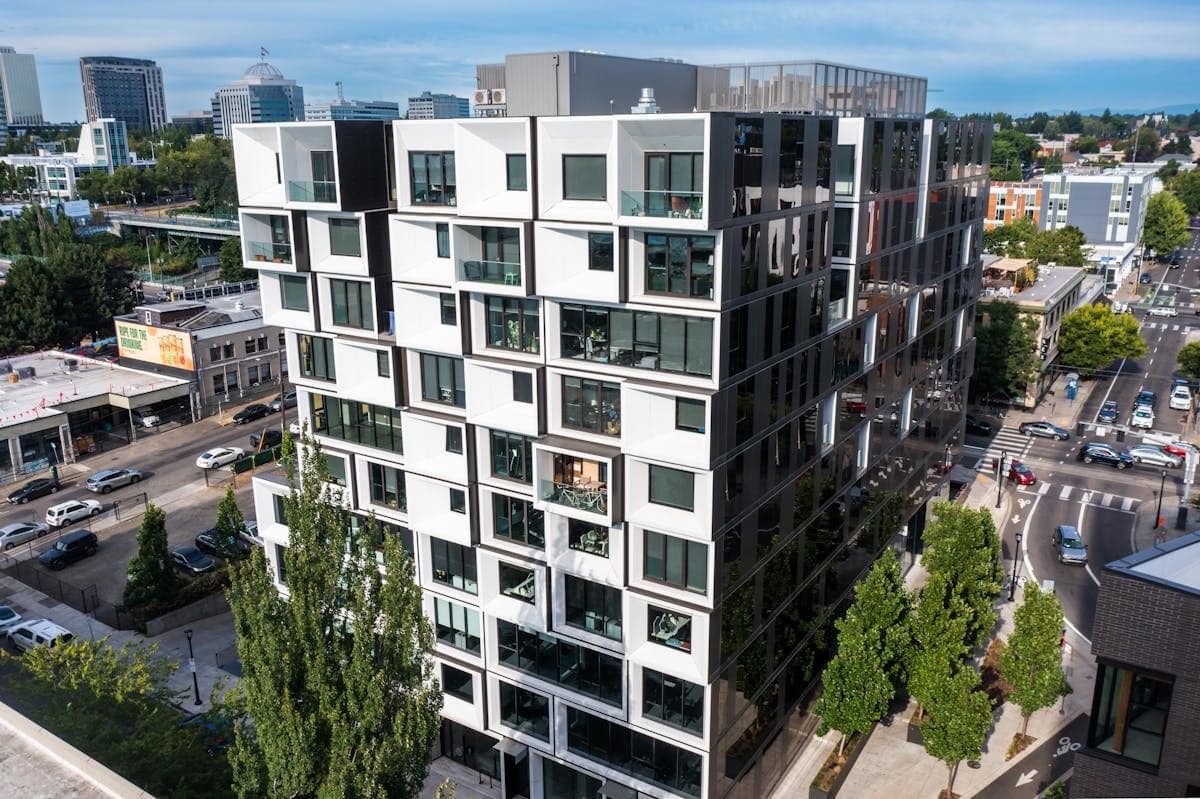
Telopea 2117 · City of Parramatta
Custom Home Builder in Telopea: All-Electric From Day One
No gas meter, no gas bill. Design the house around that.
Telopea is being rebuilt around the light rail, and plenty of owners on the R2 fringe are replacing 1960s brick with something new. The question I'm asked more often now: can we skip gas entirely? Yes. But an all-electric home works best when it's designed that way from the start, not converted halfway through.
Short answer
Can a new Telopea home be built all-electric?
Yes. Gas isn't required in a new NSW home, so an all-electric design uses a heat pump for hot water, induction cooking, reverse-cycle heating and cooling, and solar, with a battery installed to AS/NZS 5139 if you want one. Check whether an EV charger needs three-phase power. Mid-spec construction is about $2,160 to $2,600 per m², with solar and battery priced separately.
Written and reviewed by Oliver Alameri
Licensed builder, NSW Contractor Licence 487805C · Founder, Buildana
Fact-checked
The four big electric loads
In a gas-free home, four things do the work gas used to do. Heat pump hot water, which moves heat from the air into the tank rather than heating it with a plain element, and uses far less electricity doing it. An induction cooktop: fast, precise, easy to clean. Reverse-cycle air conditioning for heating as well as cooling. And, increasingly, an electric vehicle charging in the garage.
Each is ordinary technology now. The design work is in making them fit together: where the heat pump unit sits (it hums, so not under a bedroom window), how big the switchboard is, and whether the supply can handle everything running at once.
- Heat pump hot water, placed away from bedrooms
- Induction cooktop on its own circuit
- Reverse-cycle air conditioning sized to the plan
- EV charger circuit or conduit in the garage
Converting to all-electric later means new cables through finished walls. Designing it in costs far less.
Solar, batteries and the power supply
BASIX sets energy targets for every new NSW home. Rooftop solar is one of the most effective ways to meet them, and on a gas-free house it pays back faster because more of your load is electric. We plan roof planes facing north and west with no vents or skylights in the way.
Batteries have their own rules. AS/NZS 5139 restricts where a home battery can go: not in habitable rooms, not in ceiling spaces, not under stairs, and with clearances around doors and windows. A garage wall or dedicated external enclosure usually works. We mark the spot on the plans so conduits are in place even if the battery comes later.
Then the supply. With an EV charger, induction and air conditioning all drawing power, the electrician checks the maximum demand. Sometimes the answer is a larger single-phase supply. Sometimes it's three-phase, arranged with the network before construction.
Building a gas-free home in Telopea?
Share your Telopea street and roughly what you want to build. You'll get the electrical loads mapped, solar and battery options, the supply you'll need, and the build cost beside them.
0476 300 300What it costs, and what it saves
Leaving out gas removes the gas connection, the meter and the pipework. Heat pump hot water, a larger switchboard and solar add cost. On balance, the build cost difference is modest, and there's no gas supply charge to pay every quarter afterwards.
Telopea sits 2% under the Rawlinsons Sydney figures. Expect around $2,160–$2,600/m² for mid-spec construction, with solar, battery and three-phase upgrades priced as separate items so you can decide on each.

All-electric design checklist
Put these on the drawings, not in a later variation.
- 01
Heat pump location away from bedrooms and neighbours
- 02
Switchboard with spare capacity
- 03
Maximum demand check and supply upgrade if needed
- 04
Solar roof planes clear of vents and skylights
- 05
Battery location compliant with AS/NZS 5139
- 06
EV charger circuit or conduit to the garage
All-electric homes in Telopea
Is gas required in a new NSW home?
Yes. Gas isn't required. The home still needs a BASIX certificate, and all-electric designs commonly meet it with heat pump hot water and solar.
Where can a home battery be installed?
AS/NZS 5139 restricts locations. Batteries can't go in habitable rooms, ceiling spaces or under stairs, and need clearances from doors and windows.
Do I need three-phase power for an EV charger?
Not always. Many chargers run on single-phase. The electrician's maximum demand calculation decides whether an upgrade is needed.
Which council approves homes in Telopea?
The City of Parramatta, postcode 2117. Code-compliant designs may go through complying development instead of a DA.
Sources and references
Costs are from the Rawlinsons handbook with the local cost index applied; rules and timeframes are checked against the sources below.
One meter. One bill. Planned from the start.
All-electric custom homes in Telopea, with heat pumps, induction, solar, batteries and EV charging designed into the plans.