
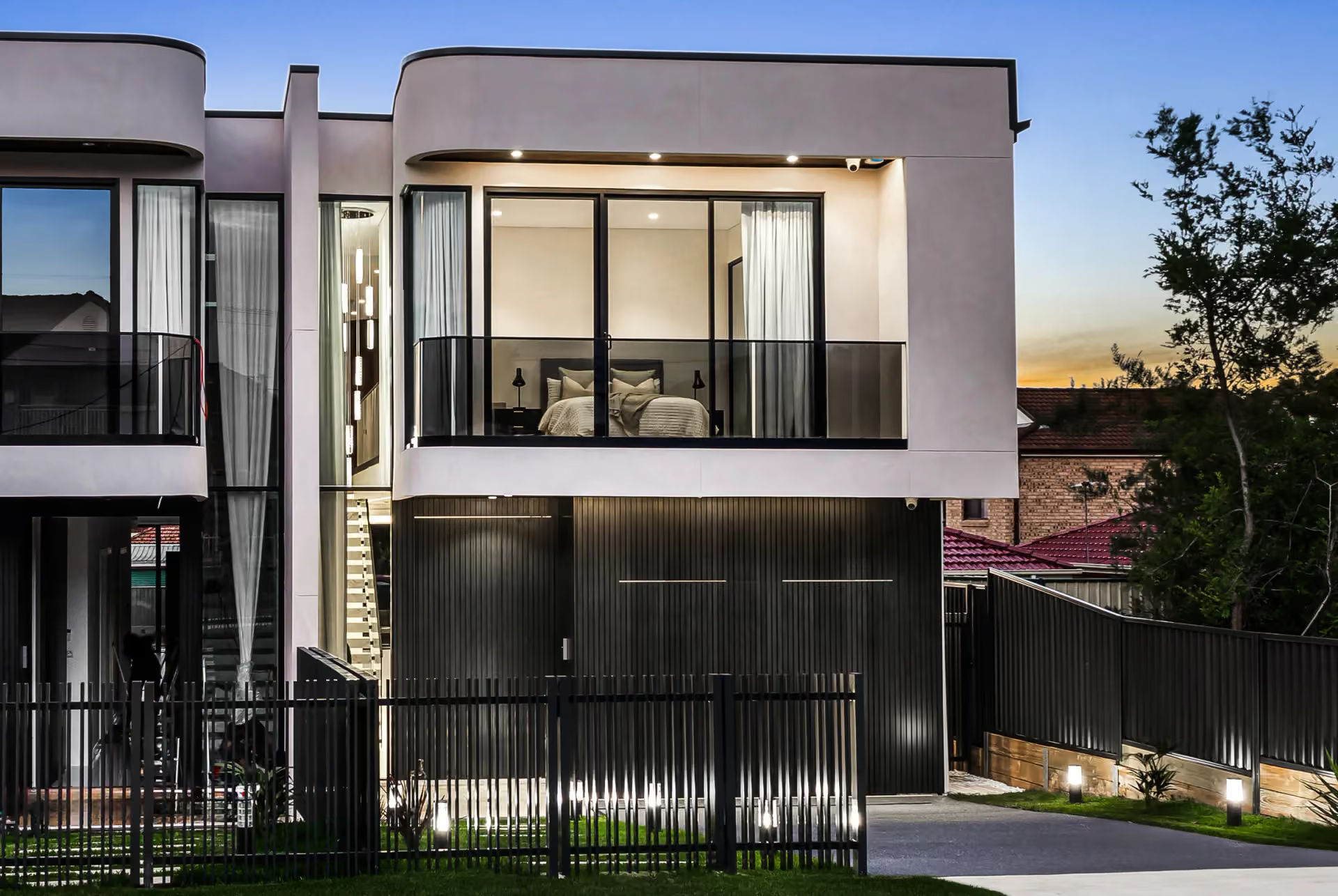
Stanmore 2048 · Inner West Council
Duplex Builders Stanmore
Stanmore already has plenty of pairs. A new duplex here has to sit among them.
The Marrickville development control plan describes northern Stanmore as mostly houses, with a considerable number of semis and terraces, and very few blocks of flats. Stanmore station gives nearby lots the state's duplex standards, and three conservation areas shape what a new pair looks like. Here's how they fit together on a real lot.
Short answer
Can I build a duplex in Stanmore?
Often, if the lot suits. Within 800m walking distance of Stanmore station, the state's standards apply: 450m² and 12m wide. Stanmore's houses are assessed under the Inner West LEP 2022 and the Marrickville DCP 2011, and parts of northern Stanmore sit in one of three heritage conservation areas, which usually means a DA to Inner West Council.
Written and reviewed by Oliver Alameri
Licensed builder, NSW Contractor Licence 487805C · Founder, Buildana
Fact-checked
Stanmore station and the state's numbers
Stanmore station is on the NSW Government's list of Low and Mid-Rise Housing areas, and so are Petersham station and Newtown station and town centre (King Street & Enmore Road). Since 28 February 2025, residential land within 800m walking distance of a listed area has state standards for a dual occupancy: a lot of 450m², 12m wide, a floor space ratio of 0.65:1 and a height of 9.5m. A design that meets them can't be refused on those grounds.
The same standards allow the pair to be subdivided into lots of 225m² and 6m wide each. In a suburb where a lot of the housing is already in pairs, that's the rule that makes two separately owned homes possible on one original lot.
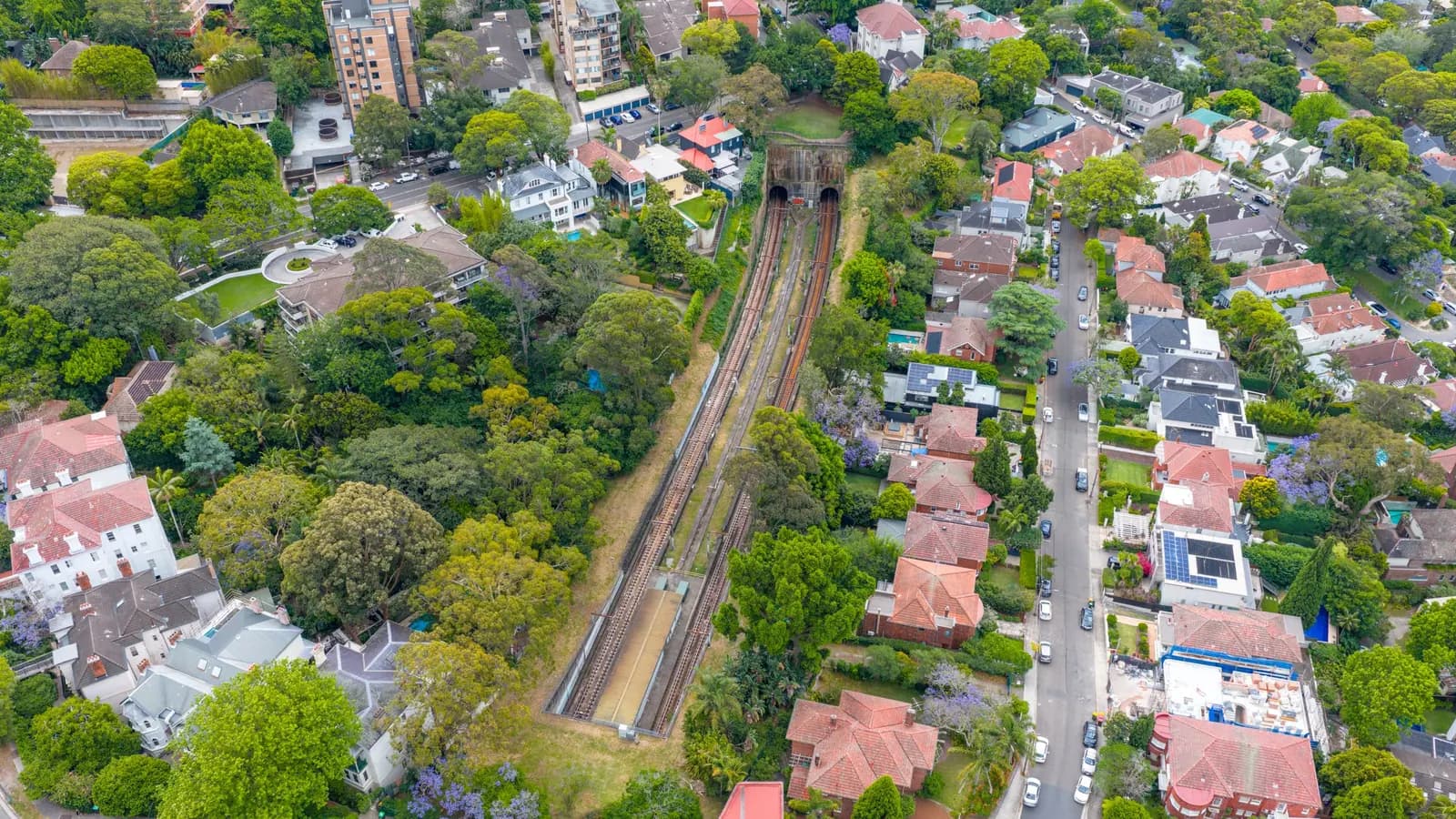
Two cautions. The walk is measured along streets and paths you can use, and the railway line can make it longer than it looks, so a lot can be close to the station and still outside the catchment. And NSW Planning's exclusions, heritage items among them, still apply lot by lot. The planning certificate settles both.
Precinct 3: what the DCP says about Stanmore North
Part 9 of the Marrickville DCP 2011 divides its area into planning precincts, and Stanmore has two: Stanmore North, Precinct 3, and Stanmore South, Precinct 7. Precinct 3 covers the northern part of Stanmore and the eastern part of Petersham, bounded by the railway line, Crystal Street, the back of Parramatta Road along Corunna Lane, and Kingston Road and Cardigan Lane. Stanmore Village and the station sit on its southern edge.
The DCP describes dwellings mostly from the Late Victorian and Federation periods, predominantly single storey with a considerable amount of two storey, finished in a mix of render, paint and face brick under mostly terracotta tiled pitched roofs. Lots are mostly small to medium in frontage, with double or triple width blocks in places and larger lots with big villas on the higher streets.
Its desired future character is direct about what a duplex has to respect. It aims to maintain distinctly single storey streetscapes where they exist, to protect groups or runs of buildings that keep their original roof forms, detailing and finishes, to preserve the precinct's predominantly low density character, and to make sure off-street parking doesn't harm the precinct's amenity.
If your street is a run of single storey cottages, the second storey has to hide behind the first.
Have a Stanmore lot in mind?
Send the address and a photo of the street front. Oliver will respond within 4 working hours for a free initial conversation about the station rules and the conservation area.
0476 300 300Three conservation areas, three histories
Precinct 3 contains three heritage conservation areas. Annandale Farm, C6, grew from the last subdivisions of the Annandale Farm Estate, historically associated with George Johnston, and is valued for cohesive streetscapes and rhythmical roofscapes from runs of houses built to a single pattern. The DCP also flags sites with archaeological potential relating to the former farm outbuildings, with controls in section 8.2.8.
Kingston West, C7, comes from the 1887 and 1893 subdivisions of the West Kingston Estate, with modest, finely detailed terraces and cottages, and roofscapes along Rosevear Street that step up and down the hillside. Cardigan Street, C8, is a group of Federation cottages and semi-detached dwellings built within a short period, in dark and polychrome brick with timber sash windows and Marseilles pattern terracotta roofs.
Each comes with its streetscape type in section 8.3 and its architectural style sheets in section 8.5, and the design is read against them. A heritage conservation area generally rules complying development out for a new duplex, so in these streets expect a development application to Inner West Council, assessed with Part 8 alongside the state standards where they apply.
- C6 Annandale Farm: runs of houses, rhythmical roofscapes, archaeological potential
- C7 Kingston West: modest single storey terraces and cottages
- C8 Cardigan Street: Federation cottages and semis
Rear lanes, parking and the complying development width
The DCP notes that very few Stanmore North houses have a garage or hardstand at the front, because most streets have rear lanes that allow parking at the back. For a duplex, that's usually where the garages belong: off the lane, keeping the street front as gardens, verandahs and front doors.
It also matters for complying development on lots outside the conservation areas. Under the Low Rise Housing Diversity Code, the lot needs at least 400m², or the LEP's dual occupancy minimum if larger, and 15m at the building line. That drops to 12m where parking is reached only from a secondary road, parallel road or lane. If the lot passes and nothing excludes it, a CDC must be decided within 20 days where neighbours are notified (10 days otherwise). If not, it's a DA, and a DA has a 40-day assessment period.
A garage on a lane still needs to work for the lane: turning space, the neighbours' garages opposite, and how bins and deliveries get in and out. I walk the lane before the garages are drawn.
Duplex construction on a tight Stanmore lot
Building two homes on a small inner west lot is mostly a logistics job. Materials and machinery often come in from the lane. Neighbours are close on both sides, so dilapidation reports on their houses come before demolition. The shared wall between the two new homes has to meet the National Construction Code's fire and sound requirements, and on an attached pair it's detailed before anything else.
If there's a house on the lot now, an asbestos check comes before demolition is priced. On sites with archaeological potential, the DCP's controls set what happens if relics turn up during excavation, so it's planned for, not discovered.
For the build itself, Rawlinsons' Sydney rate for a two-storey full brick townhouse is the nearest published guide: $3,030–$3,270/m² at a medium finish, $3,430–$3,700/m² at a high finish, excluding GST and escalated to the ABS September 2026 index. My allowance for an attached four-bedroom pair is $1.4M–$1.7M plus GST; land, demolition, site works, approvals and contributions come on top. For timing, the ABS average build for new NSW townhouses and semi-detached homes was 3.45 quarters in 2025-26.
One timing note. Inner West Council is replacing the Marrickville DCP 2011 with a single Inner West DCP, and has its own housing plans in progress. A design started now should be checked against both the current and the draft controls before lodgement.

What I check first on a Stanmore duplex lot
These decide the rules, the form and how the job gets built.
- 01
Walking distance to Stanmore station, Petersham station or Newtown station and town centre (King Street & Enmore Road)
- 02
Conservation area or heritage item on the planning certificate
- 03
Whether the street is a run of single storey houses
- 04
Rear lane access for garages and for building
- 05
Archaeological potential under section 8.2.8
- 06
Whether you'll hold both homes or subdivide
Duplexes in Stanmore
Can I build a two storey duplex on a single storey street in Stanmore?
Possibly, but the DCP's desired character for Stanmore North aims to keep distinctly single storey streetscapes. On a street like that, plan for an upper floor set well back behind the original roof form, so the street still reads as single storey.
Is my lot in a heritage conservation area?
Precinct 3 includes the Annandale Farm, Kingston West and Cardigan Street conservation areas. The planning certificate and the Inner West LEP heritage maps confirm whether your lot is in one, or is a heritage item.
Can I put the garages on the rear lane?
That's usually the best answer in Stanmore, and the DCP notes most streets have rear lanes. Lane-only parking also lowers the complying development width test, if the lot is outside a conservation area.
Do the state's duplex rules apply near Newtown or Petersham too?
Yes, if your lot is within 800m walking distance of Petersham station or Newtown station and town centre (King Street & Enmore Road), both of which are listed. The walking route decides, not the suburb name.
Who would build it?
Oliver Alameri builds it himself. He's the licensed builder behind Buildana, NSW contractor licence 487805C, with more than 15 years' building experience, and inner west jobs are run from the Fairfield studio like every other.
Sources and references
Costs are from the Rawlinsons handbook with the local cost index applied; rules and timeframes are checked against the sources below.
- Inner West Council
- Rawlinsons Australian Construction Handbook, Rawlhouse Publishing
- Environmental Planning and Assessment Act 1979 (NSW)
- State Environmental Planning Policy (Exempt and Complying Development Codes) 2008
- National Construction Code, ABCB
- Asbestos, SafeWork NSW
- Search heritage databases, NSW Environment and Heritage
- NSW Planning Portal Spatial Viewer (zoning, FSR and hazard maps)
- Low and Mid-Rise Housing areas, NSW Planning
- Australia Post postcode search
- State Environmental Planning Policy (Housing) 2021
A new pair for an old street
Tell me the address and what you'd like from the lot. Oliver will respond within 4 working hours for a free initial conversation.