What Is a Duplex? Dual Occupancy Explained
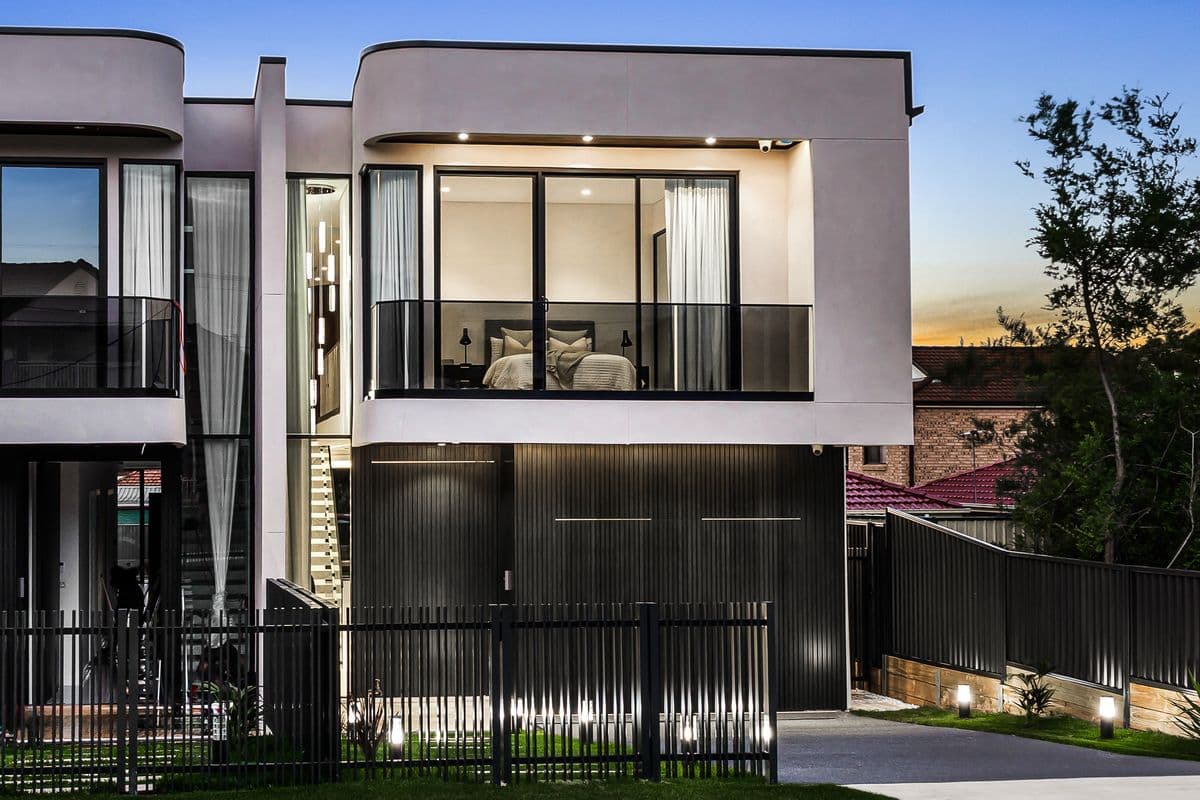
A duplex — legally called a dual occupancy in NSW — is two dwellings on one lot. They can share a common wall (attached duplex) or be completely separate buildings (detached duplex). Each dwelling has its own entrance, kitchen, bathroom and living areas. You can live in one and rent the other, house extended family, or sell both independently if you subdivide under Torrens Title.
In Western Sydney, duplexes are one of the most efficient ways to unlock the development potential of an existing residential block. Instead of one ageing 3-bedroom house on a 600 sqm lot, you build two modern 3–4 bedroom homes — doubling the housing on the same land while staying well under the density of townhouse or apartment development.
Under NSW planning law, dual occupancy is permitted on R2 Low Density Residential land (subject to minimum lot sizes) and R3 Medium Density Residential land. The July 2024 Low and Mid-Rise Housing Policy has expanded dual occupancy eligibility to more R2-zoned land near transport — particularly relevant for suburbs close to train stations across Fairfield, Liverpool, Bankstown and Merrylands.
Buildana (Lic. 487805C) designs and builds duplexes across Western Sydney under a single fixed-price contract. We handle feasibility assessment, design, approval, construction and — if required — Torrens Title subdivision so you receive two separate titles at completion.
How Much Does It Cost to Build a Duplex in Western Sydney?
Duplex construction costs depend on the total floor area of both dwellings combined, the construction type, and the spec level. Here are the real numbers sourced from the Rawlinson Australian Construction Handbook.
Construction costs per dwelling (Rawlinson, Edition 29 — Sydney):
Duplex construction sits between detached housing and townhouse costs. For attached duplexes sharing a party wall, the townhouse rate applies. For detached duplexes, individual house rates apply to each dwelling.
| Construction Type | Spec Level | Cost per sqm |
|---|---|---|
| Townhouse two storey full brick (attached duplex) | Medium | $2,115–$2,280/sqm |
| Townhouse two storey full brick (attached duplex) | High | $2,390–$2,580/sqm |
| Individual house brick veneer (detached duplex) | Medium | $1,965–$2,120/sqm |
| Individual house brick veneer (detached duplex) | High | $2,745–$2,960/sqm |
| Individual house full brick (detached duplex) | Medium | $2,050–$2,210/sqm |
| Individual house full brick (detached duplex) | High | $2,815–$3,035/sqm |
Typical duplex project costs (both dwellings combined):
| Duplex Type | Total Floor Area | Construction Cost | Per Dwelling |
|---|---|---|---|
| Attached — 2 × 120 sqm, medium brick | 240 sqm total | $508,000–$547,000 | $254,000–$274,000 |
| Attached — 2 × 150 sqm, medium brick | 300 sqm total | $635,000–$684,000 | $317,000–$342,000 |
| Attached — 2 × 150 sqm, high brick | 300 sqm total | $717,000–$774,000 | $358,000–$387,000 |
| Detached — 2 × 140 sqm, medium BV | 280 sqm total | $550,000–$594,000 | $275,000–$297,000 |
| Detached — 2 × 160 sqm, high BV | 320 sqm total | $878,000–$947,000 | $439,000–$474,000 |
Additional costs to budget for:
- Demolition of existing house (if applicable): $8,000–$18,000 (plus $5,000–$25,000 for asbestos)
- Torrens Title subdivision (surveyor + council fees): $15,000–$30,000
- Section 7.11 / 7.12 contributions (varies by council): $20,000–$50,000 per additional dwelling
- Civil works — driveway, stormwater, sewer connection for second dwelling: $25,000–$50,000
- External works — landscaping, fencing, driveways for both dwellings: $30,000–$60,000
Total all-in duplex project cost (typical Western Sydney):
- Standard attached duplex — 2 × 130 sqm, medium spec: $650,000–$780,000 all-in
- Quality attached duplex — 2 × 160 sqm, high spec: $900,000–$1,050,000 all-in
- Premium detached duplex — 2 × 180 sqm, high spec: $1,100,000–$1,300,000 all-in
The Duplex Development Process — Step by Step
Building a duplex is more complex than a single dwelling because it involves dual occupancy planning controls, potential subdivision, and additional infrastructure for the second dwelling. Here is the process Buildana follows.
Step 1 — Feasibility assessment (Week 1–2)
Before anything else, we check whether your block can support a duplex. This means verifying: zoning (R2, R3 or eligible under the Low and Mid-Rise Housing Policy), minimum lot size for dual occupancy under your council's LEP, frontage width, setbacks under the DCP, floor space ratio, landscaped area requirements, and car parking. We also assess soil, slope, services, flood mapping and contamination. Free assessment — no obligation.
Step 2 — Design (Week 3–10)
Duplex design must balance two competing goals: maximising liveable space in each dwelling while meeting all planning controls. Key design considerations include:
- Party wall placement (attached) or building separation (detached)
- Dual street access for corner blocks vs battle-axe configuration
- Private open space for each dwelling (minimum 24 sqm per dwelling under the Housing Code)
- Car parking — typically 1 space per 1–2 bedroom dwelling, 2 spaces per 3+ bedroom dwelling
- Privacy — window placement, screening, acoustic separation between dwellings
Average design phase: 6–8 weeks including client revisions.
Step 3 — Documentation and approval (Week 10–24)
Full documentation package: architectural drawings, BASIX certificates (one per dwelling), structural engineering, geotechnical report, stormwater management (critical for dual occupancy — double the impervious area), shadow diagrams, landscaping plan, and waste management plan.
Approval pathway:
- CDC: 10–15 business days if the duplex meets all Housing Code parameters. Available for attached duplexes on R2 land meeting minimum lot size and frontage.
- DA: 60–120+ business days through council. Required for detached duplexes, battle-axe configurations, flood-affected land, or designs exceeding CDC parameters.
Step 4 — Demolition (if applicable, Week 24–28)
If an existing house needs to come down first — same process as a knockdown rebuild. Licensed demolition including asbestos assessment and removal.
Step 5 — Construction (Week 28–52+)
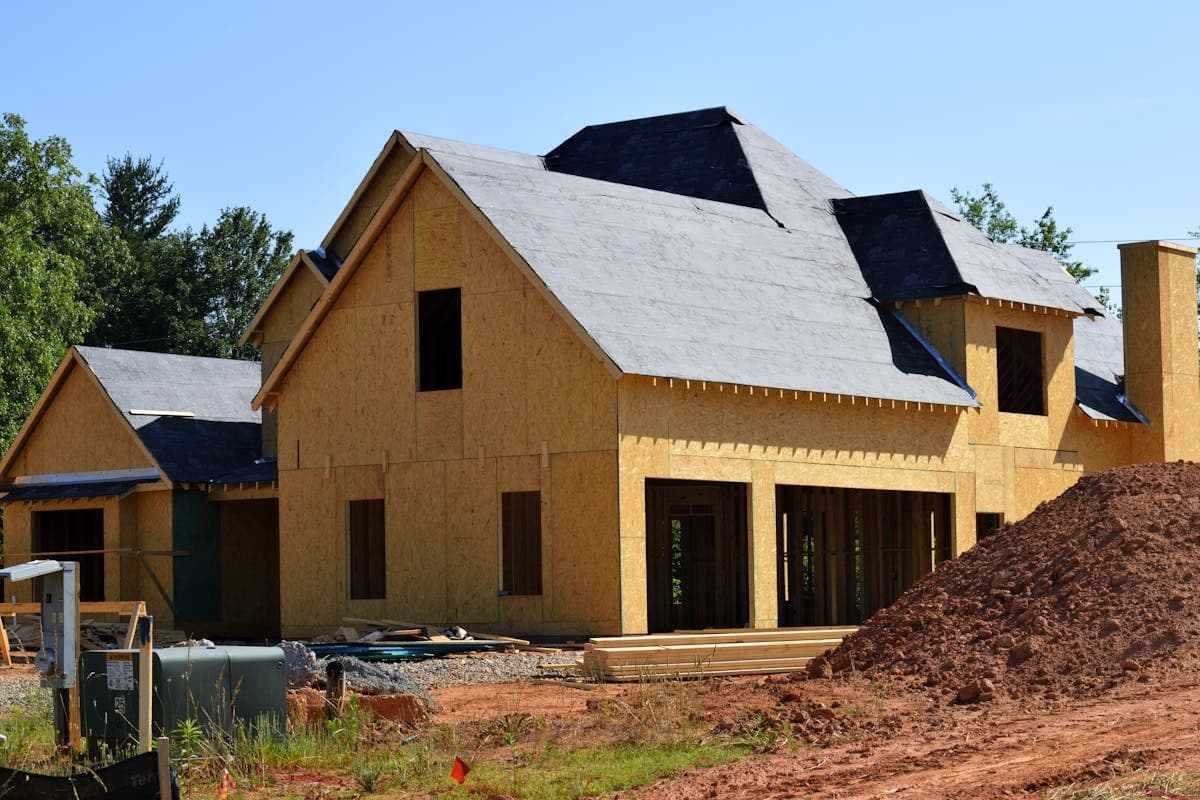
Both dwellings built simultaneously under one contract. Buildana manages the full build with milestone updates: excavation and slab, frame, lock-up, fit-out, finishing. Typical construction duration: 30–40 weeks depending on size and complexity.
Step 6 — Subdivision (if required, Week 48–60)
If you want separate titles (Torrens Title), the subdivision process runs in parallel with the final construction stages. This involves: a registered surveyor preparing a subdivision plan, council endorsement, linen plan registration with NSW Land Registry Services, and creation of two separate titles. Timeline: 8–16 weeks from lodgement.
Step 7 — Completion (Week 52–60)
Occupation Certificates for both dwellings, warranty documentation, handover of keys. If subdivided, you receive two separate Torrens Title certificates.
Duplex Approval in NSW — CDC vs DA
The approval pathway determines your timeline. Getting this right at the start saves months.
CDC — Complying Development Certificate
A duplex can be approved via CDC under the NSW Housing Code if it meets ALL of these criteria:
- Block is zoned R2, R3 or RU5
- Block meets the minimum lot size for dual occupancy in your council's LEP (typically 600 sqm in R2)
- Minimum frontage: 12m (varies by council)
- Attached duplex only (detached dual occupancy generally requires DA)
- Not in a heritage conservation area
- Not flood-prone land (consult council flood maps)
- Not bushfire-prone land (BAL-40 or Flame Zone)
- Meets all setbacks, height limits and FSR in the Housing Code
- Maximum two storeys
Timeline: 10–15 business days
Cost: $4,000–$8,000 (certifier fees — two dwellings)
DA — Development Application
Required when CDC criteria are not met. Most common triggers:
- Detached duplex configuration
- Block does not meet minimum lot size
- Heritage conservation area
- Flood-affected land
- Variation sought to setbacks, FSR or height
Timeline by council (typical for dual occupancy DA):
- Fairfield City Council: 60–100 days
- Liverpool City Council: 80–120 days
- Cumberland Council: 60–90 days
- Canterbury-Bankstown City Council: 80–120 days
- Blacktown City Council: 60–100 days
Cost: $8,000–$20,000 (council fees + consultant reports)
Key difference: DA applications for dual occupancy often require neighbour notification and may attract objections — particularly around overlooking, overshadowing and traffic. CDC has no neighbour notification requirement, which makes it faster and more predictable.
The July 2024 Low and Mid-Rise Housing Policy
This NSW Government reform is a game-changer for duplex development. It allows dual occupancy on R2-zoned land within 800m of certain rail stations and town centres — even if the council's LEP does not currently permit it. Suburbs near stations in Fairfield, Liverpool, Bankstown, Auburn, Merrylands, Granville and Blacktown are particularly affected. Buildana assesses eligibility under this policy as part of every feasibility study.
What Block Do You Need for a Duplex in NSW?
Block requirements vary by council and zoning. Here are the key parameters for Western Sydney councils.
Minimum lot sizes for dual occupancy (R2 Low Density Residential):
| Council | Minimum Lot Size | Minimum Frontage | Notes |
|---|---|---|---|
| Fairfield City Council | 600 sqm | 15m | Attached only in R2 unless mid-rise policy applies |
| Liverpool City Council | 600 sqm | 15m | Higher Section 7.11 contributions |
| Cumberland Council | 600 sqm | 15m | Heritage restrictions in Granville, Lidcombe, Auburn |
| Canterbury-Bankstown | 600–700 sqm | 15m | Varies by precinct — check LEP mapping |
| Blacktown City Council | 600 sqm | 15m | Efficient processing for standard applications |
R3 Medium Density Residential:
Minimum lot sizes are generally smaller (450–500 sqm) and detached dual occupancy is more readily permitted. R3 zones are found in select pockets near town centres and transport corridors.
Block characteristics that make a great duplex site:
- Width over depth: A wider block (18m+) allows a side-by-side attached duplex with each dwelling facing the street. Blocks under 15m frontage are generally too narrow for CDC-compliant dual occupancy.
- Corner blocks: The best duplex sites in Western Sydney. Dual street frontage allows each dwelling to face a different street — solving the problem of car access, address, and streetscape. Many corner blocks in Fairfield, Liverpool and Bankstown are 600–700 sqm with 15m+ frontage on each street.
- Flat or gently sloping: Keeps slab and civil works costs predictable. Significant slope adds $30,000–$80,000 in retaining and benching.
- Existing services: Both dwellings need sewer, water, electricity and stormwater connections. A second sewer junction or pump-out adds $15,000–$40,000.
What does NOT work for a duplex:
- Blocks under 550 sqm in R2 zones (under minimum lot size)
- Blocks with less than 12m frontage (insufficient for setbacks and car access)
- Blocks with significant easements or restrictions on title
- Flood-affected land (possible but adds cost and complexity — DA required)
- Heritage-listed properties (demolition may not be permitted)
Attached vs Detached Duplex — Which Should You Build?
This is one of the first design decisions and it affects cost, approval pathway, and end value.
Attached duplex (party wall)
Two dwellings share a common wall — like a semi-detached house. The party wall must meet acoustic and fire separation requirements under the NCC.
Advantages:
- Eligible for CDC (faster approval, no neighbour notification)
- More efficient use of land — shared wall means more internal space
- Lower construction cost per sqm (shared wall, shared foundations along party wall)
- Simpler stormwater and civil design
Disadvantages:
- Acoustic separation requirements add cost to the party wall ($3,000–$6,000)
- Both dwellings share the same street frontage — one typically gets a less desirable orientation
- Feels more "attached" — lower buyer perception of independence
Detached duplex (separate buildings)
Two completely separate dwellings on the same lot — no shared walls.
Advantages:
- Each dwelling is truly independent — higher buyer appeal
- More flexible site layout, especially on irregular blocks
- No acoustic transfer between dwellings
- Each dwelling can have a different orientation, entry and address (if on a corner block)
Disadvantages:
- Generally requires DA (not CDC eligible in most cases)
- Higher construction cost — two separate structures, two full sets of foundations and roofing
- More site coverage needed — must meet building separation requirements (typically 3m minimum)
- More complex civil works — separate stormwater systems, separate service connections
Our recommendation: For most blocks in Western Sydney under 700 sqm, an attached duplex delivers the best value — faster approval via CDC, lower construction cost, and efficient use of land. For larger blocks (700 sqm+) and corner blocks, a detached duplex can deliver higher individual sale prices that justify the additional cost and longer DA timeline.
Duplex as an Investment — The Numbers
A duplex development in Western Sydney is both a housing solution and an investment strategy. Here is how the numbers work.
Scenario 1: Build to hold (live in one, rent the other)
You own a 650 sqm block in Fairfield with an existing 3-bedroom house valued at $850,000 (land $700,000 + house $150,000). You demolish and build an attached duplex — two 4-bedroom homes, medium spec.
- Total build cost: $700,000 all-in (demolition + construction + subdivision)
- Your total investment: $700,000 (you already own the land)
- End value of both dwellings: $1,400,000–$1,600,000 (two separate Torrens Title homes at $700,000–$800,000 each)
- Equity created: $700,000–$900,000
- Rental income from second dwelling: $550–$650/week ($28,600–$33,800/year)
- Gross rental yield on build cost (second dwelling only): 8.2–9.7 per cent
Scenario 2: Build to sell (sell both)
Same block. You build, subdivide, and sell both homes.
- Total investment: $850,000 (land) + $700,000 (build) = $1,550,000
- Sale of both dwellings: $1,400,000–$1,600,000
- Gross profit: $0–$50,000 (on paper — thin margin)
- BUT: if you live in one for 12 months before selling, CGT main residence exemption applies to that dwelling
The real investment play: Smart duplex developers in Western Sydney are not building to sell day one. They are building to hold long-term — living in one dwelling (CGT-free main residence) and renting the other. Over 5–10 years, both dwellings appreciate while one generates income. This is how generational wealth is built in Western Sydney property.
Rental yield comparison (Western Sydney averages 2026):
| Property Type | Median Rent/Week | Gross Yield |
|---|---|---|
| Detached house 3-bed (Fairfield LGA) | $530–$580 | 3.5–4.0% |
| Duplex dwelling 3-bed (Fairfield LGA) | $550–$630 | 4.0–4.8% |
| Duplex dwelling 4-bed (Liverpool LGA) | $600–$680 | 4.2–5.0% |
| Unit/apartment 2-bed (Canterbury-Bankstown) | $450–$520 | 4.5–5.5% |
Duplexes command near-house rents with lower land cost per dwelling — the best of both worlds for yield-focused investors.
Choosing a Duplex Builder in Western Sydney
Building a duplex is more complex than a standard single dwelling. You need a builder who understands dual occupancy planning controls, subdivision, and multi-dwelling construction.
What to look for in a duplex builder:
- NSW contractor licence for the total contract value. A duplex project commonly exceeds $500,000 — your builder must hold a licence for that value. Buildana holds Contractor Licence 487805C — covering residential building work of any value in NSW.
- Experience with dual occupancy approvals. Each council has different DCP requirements for dual occupancy — setbacks, landscaping, car parking, waste collection, stormwater. A builder with experience in your council area knows what gets approved and what gets sent back for amendments.
- Single fixed-price contract. The contract should cover everything: demolition (if required), construction of both dwellings, all civil works, driveways, landscaping, and fencing. No grey areas.
- Subdivision experience. If you want Torrens Title (separate titles for each dwelling), your builder should coordinate the subdivision process — surveyor, council endorsement, and linen plan registration. Not all builders do this.
- HBCF insurance for each dwelling. Mandatory in NSW for residential work over $20,000. You need separate HBCF certificates for each dwelling.
- Transparent cost breakdown. You should be able to see exactly what each dwelling costs, what the site works cost, and what the subdivision will cost. No lump-sum mystery pricing.
Red flags:
- Builder suggests two separate contracts for each dwelling (creates gaps in responsibility)
- No experience with dual occupancy DA or CDC in your council area
- Cannot provide references from completed duplex projects
- No subdivision coordination — tells you to "sort that out separately"
- Pressure to start before DA/CDC approval is granted
Buildana has built duplexes across Fairfield, Liverpool, Cumberland, Canterbury-Bankstown and Blacktown council areas. We handle the entire process — from feasibility check through to Torrens Title subdivision and handover of two separate homes with Occupation Certificates.
Ready to discuss your knockdown rebuild?
Free site assessment. Honest advice. No obligation.
Book Free Consultation