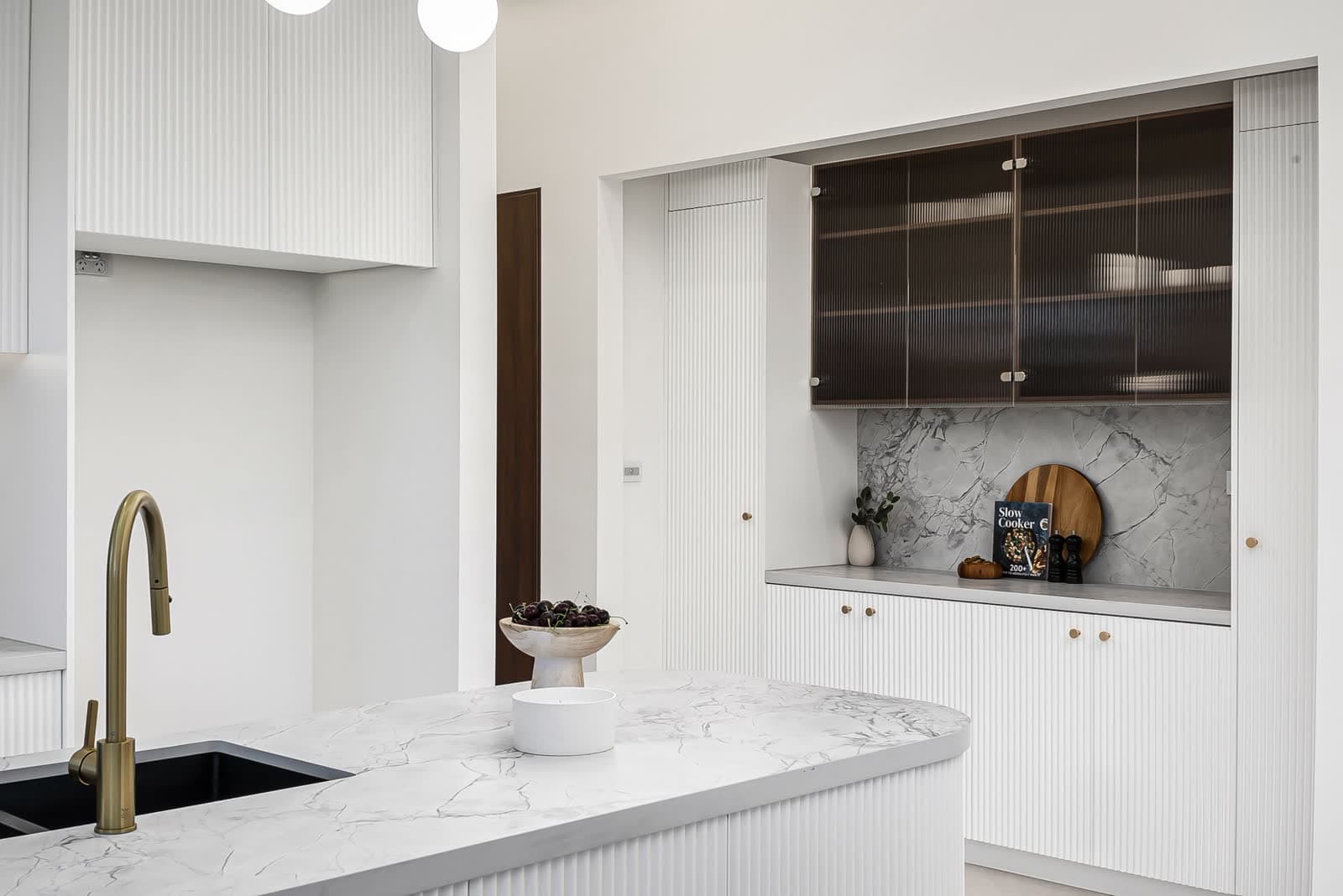
Home Extension Melrose Park — Design, Approval, Structural, Build
Full-service extensions in Melrose Park 2114: structural survey of existing 1950s–1970s + apartments 2020s+ home, design, City of Ryde Council approval, engineering, weatherproofed construction, matched finish to original dwelling.

Quick Answer
A home extension in Melrose Park costs $150,000–$600,000+. Rear extension from $150K, second-storey addition from $300K. Buildana manages design, City of Ryde Council approvals, and construction under one fixed-price contract.
Extending Homes in Melrose Park
Extension in Melrose Park is rare — PAYCE master-planned apartments dominate with strata bylaws restricting scope. Limited detached extension stock outside the precinct. Realistic budget $200K–$500K detached; $130K–$320K apartment-scale.
Melrose Park's housing stock is mostly from the 1950s–1970s + apartments 2020s+, which is the era where structural bones either hold up or don't — and we see plenty of both across the suburb. For extending here, that history matters: asbestos survey before any demolition is non-negotiable, and licensed removal lands somewhere between $5,000 and $25,000 depending on what's actually there. Median price $1.5M–$2.4M on typical 300–600m² blocks. Class M (Wianamatta Shale) / H (Lane Cove + Parramatta River fall, sandstone outcrops) ground, foundation cost band $24,000–$42,000.
Buildana manages the complete home extension process in Melrose Park — from design consultation and structural engineering through to DA or CDC approval, and fixed-price construction to handover. Extend your home without the stress.
Read our Home Extension Cost Guide 2026 or explore extension approval pathways in NSW.
- Home extensions in Melrose Park from $150K
- City of Ryde Council DA and CDC approvals managed
- Ground floor, rear and second-storey additions
- Class M (Wianamatta Shale) / H (Lane Cove + Parramatta River fall, sandstone outcrops) soil — structural engineering included
- 1950s–1970s + apartments 2020s+-era homes assessed for extension suitability
- Connect new to existing — clean, matched finish
- 6-year structural warranty
- Free design consultation — near Meadowbank (T9, 1.2 km) station
Reviewed by Oliver Alameri
Licensed Builder (NSW 487805C) · Master of Property Development · PhD Student · Building across Western Sydney since 2010
Why Extend Your Home in Melrose Park?
Melrose Park is the riverside suburb west of Meadowbank on the Parramatta River — undergoing major master-planned redevelopment (PAYCE Melrose Park, 25-hectare brownfield site) with high-rise apartments replacing the former industrial precinct. Limited detached stock. Wianamatta Shale soil with industrial-legacy contamination management on remediated parcels.
Building costs in Melrose Park sit well below the Sydney metro average, making it an attractive location for value-conscious homeowners and investors. 300–600m² blocks at median prices of $1.5M–$2.4M offer strong land-to-build ratios. Transport access via Meadowbank (T9, 1.2 km) connects Melrose Park to the wider Sydney network. 1950s–1970s + apartments 2020s+-era homes in Melrose Park often have good structural foundations worth building on. Extensions add living space at a fraction of the full rebuild cost. Class M (Wianamatta Shale) / H (Lane Cove + Parramatta River fall, sandstone outcrops) soil (moderately to highly reactive) is standard for Melrose Park — Buildana includes engineered slab design in every quote.
Extension is the dominant scope across Ryde's Heritage Conservation Areas (Putney village, Gladesville Victoria Road precinct, Eastwood Brush Farm precinct, Denistone heritage streets, parts of West Ryde) where KDR is restricted. Federation cottage additions, inter-war heritage extensions, river-fall heritage-grade work on Putney and Tennyson Point all common. Suspended slabs on river-fall sites; foreshore consent on direct waterfront. Heritage Council expects retention of original Federation/inter-war detail. Apartment renovations the other major category — Macquarie Park towers, Meadowbank station precinct, Top Ryde City precinct, Melrose Park master-planned community. Realistic budget $250K–$700K for thoughtful 50–110m² addition inland; $600K–$1.4M premium river-fall heritage-grade work.
Planning Controls — City of Ryde Council
Ryde LEP 2014 & Ryde DCP 2014. R2 Low Density covers most residential streets: FSR 0.5–0.55:1, building height 9.5m, front setback 6–7.5m, landscaped area 40–50% (Ryde DCP enforces 50% on >580m² lots). R3 Medium Density along Victoria Road, Blaxland Road, Devlin Street and Lane Cove Road permits FSR up to 0.9:1. R4 High Density and B4 Mixed Use concentrated on Macquarie Park strategic centre, Top Ryde City precinct, Meadowbank station precinct, West Ryde station precinct and the Eastwood town centre. Duplex minimum lot 580m² (slightly below the typical 600m² standard). Heritage Conservation Areas in pockets — West Ryde Federation streets, Putney village core, Gladesville Victoria Road and side streets, Eastwood Brush Farm Park precinct, Denistone heritage streets. Tree Preservation Order LGA-wide and strict — Ryde retains substantial bushland (Lane Cove National Park frontage on East Ryde, North Ryde; Field of Mars Reserve in Ryde). Wianamatta Shale soil predominant; sandstone outcrops on the Lane Cove River fall (Putney, Tennyson Point, Gladesville) and Parramatta River fall (Meadowbank, Melrose Park) — suspended slab engineering on premium river-fall lots. Riparian setbacks apply to all Lane Cove River and Parramatta River frontages. Sydney Metro Macquarie Park / North Ryde stations and the Macquarie University Hospital + Macquarie University precinct anchor the LGA's strategic centre. Melrose Park master-planned brownfield redevelopment (PAYCE 25-hectare precinct) under specific design controls with industrial-legacy contamination management on remediated parcels.
Home extension builder in Melrose Park — key facts
- Suburb
- Melrose Park, NSW 2114
- Council / LGA
- City of Ryde Council (City of Ryde)
- Primary zoning
- R2 Low / R3 Medium / R4 (Macquarie Park, Top Ryde, Meadowbank station precincts)
- Typical lot size
- 300–600m²
- Soil class
- Class M (Wianamatta Shale) / H (Lane Cove + Parramatta River fall, sandstone outcrops)
- Median house price
- $1.5M–$2.4M
- Home era
- 1950s–1970s + apartments 2020s+
- Typical price range
- $150,000 – $600,000+
- Typical timeline
- 6–12 months design to handover
- Approval pathway
- CDC for most rear extensions, DA for second-storey
Building in Melrose Park — Local Context
Melrose Park Block Realities
Typical Melrose Park blocks are 300–600m² on Class M (Wianamatta Shale) / H (Lane Cove + Parramatta River fall, sandstone outcrops) ground (moderately to highly reactive clay). For a extension, the structural envelope is more constrained than the headline lot size suggests — once you subtract setbacks, easements, landscaped area requirements, and any tree preservation, the actual buildable area is usually 35-45% of the block. We map that early in the feasibility stage so you're designing to what's actually allowed, not what looks possible from the title plan. Foundation cost band on most Melrose Park blocks: $24,000–$42,000.
City of Ryde Planning Context
City of Ryde has its own LEP and DCP layered over State planning controls. For extending in Melrose Park, the practical impact: City of Ryde Council's DCP sets local rules for streetscape character, materials palette in some precincts, vehicle crossover widths, and tree retention. R2 Low / R3 Medium / R4 (Macquarie Park, Top Ryde, Meadowbank station precincts) zoning on most Melrose Park blocks permits single dwellings, alterations, and additions. Buildana checks every overlay (heritage, bushfire, flood, acid sulfate soil, biodiversity) before quoting.
Cost vs Value in Melrose Park
Median sale price in Melrose Park is $1.5M–$2.4M. For a extension, the decision tree runs through three numbers: build cost, expected post-completion value, and how long you plan to hold. Ground-floor extensions of 30–50m² typically return 1.1–1.3× their cost at sale in suburbs around $1.5M–$2.4M. Second-storey adds tend to outperform — 1.3–1.6× — because they unlock larger family layouts on standard blocks. We map this in feasibility before you commit.
Designing for the Melrose Park Streetscape
Melrose Park's housing stock is predominantly from the 1950s–1970s + apartments 2020s+. Meadowbank (T9, 1.2 km) from the nearest station. The local anchor is PAYCE Melrose Park master-planned community. For a home extension, the streetscape question matters more than most builders admit — a brand-new double-storey on a street of single-storey 1950s–1970s + apartments 2020s+ weatherboards will draw council attention on bulk and scale, even if technically compliant. Buildana designs the front elevation to read appropriately for the street while modernising the floor plan and structure behind it. Materials palette, roof pitch, fenestration rhythm — all chosen to settle into the existing rhythm rather than fight it.
Building Activity in Melrose Park Right Now
Melrose Park is seeing steady residential activity — extensions are picking up as families choose to upsize their existing home rather than face stamp duty on a move. Buildana sits inside that pipeline — we know what's getting approved, what's stalling, and why.
Builder's Take on Melrose Park
Existing-structure assessment is the non-negotiable first step. Melrose Park 1950s–1970s + apartments 2020s+ homes often have undersized footings or termite-damaged wall plates that won't carry a second storey. We check with drilled inspections before quoting — no point designing a dream that's not structurally viable.
Second storey on a Melrose Park home: the existing single-storey footings usually need reinforcement, which adds $15K–$40K. The roof comes off. The house is exposed for 4–8 weeks (weatherproofed nightly). Clients often underestimate the disruption — but the result is a doubling of floor area for 50% of the cost of a rebuild.
Melrose Park vs Nearby Suburbs
Melrose Park vs nearby suburbs — key metrics for extending.
| Suburb | Median Price | Typical Lot | Soil Class | Era | Station |
|---|---|---|---|---|---|
| Melrose Park2114this suburb | $1.5M–$2.4M | 300–600m² | Class M (Wianamatta Shale) / H (Lane Cove + Parramatta River fall, sandstone outcrops) | 1950s–1970s + apartments 2020s+ | Meadowbank (T9, 1.2 km) |
| Meadowbank2114 | $1.7M–$2.5M (apartments dominate) | 400–700m² | Class M (Wianamatta Shale) / H (Lane Cove + Parramatta River fall, sandstone outcrops) | 1900s–1970s + apartments 2000s+ | Meadowbank (T9, in suburb) |
| Ermington2115 | $1.4M–$2.0M | 450–700m² | Class M (Wianamatta Shale predominant) / Class P/E (alluvial Parramatta River corridor: Rydalmere, Ermington, Sydney Olympic Park, Wentworth Point) / industrial-legacy contamination overlays on Camellia, Rosehill, Silverwater fringe and Sydney Olympic Park | 1950s–1970s + 2010s+ apartments | Bus to Rydalmere (Parramatta Light Rail, 2 km) |
| West Ryde2114 | $1.9M–$2.8M | 450–750m² | Class M (Wianamatta Shale) / H (Lane Cove + Parramatta River fall, sandstone outcrops) | 1900s–1970s | West Ryde (T9, in suburb) |
Median price, soil class, and lot size shape build feasibility and final cost. Buildana assesses every site against these and other constraints during the free feasibility stage.
Have a question about your project?
Talk to our team — free site assessment and fixed-price quote.
Cost Guide
| Item | Estimated Range |
|---|---|
| Small rear extension (up to 30m²) | $81,000 – $160,000 |
| Medium rear/side extension (30–60m²) | $160,000 – $290,000 |
| Large ground-floor extension (60–100m²) | $290,000 – $450,000 |
| Second-storey addition (60–120m²) | $250,000 – $500,000 |
| Wrap-around (ground + 1st floor) | $450,000+ |
| Structural engineering & tie-in | Included |
Prices are indicative for Western Sydney (2025). Actual costs depend on site, specifications, and approvals.
How It Works
From First Call to Final Key
Everything that has to be right before we touch the ground. Free consultation at your Melrose Park home. We inspect the existing structure, check City of Ryde Council's controls, measure available space, and discuss what you need. You get a clear scope, budget range, and timeline before committing. Two design moves are usually on the table: match the existing house so the extension reads as original, or contrast with it so the new section is clearly modern. Both work — choice is aesthetic, and we'll show 3D renders of both before you commit.
⏱The Melrose Park construction phase. Fixed price, programmed, supervised. CDC (10–15 business days) or DA through City of Ryde Council depending on scope. Structural engineering, BASIX, and all documentation prepared and lodged. Construction Certificate obtained. Construction phase connects new to existing — footings, frame, roof tie-in, waterproofing at junction, internal fit-out and external finish. Staged works minimise disruption to your daily routine in Melrose Park.
⏱The job isn't done when the site's clean; it's done when you have keys, certificates and warranties. Final inspection focuses on the integration: paint blend, flooring transitions, ceiling height, junction waterproofing, sound transmission. The extension shouldn't feel bolted on — it should feel like the house was always meant to be this size.
⏱Our Team
Oliver Alameri
Founder / Director / Builder · MPropDev · PhD Student
Ahmad Alameri
Accounts Manager
Claire Wendell
Project Manager
Estimate Your Build Cost
Use our free calculator to get an instant cost estimate for your project
Ready to take the next step?
Free consultation — no obligation, no pressure.
Frequently Asked Questions
“Buildana built our granny flat in just 12 weeks. Fast approvals, great communication, and a beautiful final product. Highly recommend.”
Fatima Al-Rashid
Liverpool, NSW
We Build Across Sydney
Buildana builds across greater Sydney — with deep roots in Western Sydney's Fairfield, Liverpool, Cumberland, Canterbury-Bankstown, and Blacktown LGAs.
Last updated: 1 April 2026
Melrose Park Extension — Free Consultation
Free design consultation for Melrose Park 2114. We'll assess your home, design the extension, and provide a fixed-price quote.
Start Your Project