Skip to content
Buildana construction project in Western Sydney

Old Toongabbie Knockdown Rebuild — Stay on Your Street

Buildana handles KDR across Old Toongabbie 2146. 1960s–1980s homes on 500–750m² blocks — we know the soil, the City of Parramatta Council rules, and the neighbours' expectations.

Based in Fairfield, Western Sydney5.0 Google RatingLicensed & Insured (LIC 487805C)HIA Member — Buildana Custom Home Builders SydneyHIA MemberMaster Builders Association NSW Member — BuildanaMBA NSW0476 300 300

Demolish and Rebuild in Old Toongabbie

KDR in Old Toongabbie works 500–750m² R2 1960s–1980s brick stock — Wianamatta Shale, mid-tier scope, M2 adjacent. End values $1.3M–$1.8M. Pre-construction 4–7 months.

For a rebuild in Old Toongabbie, the economics are the framing question. Median price $1.3M–$1.8M; build cost on 500–750m² blocks scales by site conditions and specification. Class M (Wianamatta Shale predominant) / Class P/E (alluvial Parramatta River corridor: Rydalmere, Ermington, Sydney Olympic Park, Wentworth Point) / industrial-legacy contamination overlays on Camellia, Rosehill, Silverwater fringe and Sydney Olympic Park ground (extremely reactive clay) keeps foundations honest — $45,000–$80,000 band — and blowouts on that line are the single most common reason fixed-price contracts elsewhere don't stay fixed. Buildana itemises the slab, structural engineering, and geotech work upfront so you see the actual cost in the contract. R3 zoning in pockets of Old Toongabbie opens up dual occupancy potential — worth exploring even if you're not initially considering it.

Buildana manages the complete knockdown rebuild process in Old Toongabbie — from site assessment and architectural design through to DA or CDC approval, demolition management, and fixed-price construction to handover. One builder, one contract, one new home.

Read our KDR Cost Guide 2026 or use the Renovation vs KDR Calculator to compare options.

  • New home in Old Toongabbie from $450K
  • City of Parramatta Council DA and CDC approvals managed
  • Demolition and asbestos removal included
  • Class M (Wianamatta Shale predominant) / Class P/E (alluvial Parramatta River corridor: Rydalmere, Ermington, Sydney Olympic Park, Wentworth Point) / industrial-legacy contamination overlays on Camellia, Rosehill, Silverwater fringe and Sydney Olympic Park soil — engineered slab design included
  • Typical blocks 500–750m² in Old Toongabbie
  • Single and two-storey designs available
  • 6-year structural warranty
  • Free site assessment — near Toongabbie (T1, 2 km) / bus to Parramatta station
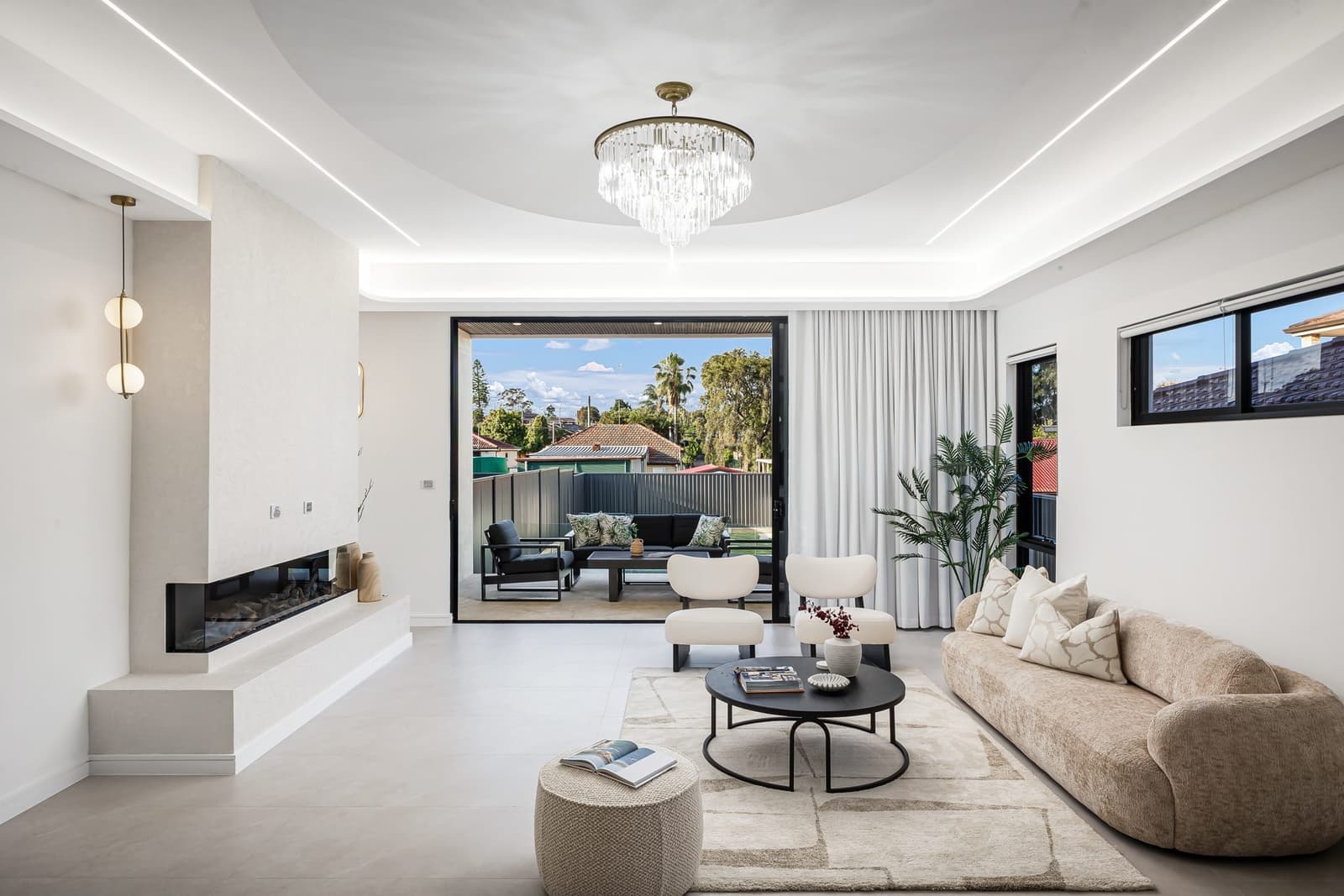
Old Toongabbie knockdown rebuild — 1960s–1980s home replaced with new build
OA

Reviewed by Oliver Alameri

Licensed Builder (NSW 487805C) · Master of Property Development · PhD Student · Building across Western Sydney since 2010

Why Knockdown Rebuild in Old Toongabbie?

Old Toongabbie is the established suburb between Toongabbie and Winston Hills — 1960s–1980s brick on 500–750m² R2 lots. Wianamatta Shale soil. Quiet residential. Strong KDR and duplex market on the larger blocks. Bus connections to Parramatta.

Residential blocks of 500–750m² across Old Toongabbie (2146) provide solid building envelopes for a range of project types. City of Parramatta Council manages planning controls with well-established DCP provisions. Transport access via Toongabbie (T1, 2 km) / bus to Parramatta connects Old Toongabbie to the wider Sydney network. 1960s–1980s-era housing stock across Old Toongabbie is prime for knockdown rebuild — replacing dated layouts and materials with modern, NCC-compliant homes that maximise block potential. Class M (Wianamatta Shale predominant) / Class P/E (alluvial Parramatta River corridor: Rydalmere, Ermington, Sydney Olympic Park, Wentworth Point) / industrial-legacy contamination overlays on Camellia, Rosehill, Silverwater fringe and Sydney Olympic Park soil (extremely reactive) is standard for Old Toongabbie — Buildana includes engineered slab design in every quote.

KDR in the City of Parramatta is split sharply by suburb tier. The acreage-style premium tier — Oatlands (700–1,200m² R2 lots, top-school King's School premium), Carlingford (600–900m² R2), Northmead and North Parramatta (550–800m² R2) — carries premium custom KDR with end values $2.0M–$3.5M+ on Oatlands. Mid-tier KDR is the dominant scope across Dundas, Dundas Valley, Ermington, Rydalmere, Old Toongabbie, parts of Carlingford and Northmead with 1950s–1970s brick stock on 500–800m² R2 lots being replaced with two-storey contemporary builds. KDR is largely impractical on the apartment-led R4 cores (Parramatta CBD, Westmead, Harris Park, Sydney Olympic Park, Wentworth Point, Telopea Renewal Precinct, Epping town centre) where the playbook is apartment redevelopment. Wianamatta Shale soil predominant on suburban cores with minimal rock excavation; Class P/E alluvial soil with elevated water table on the Parramatta River corridor (Rydalmere, Ermington, parts of Telopea, Sydney Olympic Park, Wentworth Point) requiring suspended slabs, Class P/E footings and dewatering — cost premium $40K–$80K above standard. Industrial-legacy contamination clearance required on Sydney Olympic Park (former Homebush Bay industrial/Union Carbide), Wentworth Point (former industrial), Camellia (former Shell Oil refinery), Rosehill industrial fringe, Rydalmere (former industrial), Ermington (former Department of Defence, Boys Town) parcels — NSW EPA SEPP 55 site investigation, remediation action plan and validation reports add 4–8 months and $30K–$150K+ depending on contamination level. Heritage Conservation Areas restrict KDR on the heritage core (Parramatta CBD heritage precinct, Harris Park UNESCO buffer, North Parramatta Cumberland Hospital state-significant precinct, Federation streets in Dundas, Dundas Valley, parts of Carlingford, Epping village, Oatlands, Northmead, Rydalmere riverfront). UNESCO Old Government House World Heritage buffer-zone controls extend to adjoining streets in Harris Park, Parramatta CBD, North Parramatta and parts of Westmead. Tree Preservation Order LGA-wide. Demolition $30K–$60K with asbestos universal pre-1990. Riparian setbacks 10–60m on Parramatta River, Toongabbie Creek, Duck River and tributaries. Foreshore Building Line restrictions on direct waterfront in Wentworth Point, Sydney Olympic Park, Rydalmere, Ermington. Realistic premium turnkey $1.4M–$2.5M for 280–450m² build on suburban-core R2; $2.0M–$3.8M on Oatlands/Carlingford/Northmead premium suburban; $2.5M–$5M on direct river-frontage Rydalmere/Ermington with foreshore consent and Class P/E engineering. Pre-construction 4–7 months suburban-core; 6–10 months on heritage-adjacent, river-frontage, or contamination-clearance sites.

Planning Controls — City of Parramatta Council

Parramatta LEP 2023 & Parramatta DCP 2023. The City of Parramatta is Sydney's geographic centre and second CBD — a four-tier LGA spanning R4 high-rise apartment cores (Parramatta CBD, Westmead, Harris Park, Wentworth Point, Sydney Olympic Park, Telopea, Epping town centre), R3 station-precinct medium density, R2 detached suburban cores (Carlingford, Oatlands, Northmead, Dundas, Dundas Valley, Ermington, Rydalmere, North Parramatta, Old Toongabbie), and industrial-legacy redevelopment parcels (Camellia, Rosehill fringe, Silverwater, Sydney Olympic Park). R2 Low Density: FSR 0.5–0.55:1, building height 9m, front setback 6–7.5m, landscaped area 35–45%, deep soil 25%. R3 Medium Density along station precincts and major road corridors permits FSR up to 0.85:1 with heights 12–15m. R4 High Density on the Parramatta CBD core, Westmead Health Precinct, Harris Park, Wentworth Point peninsula, Sydney Olympic Park, Telopea Renewal Precinct and Epping town centre permits FSR 2.5–6:1+ with heights 50–150m+ — Parramatta hosts Sydney's tallest residential and commercial towers outside the CBD. Parramatta DCP 2023 enforces 600m² R2 dual-occupancy minimum. Heritage Conservation Areas in pockets covering Parramatta CBD heritage core (St John's Cathedral, Lancer Barracks, Old Government House precinct), Harris Park (UNESCO Old Government House World Heritage buffer), North Parramatta (Cumberland Hospital state-significant precinct + Female Factory), Westmead Boys' Home / Cumberland Hospital, parts of Carlingford, Beecroft fringe, Epping village, Oatlands, Northmead, Federation streets in Dundas, Dundas Valley, Rydalmere riverfront. Old Government House and the Government Domain at Parramatta Park are UNESCO World Heritage — buffer-zone planning controls extend to adjoining streets in Harris Park, Parramatta CBD, North Parramatta and parts of Westmead. Tree Preservation Order LGA-wide. Wianamatta Shale soil predominant; Class P/E alluvial soil with elevated water table on the Parramatta River corridor (Rydalmere, Ermington, Sydney Olympic Park, Wentworth Point, Camellia) requiring suspended slabs, Class P/E footings and dewatering on basement excavations. Industrial-legacy contamination management protocols apply to remediated parcels in Sydney Olympic Park (former Homebush Bay industrial/abattoir/Union Carbide), Wentworth Point (former industrial), Camellia (former Shell Oil refinery), Rosehill industrial fringe, Rydalmere (former industrial), Silverwater (current industrial transitioning) and Ermington (former Department of Defence, Boys Town). Riparian setbacks 10–60m on Parramatta River, Toongabbie Creek, Duck River and Parramatta River tributaries. Foreshore Building Line restrictions on direct waterfront in Wentworth Point, Sydney Olympic Park, Rydalmere, Ermington. Aircraft Noise overlays affect Sydney Olympic Park and Wentworth Point on the helicopter routes serving the Olympic Park heliport. Sydney Metro West (under construction, opening 2032) is the LGA's signature infrastructure event — stations at Parramatta CBD, Westmead, Sydney Olympic Park, Rosehill (planned) drive station-precinct redevelopment under specific 400m TOD overlays. Parramatta Light Rail Stage 1 (Carlingford–Westmead via Camellia–Rydalmere–Telopea–Dundas–Carlingford, opening 2024) anchors Stage-1 corridor R3/R4 redevelopment. Parramatta Light Rail Stage 2 (Parramatta CBD–Sydney Olympic Park via Camellia and Wentworth Point) opens further density precincts. Westmead Health Precinct (Westmead Hospital, The Children's Hospital, Westmead Private, Cumberland Hospital, Sydney Children's Hospital Network) anchors LGA employment with hospital-staff demand driving granny flat rental yield. Sydney Olympic Park is a master-planned event-and-residential precinct with apartment-only redevelopment under SREP 24 (Sydney Olympic Park) controls. Wentworth Point is a master-planned waterfront residential peninsula. Telopea Renewal is a UrbanGrowth NSW master-planned light-rail-corridor renewal precinct (post-war public housing replaced by 4,000+ apartment dwellings). Parramatta CBD is undergoing the largest commercial and residential tower redevelopment outside the Sydney CBD core — tallest residential tower outside Sydney CBD (Aspire Tower, 90 stories) and commercial towers Walker Corp, ATO, NSW Government precinct.

Knockdown-rebuild builder in Old Toongabbie — key facts

Suburb
Old Toongabbie, NSW 2146
Council / LGA
City of Parramatta Council (City of Parramatta)
Primary zoning
R2 Low / R3 Medium (station precincts) / R4 High (Parramatta CBD, Westmead, Harris Park, Wentworth Point, Sydney Olympic Park, Telopea, Epping town centre)
Typical lot size
500–750m²
Soil class
Class M (Wianamatta Shale predominant) / Class P/E (alluvial Parramatta River corridor: Rydalmere, Ermington, Sydney Olympic Park, Wentworth Point) / industrial-legacy contamination overlays on Camellia, Rosehill, Silverwater fringe and Sydney Olympic Park
Median house price
$1.3M–$1.8M
Home era
1960s–1980s
Typical price range
$450,000 – $1,200,000+
Typical timeline
14–22 months including demolition
Approval pathway
CDC where eligible or DA for complex sites

Building in Old Toongabbie — Local Context

What Old Toongabbie Soil Means for Your Rebuild

Most blocks across Old Toongabbie (2146) classify as Class M (Wianamatta Shale predominant) / Class P/E (alluvial Parramatta River corridor: Rydalmere, Ermington, Sydney Olympic Park, Wentworth Point) / industrial-legacy contamination overlays on Camellia, Rosehill, Silverwater fringe and Sydney Olympic Park — extremely reactive clay. Translation for a knockdown rebuild: foundation cost lands somewhere between $45,000–$80,000, depending on building footprint and how the engineer reads the borehole. Reactive soils move with seasonal moisture. A waffle pod alone won't cut it on a Class M (Wianamatta Shale predominant) / Class P/E (alluvial Parramatta River corridor: Rydalmere, Ermington, Sydney Olympic Park, Wentworth Point) / industrial-legacy contamination overlays on Camellia, Rosehill, Silverwater fringe and Sydney Olympic Park site — you need stiffened edge beams, sometimes piered footings, and careful detailing around wet areas to stop differential movement showing up as cracking. Buildana includes the geotech report, structural engineering, and slab design in every quote. No site allowance, no provisional sum.

City of Parramatta Planning Context

City of Parramatta has its own LEP and DCP layered over State planning controls. For knocking down and rebuilding in Old Toongabbie, the practical impact: City of Parramatta Council's DCP sets local rules for streetscape character, materials palette in some precincts, vehicle crossover widths, and tree retention. R2 Low / R3 Medium (station precincts) / R4 High (Parramatta CBD, Westmead, Harris Park, Wentworth Point, Sydney Olympic Park, Telopea, Epping town centre) zoning on most Old Toongabbie blocks permits single dwellings, alterations, and additions. Buildana checks every overlay (heritage, bushfire, flood, acid sulfate soil, biodiversity) before quoting.

Old Toongabbie Build Economics

Old Toongabbie sits in the $1.3M–$1.8M price band, which is the framing for any knockdown rebuild decision. On a 500–750m² block here, the build-versus-buy maths usually favours knockdown rebuild on stock from before 1985 — replacement value typically beats deep renovation. Free Buildana feasibility runs the numbers against your actual block before any commitment.

Designing for the Old Toongabbie Streetscape

Old Toongabbie's housing stock is predominantly from the 1960s–1980s. Toongabbie (T1, 2 km) / bus to Parramatta from the nearest station. The local anchor is Old Toongabbie Public School. For a knockdown rebuild, the streetscape question matters more than most builders admit — a brand-new double-storey on a street of single-storey 1960s–1980s weatherboards will draw council attention on bulk and scale, even if technically compliant. Buildana designs the front elevation to read appropriately for the street while modernising the floor plan and structure behind it. Materials palette, roof pitch, fenestration rhythm — all chosen to settle into the existing rhythm rather than fight it.

City of Parramatta Council Processing & Old Toongabbie Activity

City of Parramatta Council processes thousands of residential applications a year across the City of Parramatta LGA, and Old Toongabbie (2146) sits in the active end of that workload. For a knockdown rebuild, the realistic clock from lodgement to DA determination is 8-14 weeks. The applications that move to the front of the queue are the ones where every required document is correctly named, drawn to scale, and matched against the SEPP or LEP clause it's claiming compliance with. Buildana lodges every project at that standard — not because it's required, but because it's how you avoid sitting in the RFI loop for an extra month.

Builder's Take on Old Toongabbie

Clients often ask whether to keep the existing slab. Almost always no. 1960s–1980s-era slabs in Old Toongabbie weren't engineered for Class M (Wianamatta Shale predominant) / Class P/E (alluvial Parramatta River corridor: Rydalmere, Ermington, Sydney Olympic Park, Wentworth Point) / industrial-legacy contamination overlays on Camellia, Rosehill, Silverwater fringe and Sydney Olympic Park soil to today's standards. Trying to match new construction to old footings creates structural liability. Full slab replacement is cleaner and cheaper in the long run.

1960s–1980s Old Toongabbie homes are often asbestos-affected — not always, but often enough that the demolition quote should include contingency. AL/A-class licensed removal runs $8K–$25K on top of standard demolition. Any builder who doesn't flag this is either inexperienced or setting up a variation.

Old Toongabbie vs Nearby Suburbs

Old Toongabbie vs nearby suburbs — key metrics for knocking down and rebuilding.

SuburbMedian PriceTypical LotSoil ClassEraStation
Old Toongabbie2146this suburb$1.3M–$1.8M500–750m²Class M (Wianamatta Shale predominant) / Class P/E (alluvial Parramatta River corridor: Rydalmere, Ermington, Sydney Olympic Park, Wentworth Point) / industrial-legacy contamination overlays on Camellia, Rosehill, Silverwater fringe and Sydney Olympic Park1960s–1980sToongabbie (T1, 2 km) / bus to Parramatta
Toongabbie2146$1.0M–$1.3M450–650m²Class M1950s–1970sToongabbie
Winston Hills2153$1.5M–$2.2M600–900m²Class M (Wianamatta Shale, suburban core) / H (Hawkesbury Sandstone, rural west + acreage belt)1970s–1990sBus to Parramatta (T1, 5 km) / T-Way
Wentworthville2145$1.0M–$1.3M450–650m²Class M1950s–1970sWentworthville

Median price, soil class, and lot size shape build feasibility and final cost. Buildana assesses every site against these and other constraints during the free feasibility stage.

Have a question about your project?

Talk to our team — free site assessment and fixed-price quote.

Quality Promise

Old Toongabbie knockdown rebuild done cleanly: licensed demolition, compliant slab, new home built to NCC 2025. Fixed-price contract.

Fixed-price KDR constructionNCC 2025 and BASIX compliantFull City of Parramatta Council complianceLicensed demolition and asbestos removalWeekly progress updates6-year structural warranty

How It Works

From First Call to Final Key

KDR feasibility is two questions: what can the block legally support, and is it cheaper to build new than fix old. We answer both in writing within a week, with cost ranges grounded in current Old Toongabbie market data — not generic Sydney averages.

New home designed for your Old Toongabbie block — maximising FSR, orientation, and streetscape. Working drawings, engineering, and BASIX prepared. CDC or DA lodged with City of Parramatta Council.

Full demolition management: asbestos survey report, licensed removal where required, structural demolition, site clearing, temporary fencing, and dust/noise management. City of Parramatta Council demolition permit obtained beforehand.

Build sequence: site prep, slab pour, frame stand, roof, brickwork, lock-up, plumbing and electrical rough-in, plaster, internal fit-out, kitchen install, tiling, flooring, painting, external works, final clean. Each stage signed off before payment release.

Defect-free handover inspection, OC issued, keys in hand. Permanent services reconnected, landscaping complete, 6-year structural warranty, and full maintenance guide provided.

Our Team

OA

Oliver Alameri

Founder / Director / Builder · MPropDev · PhD Student

AA

Ahmad Alameri

Accounts Manager

CW

Claire Wendell

Project Manager

Estimate Your Build Cost

Use our free calculator to get an instant cost estimate for your project

Open Calculator →

Ready to take the next step?

Free consultation — no obligation, no pressure.

Frequently Asked Questions

Google Reviews
5.0
Buildana built our granny flat in just 12 weeks. Fast approvals, great communication, and a beautiful final product. Highly recommend.

Fatima Al-Rashid

Liverpool, NSW

See all reviews on Google
Areas We Serve

We Build Across Sydney

Buildana builds across greater Sydney — with deep roots in Western Sydney's Fairfield, Liverpool, Cumberland, Canterbury-Bankstown, and Blacktown LGAs.

Old Toongabbie KDR — Start Here

Free KDR site assessment for Old Toongabbie 2146. We'll assess your block, estimate cost, and provide a fixed-price budget.

Start Your Project