
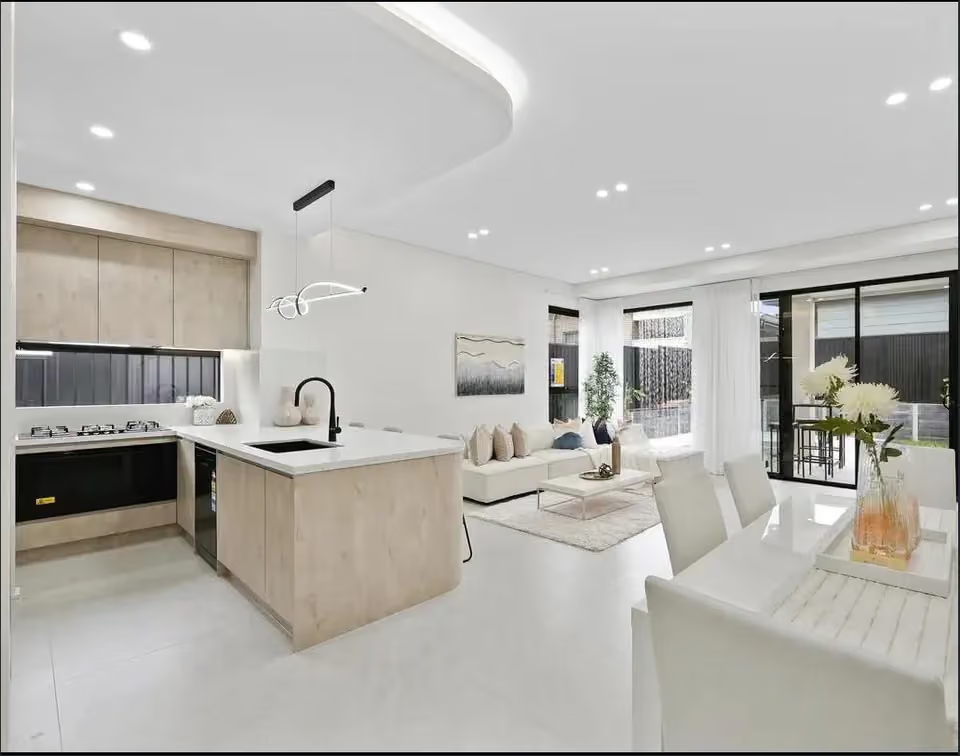
Beaumont Hills 2155 · The Hills Shire
Home Extension Beaumont Hills
In Beaumont Hills, the back fence decides more about an extension than the floor plan does.
Most extensions here go out the back or up a level, and both run into the same few controls: how close a new room can get to the rear boundary, how much yard has to stay usable, and, near Turkey Nest Park, how high the roof can go. Here's how The Hills' plans treat each one, and what the published rates say.
Short answer
Can I extend my house in Beaumont Hills?
Usually, if the addition keeps to The Hills Shire's setbacks and leaves enough private open space. Part B Section 2 of The Hills DCP sets the general rules, and lots inside the Kellyville/Rouse Hill Release Area also follow Part D Section 5. A design that meets the State's Housing Code can be approved as complying development; otherwise it's a DA to The Hills Shire Council.
Written and reviewed by Oliver Alameri
Licensed builder, NSW Contractor Licence 487805C · Founder, Buildana
Fact-checked
Which part of The Hills DCP your lot sits under
The Hills Shire Council lists Beaumont Hills, postcode 2155, as wholly inside its area, so there's no doubt about the council. The question is which section of its development control plan applies. Part B Section 2, Residential, covers all residential land in the shire. Its table of front setbacks lists the Kellyville/Rouse Hill Development Area without a figure, and that area has its own section.
That section is Part D Section 5, Kellyville/Rouse Hill Release Area, with a current version in force from 15 May 2026. It sets setbacks, site coverage and private open space for houses inside the release area boundary, and it includes height restrictions around Turkey Nest Park. Council's parks directory places Turkeys Nest Recreation Park on Tamborine Drive, Beaumont Hills, so at least part of the suburb is inside that boundary.
Whether your own lot is inside it is shown on the section's map sheets. I check the address against them and the planning certificate before anything is drawn, because the two sections don't measure the rear setback the same way.
Two parts of the same DCP, two ways of measuring the back of the lot.
Going out the back
Inside the release area, Part D Section 5 sets a rear setback of 4.0 metres for a single storey and 6.0 metres for a two-storey dwelling, with side setbacks of 0.9 metres. The useful part for an extension is the allowance that follows. A single-storey part of the house can come closer than 4 metres to the rear boundary if it's no wider than half the rear boundary, up to a maximum of 7.5 metres, and it never comes closer than 2 metres.
There's a second way to use that space. Council may accept a wider single-storey section at the 2-metre setback if a side courtyard of at least 24m² is provided, with a minimum dimension of 4 metres and enough winter sun, and site coverage still complies. On a narrow lot, that trade can be the difference between a cramped family room and a good one.
Outside the release area, Part B Section 2 applies a rear setback of 4 metres to single-storey elements and 6 metres to two- and three-storey elements. Either way, the extension has to leave usable private open space behind the building line: at least 80m² or a share of the lot area, whichever is greater, able to hold a 6 by 4 metre rectangle, reached from a living area and getting sun in mid-winter.
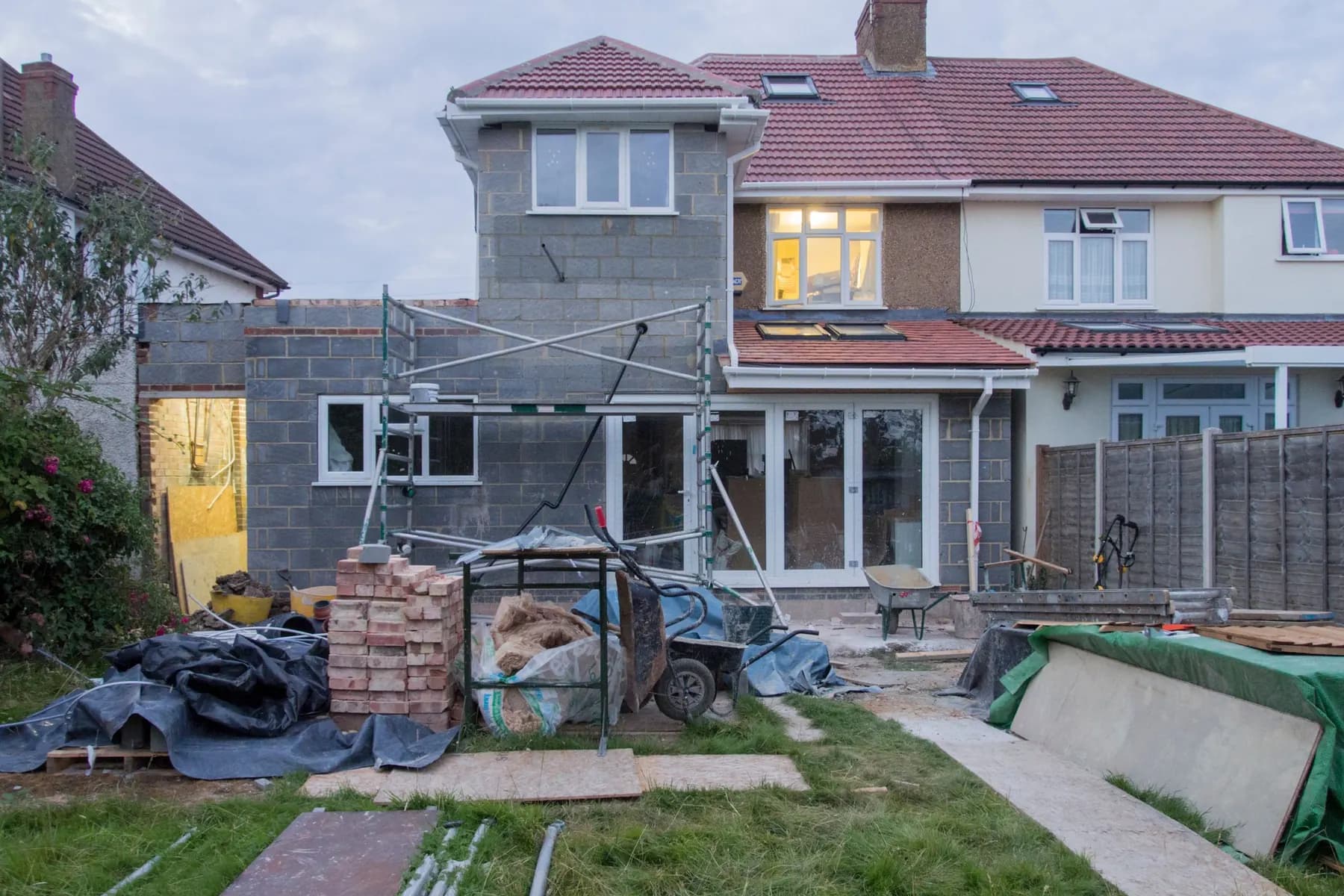
Planning an extension in Beaumont Hills?
Send the address and a photo of the back of the house. Oliver will respond within 4 working hours for a free initial conversation about which DCP section applies and how far the house can grow.
0476 300 300Going up, and the Turkey Nest Park limits
A first floor keeps the yard, but the rear setback rule tightens. In the release area, a two-storey house can only come inside the 6-metre rear setback with a single-storey part, again no wider than half the rear boundary and no more than 7.5 metres, and no wall closer than 4 metres. So an upper level usually sits over the existing footprint, not over a new rear addition.
Near Turkey Nest Park there's another layer. Part D Section 5 maps four Building Height Restriction areas around the park and the Greenway Link. In area A, houses must be single storey and no more than 1.5 metres above the pedestrian path. In area B, they must be single storey. In area C, nothing can rise more than 1.5 metres above the path, and in area D, houses can't exceed two storeys. Council will only consider a variation where compliance isn't possible and the design uses excavation, a lower roof or a split level to protect views to and from the ridgeline.
If you're outside those areas and the frame can carry it, a full first floor addition runs $3,930–$4,230/m² for 75–100m² and $3,790–$4,090/m² for 100–150m², Sydney, excluding GST, escalated to the ABS September 2026 index. The roof comes off, the house is protected while it's open, and an engineer checks the walls and footings for the new load.
- Area A: single storey, no higher than 1.5m above the Greenway Link path
- Area B: single storey
- Area C: no higher than 1.5m above the path
- Area D: no more than two storeys
Cut, fill and the garage
On sloping parts of the suburb, Part B Section 2 has controls that catch extensions out. Cut and fill should balance so no fill leaves the site. Where plans show more than 600mm of fill, council conditions a concealed dropped edge beam to hold it, and above 1.5 metres it asks for the design to change. Excavation beyond 1 metre needs structural details of the retaining walls with the application.
Garage extensions have their own limit. The DCP discourages garages that dominate the street, and says a garage should be no more than 6.5 metres wide and shouldn't span more than half the lot's width at the building line. If the plan is to turn a double garage into living space and add a new one, those numbers decide whether it works.
Approval and the published rates
If the lot isn't excluded and the addition meets every standard in the Housing Code, a certifier can issue a complying development certificate, and a CDC must be decided within 20 days where neighbours are notified (10 days otherwise). Where the design needs the DCP's flexibility, such as the rear courtyard trade, it goes to The Hills Shire Council as a development application, and a DA has a 40-day assessment period.
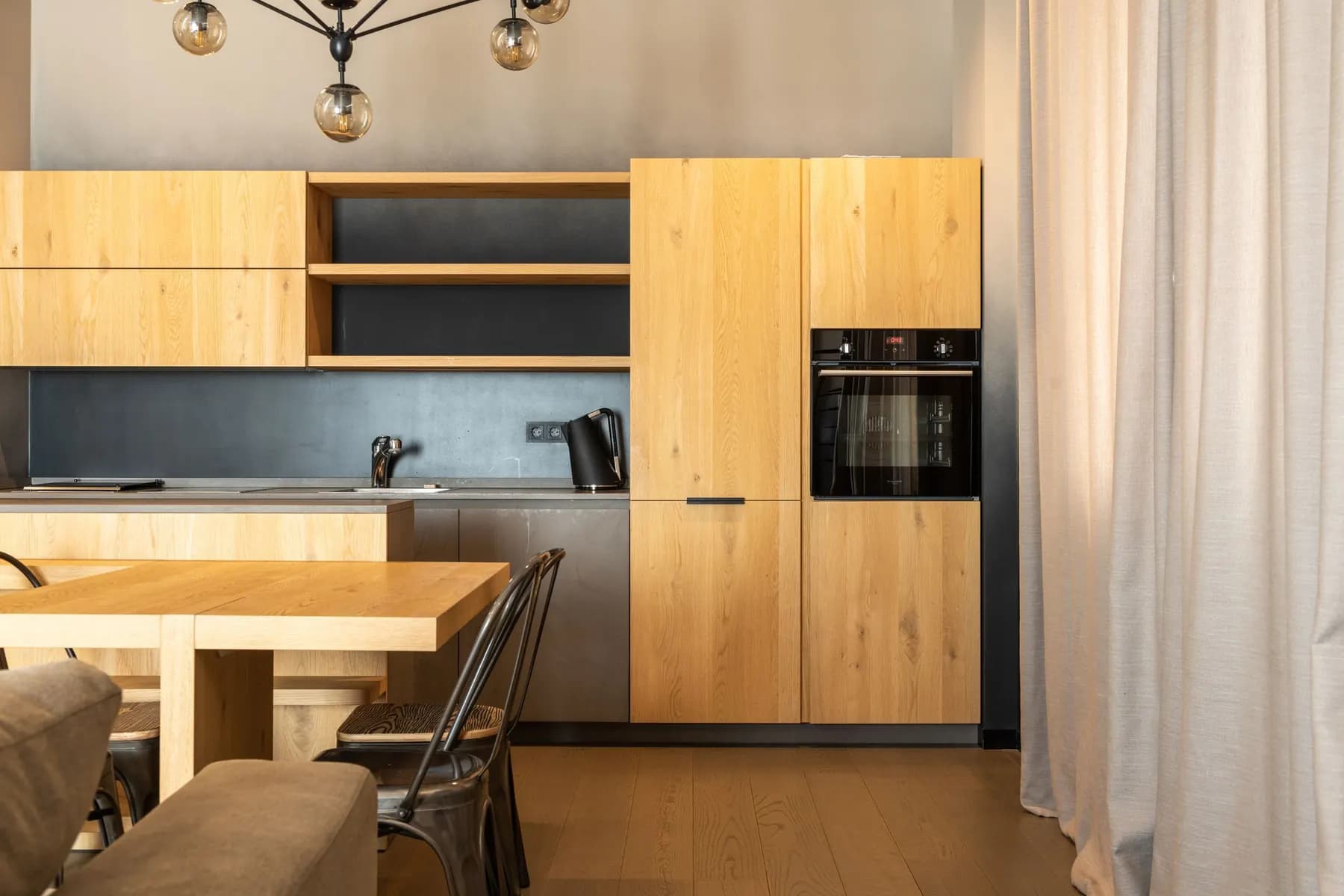
For a ground floor addition, Rawlinsons gives $2,620–$2,820/m² for 50–75m² in brick veneer, $2,630–$2,840/m² for 75–125m² in brick veneer and $2,360–$2,550/m² for 75–125m² framed. These are Sydney rates, excluding GST, escalated to the ABS September 2026 index. Fitting a bathroom into the addition is $37k–$42k and a kitchen $31k–$35k, both including GST.
Those rates price the building work. Moving stormwater lines, relocating an air-conditioning unit or a pool fence, and matching bricks or roof tiles to the existing house are priced from the site once I've seen it.
What I check first on a Beaumont Hills extension
These settle what can be built before we talk about rooms.
- 01
Whether the lot is inside the Kellyville/Rouse Hill Release Area map sheets
- 02
Any Turkey Nest Park height restriction area on the lot
- 03
The rear boundary width, and how much of it a new room can use
- 04
Private open space left behind the building line after the addition
- 05
Slope, and how much cut or fill the addition needs
- 06
Easements and stormwater lines across the back of the lot
Beaumont Hills extension questions
How close to the back fence can I build in Beaumont Hills?
Inside the release area, a single-storey part can come to within 2 metres of the rear boundary if it's no wider than half that boundary and no more than 7.5 metres. Outside it, Part B Section 2 sets 4 metres for single-storey elements.
Can I add a second storey near Turkey Nest Park?
Check the height restriction maps first. Areas A and B are limited to single storey, area C to 1.5 metres above the Greenway Link path, and area D to two storeys. Council considers variations only in limited cases.
Do I need a DA for a rear extension?
Not always. If the addition meets every Housing Code standard and the lot isn't excluded, a complying development certificate can approve it. Designs that rely on the DCP's flexibility need a DA.
What should I get from a builder before work starts?
A written contract for any residential building work over $5,000 in value, and home building compensation cover before any deposit or work once the job is $20,000 or more including GST. Check the cover on Service NSW's HBC Check. The deposit is capped at 10%.
Who will I deal with?
Oliver Alameri, who holds NSW contractor licence 487805C and has more than 15 years' building experience. Buildana's studio is in Fairfield, and we build right across Sydney, The Hills included.
Sources and references
Costs are from the Rawlinsons handbook with the local cost index applied; rules and timeframes are checked against the sources below.
- The Hills Shire Council
- Rawlinsons Australian Construction Handbook, Rawlhouse Publishing
- Environmental Planning and Assessment Act 1979 (NSW)
- State Environmental Planning Policy (Exempt and Complying Development Codes) 2008
- Home Building Act 1989 (NSW)
- Swimming Pools Act 1992 (NSW)
- NSW Planning Portal Spatial Viewer (zoning, FSR and hazard maps)
- Australia Post postcode search
- HBCF: what am I covered for?, icare NSW
- Licence check, Verify NSW (Service NSW)
Start with the back fence and the map sheet
Tell me the address and what the extra space is for. Oliver will respond within 4 working hours for a free initial conversation, and the price follows once the house and the design are understood.