
Finance / Sydney / Reviewed November 2026
Construction loans in 2026: how they work and what they cost.
A construction loan pays your builder in stages, and you pay interest only on what has been drawn. With the cash rate at 4.85% and builders failing in numbers we haven't seen in years, here's how the money moves, what it costs while the house goes up, and how to choose a builder who will still be there at handover.
01 · The basics
How does a construction loan work?
A construction loan is a home loan built for a house that doesn't exist yet. The lender approves a total amount, usually enough to cover the land (if you're buying it) and the building contract, but doesn't hand it over in one go. It pays the builder in instalments as the house reaches each stage, against the progress payment schedule in your contract. You pay interest only on the money that has actually left the loan, and during the build most lenders set the loan to interest-only.
That one difference changes how you think about cost. An ordinary home loan charges interest on the whole balance from settlement day. A construction loan starts with a small balance, the deposit and perhaps the land, and grows each time a progress claim is paid. By the time the keys arrive, it is fully drawn and becomes the loan you'll live with for the next few decades. Our guide to the switch from construction loan to end debt covers that second life in detail.
Three things make a construction loan different from buying an established home, and each one is a place where projects go wrong:
- The security doesn't exist yet. The bank values the house "as if complete", from drawings, and lends against that. If the valuation is short, the gap is yours.
- The money is tied to the contract. Lenders want a fixed price building contract, a licensed builder and a progress schedule they can follow. Variations you agree later are not automatically funded.
- Time costs money. Every month between the first draw and completion carries interest, and if you're renting or carrying an existing mortgage, those costs run at the same time.
02 · Where the money goes
Draw-downs follow your NSW progress claims.
In NSW, residential building work needs a written contract, the deposit can't exceed 10% of the contract price, and progress payments are set out in the contract. The NSW Government's advice to owners is to make sure each payment is for work actually done, not time on site (NSW Government, building contracts). A lender works the same way, and the two schedules need to line up. Our explainer on progress payment claims under the Home Building Act goes through what a valid claim looks like.
Each draw follows the same loop. The builder issues a claim for the stage. You check the work and sign the lender's draw-down authority. The lender may send its valuer or inspector to confirm the stage is reached. Then the bank pays the builder directly, and from that day you pay interest on the extra balance. Most lenders won't release the final draw until they see the occupation certificate.
- DepositMonth 0Drawn $39k · about $230/month interest
- BaseMonth 1.3Drawn $155k · about $900/month interest
- FrameMonth 3.2Drawn $310k · about $1,810/month interest
- Lock-upMonth 5Drawn $504k · about $2,940/month interest
- FixingMonth 7.2Drawn $659k · about $3,840/month interest
- Practical completionMonth 9Drawn $775k
| Stage | Work that triggers the claim | Share (assumption) | Claim | Balance after |
|---|---|---|---|---|
| Deposit | Contract signed and the HBC certificate issued | 5% | $38,750 | $38,750 |
| Base | Slab or footings poured and inspected | 15% | $116,250 | $155,000 |
| Frame | Frame standing, roof trusses on, frame inspection passed | 20% | $155,000 | $310,000 |
| Lock-up | External walls, roof, windows and external doors in | 25% | $193,750 | $503,750 |
| Fixing | Linings, cabinetry, internal doors and fit-off | 20% | $155,000 | $658,750 |
| Practical completion | Finished bar minor defects, occupation certificate issued | 15% | $116,250 | $775,000 |
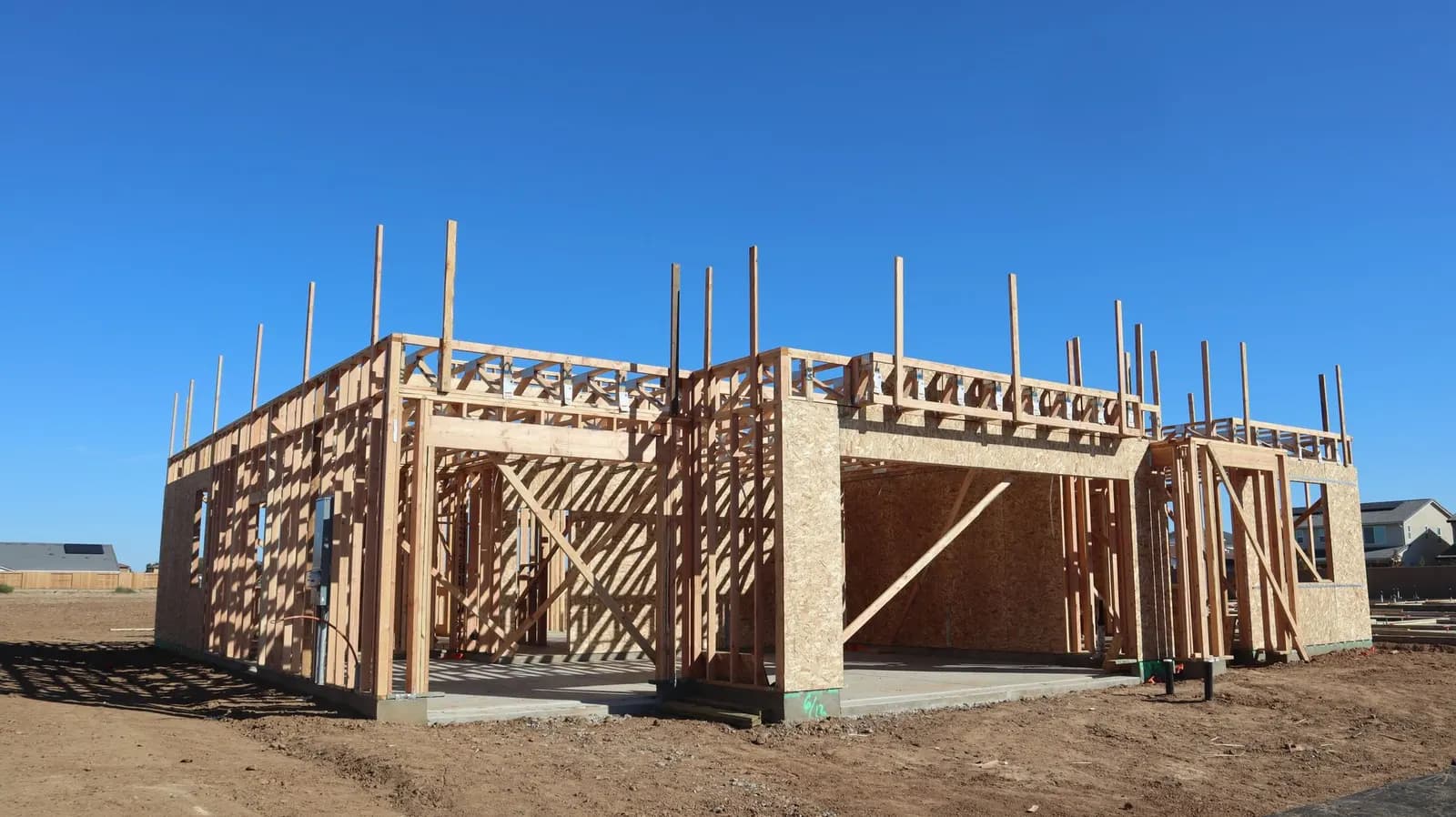
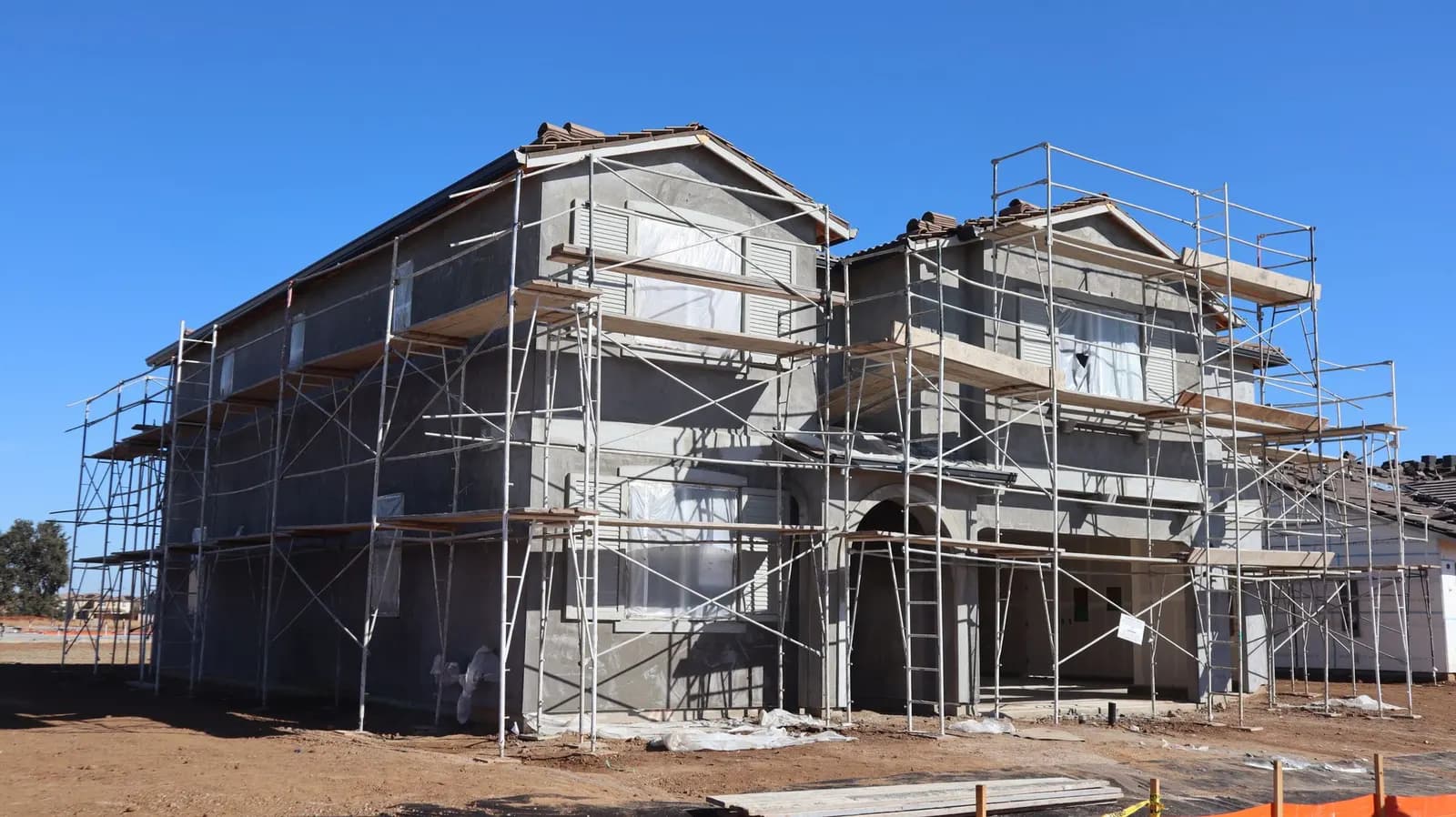
Frame stage on the left, close to lock-up on the right. The lock-up and fixing claims are usually the largest, so they move your interest bill the most.
Two practical points from the builder's side. First, the deposit is often paid from your own savings before the loan starts drawing; ask the lender whether it will fund it. Second, if a claim lands and the lender's inspector disagrees that the stage is reached, the bank holds the money. A good builder claims when the stage is genuinely done, which keeps the loop quick. A builder who needs the money early is telling you something; more on that below.
03 · The arithmetic
What a construction loan costs while you build.
Here's a worked example with every input shown. The house is 240m² of brick veneer at a medium finish. Rawlinsons prices that at $2,820–$3,040/m² in Sydney, excluding GST, escalated to the ABS September 2026 index. That puts the build at $675k–$730k before GST, or $743k–$803k including GST. We use the midpoint, $775k, as the contract price.
For the build period, the ABS average build for a new NSW house was 2.99 quarters in 2025-26, which is about 9 months. For the interest rate we've used an assumed variable rate of 7.00% p.a. That is not a quote and not a market rate; it is a round number so the arithmetic is easy to follow. Swap in your lender's rate below.
Staged drawing saves about $21,970 against a loan drawn in full at the start, because for much of the build you owe well under half the contract. But notice how the monthly interest climbs: by fixing stage, you're paying close to $3,840 a month, and that's on the house alone.
The example leaves out three things that are often bigger than the build interest:
- The land. If you bought the block with the same loan, interest on the land runs on the full amount from settlement, through design and approval, and right through the build.
- Where you live. On a knockdown rebuild, you're paying rent somewhere else while the build interest climbs. Our knockdown rebuild cost guide lists the other costs outside the contract.
- Time before the first draw. Design, reports and approval come first: a CDC generally has a 20-day determination period where statutory neighbour notification applies, or 10 days otherwise; eligible Pattern Book applications have a 10-day period even where notification applies, and most local DAs have a 40-day assessment period before deemed refusal may be appealed, not a decision deadline, counted from a complete application. Our guide to how long a house takes to build puts the whole timeline together.
Interest-during-build estimator
Enter your own figures. Nothing here is a quote or a lender's rate.
- Interest on progress draws
- $18,720
- If the whole loan were drawn on day one
- $40,690
- Difference staged drawing makes
- $21,970
- Highest monthly interest before completion
- $3,840
Uses the illustrative stage split and timing in the table above, simple interest on each draw from the day it is paid until practical completion. Your lender's method, fees, the land loan and any capitalised interest are not included.
04 · The rate
Construction loan rates in 2026.
On 3 November 2026 the Reserve Bank decided to lift the cash rate target to 4.85%, effective 4 November 2026, up from 4.60% decided on 29 September 2026. It was the fifth increase of 2026, and the Bank noted that housing prices have fallen significantly (RBA cash rate; RBA media release). The backdrop is inflation: the ABS measured CPI at 4.3% over the year to the September quarter (ABS).
The cash rate isn't your rate. Lenders price construction loan rates above it, and they differ by lender, loan size, deposit and whether you'll live in the house or rent it. Most construction loans are variable during the build, so a rise mid-build feeds straight into the next month's interest. That's why I'd always test a build at a rate higher than the one you're offered; the estimator above makes that a ten-second job.
Higher rates hit a build in a second, quieter way: serviceability. Lenders test your repayments at a rate above the one you'll pay. Each rise tightens that test, so the maximum you can borrow can fall between finding the land and signing the building contract. Get your construction facility approved in writing, with the assessment rate they used, before you commit to a contract price you then can't fund.
Ask your lender these five questions, and get the answers in writing:
- Is interest charged only on drawn funds, and is it paid monthly or capitalised into the loan?
- What does each progress inspection cost, and how long does a draw take to pay out?
- How long can the construction period run before the loan converts, and what happens if the build runs late?
- Will you fund the builder's deposit, and do you need the occupation certificate before the final draw?
- How do you treat variations, and can the loan be increased mid-build?
05 · The bank's view
Valued "as if complete", cost to complete, and contingency.
Before approving the loan, the lender sends a valuer to assess what the land and finished home will be worth on completion. The valuer works from your plans, specification and contract price, and compares them with recent sales of similar new homes nearby. The lender then lends a share of that value.
Alongside the valuation sits the cost-to-complete test. The lender adds up the land, the contract price and any costs outside the contract it knows about, and checks your loan plus your own money covers all of it. If the house can't be finished with the funds available, the loan won't be approved, however good the valuation.
In a falling market, those two numbers can pull apart. With Sydney values down about 10.1% from their February 2026 peak (Cotality), comparable sales are lower than they were when many owners bought their land. A valuation below land plus build means a bigger deposit, not a bigger loan.
Your own contingency
Lenders fund the contract, not your changes of mind or the surprises outside it. Keep money aside for variations, site costs you couldn't price until the ground was open, and the move. How much depends on the site and how complete the design is when you sign. A builder who has done proper site investigation and a full specification before the contract leaves you less exposed; one who has left a lot as provisional sums leaves you more.
Getting the scope right before the valuation is also a design job. A design and build approach, where the builder prices the design as it develops, gives the valuer and the lender a complete set of documents rather than a concept and a list of allowances.
06 · The bigger decision
Building vs buying a house in a falling market.
Established Sydney houses are cheaper than they were at the start of the year. Build costs aren't. The ABS index Rawlinsons rates are escalated by has risen about 43% between the March quarter 2021 and the September 2026 quarter (ABS producer price index, NSW house construction). So the honest answer to "should I build or buy?" in late 2026 is that buying an existing house has become relatively better value, and building has to earn its place.
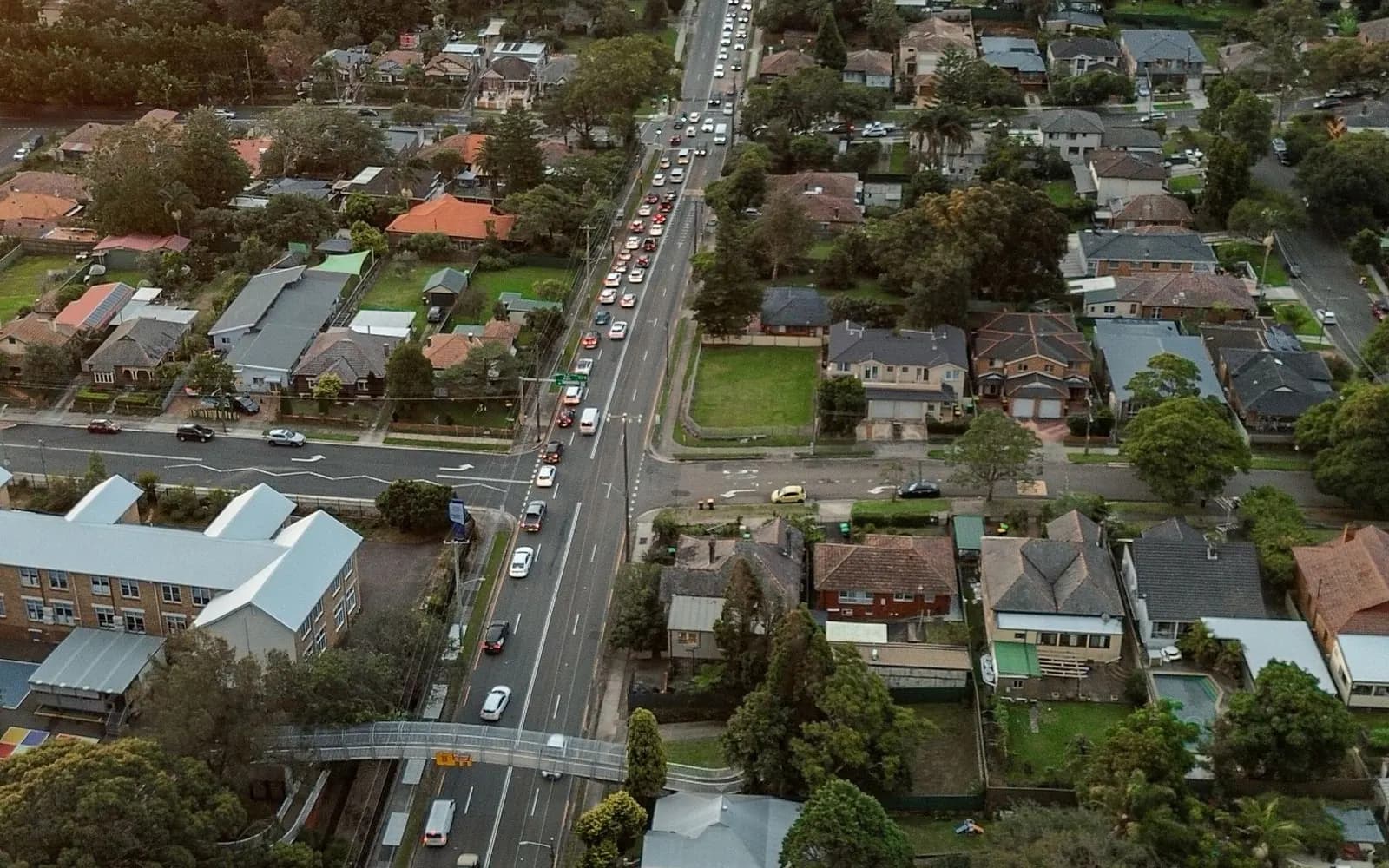
Building still makes sense in four situations I see often:
- You already own the land. Knockdown rebuilds avoid buying and selling costs on a new house, and you keep the street you know.
- You want something the market doesn't sell. A home designed for multigenerational living, a difficult block or a specific layout is hard to find established, which is the case for custom homes.
- New-home support matters to you. Several first-home programs favour new homes, and stamp duty is paid on the land rather than a finished house.
- You're building more than one home. A second dwelling changes the sums entirely; our duplex feasibility stress test works through one.
Building is harder to justify when you'd be buying land at a full price, the house you want is readily available established nearby, and the valuation "as if complete" looks likely to come in below land plus build. If that's you, I'd have a land assessment done before signing anything, and read our complete guide to Sydney building costs to see every line outside the contract.
07 · The biggest risk
Choosing a builder who won't fold.
ASIC recorded 3,472 construction companies entering external administration in FY26, 24.5% of all insolvencies (ASIC insolvency statistics). Residential names were among them, including Beechwood Homes, which collapsed in May 2026, and the Bathla Group. When a builder fails mid-build, the draw-downs stop, the site sits, and your interest keeps running.
What home building compensation does, and doesn't, cover
For residential work over $20,000, your builder must take out home building compensation cover through icare's HBCF and give you the certificate before taking a deposit. It is last-resort cover: it responds when the builder is insolvent, has died, has disappeared, or has had their licence suspended. The maximum is $340,000 per policy, and for incomplete work a claim is generally capped at 20% of the contract price (icare, what HBCF covers). On our example contract, that's $155,000. Finishing a half-built house with a new builder usually costs more than the remaining contract balance, so cover helps but rarely makes you whole. Our guide to insurance during construction covers the other policies on site.
Five checks before you sign
- Licence and history. Check the contractor licence on the NSW register, and the name on it matches the company on the contract.
- HBCF certificate. Look up the certificate for your address on the HBCF register before you pay a cent.
- A fixed price building contract. A full specification, with few provisional sums and realistic allowances. See contract types explained.
- A progress schedule that never runs ahead of work. Claims should follow completed stages. Front-loaded schedules move risk from the builder to you.
- Recent, checkable work. Talk to owners whose homes were finished recently, and visit a site under construction, not just a display home.
Red flags
- Asking for more than the 10% deposit cap, or any payment before the HBCF certificate.
- A price well below every other quote, with long lists of provisional sums.
- Requests to pay early, pay a supplier directly, or pay in cash for a discount.
- Progress claims for stages your lender's inspector says aren't reached.
- Long silences on site, trades leaving unpaid, or a sudden change of company name.
Size matters less than you'd think. Big volume builders have failed and so have small ones. What matters is a builder whose cash flow doesn't depend on your next payment. Our comparison of volume and custom builders sets out the trade-offs, and if you're tempted to manage it yourself, read owner builder vs licensed builder first: no HBCF policy covers your own work.
08 · First home
First-home help that works with a build.
5% Deposit Scheme
Since 1 October 2025, no income caps and no waitlists. It can be used to build on vacant land, but land plus build costs must stay under the location price cap: $1,500,000 for Sydney.
Housing Australia price capsHelp to Buy
A shared-equity scheme from a 2% deposit, with the Government contributing up to 40% for new homes (30% for existing). Income limits are $103,000 for individuals and $165,000 for joint applicants and single parents.
Help to BuyNSW First Home Owner Grant
$10,000 for new homes only. When you buy land and sign a building contract, the land, contract and variations together must not exceed $750,000, which rules out most Sydney builds.
Revenue NSWEach scheme works through a participating lender, and each has conditions about living in the home, so confirm eligibility with the lender before you sign a building contract. Figures read from the official sites on 19 November 2026 (5% Deposit Scheme).
09 · Paperwork
What the bank will ask for.
Lenders ask for much the same documents on every build. Having them ready, and consistent with each other, saves weeks.
- Signed fixed price building contract, with the progress payment schedule
- Full plans and specification, matching the contract
- Development consent or CDC, with stamped approved plans
- The builder's licence number and the HBCF certificate for your address
- Land contract or title search, and the section 10.7 planning certificate
- A list of costs outside the contract (demolition, driveways, landscaping, fencing), with quotes
- Proof of your own funds for the deposit, the gap and a contingency
- Income evidence, and details of any existing loans
- Builder's insurance certificates for contract works and public liability
- For a knockdown rebuild: the demolition approval and your plan for where you'll live
Keep reading
Before you sign a loan or a contract.
Building in 2026?
Get a build price your lender can work with.
Send the address and what you'd like to build. Oliver will respond within 4 working hours for a free initial conversation about the build, the contract and the documents your lender will ask for. Buildana is a builder, not a lender or broker, so we won't quote you a rate.
0476 300 300Construction loan
questions.
How does a construction loan work?
The lender approves a total loan but pays it out in stages, directly to your builder, as each progress claim under your building contract is verified. You pay interest only on what has been drawn so far, usually interest-only during the build, and the loan converts to an ordinary home loan once the house is complete.
Do I pay interest on the full construction loan from day one?
Generally no. Interest runs on the drawn balance, so it starts small and grows with each stage. In our worked example, an assumed 7.00% rate on a $775k contract over 9 months costs about $18,720 on staged draws, against $40,690 if it were all drawn at the start. Check how your lender charges interest and whether it can be capitalised.
What are construction loan rates in 2026?
Lenders set their own rates. The Reserve Bank's cash rate target has been 4.85% since 4 November 2026, the fifth increase of 2026. Construction loans are priced above that and vary by lender, loan size and your deposit, so ask a lender or broker for the rate on your loan in writing.
What does 'valued as if complete' mean?
The lender's valuer looks at your plans, specification and contract and estimates what the land and finished home will be worth on completion. The lender lends against that value and also checks the contract price plus the land covers the full cost to complete. If the valuation comes in short, you fund the gap from your own money.
Do I need a fixed price building contract for a construction loan?
Most lenders want a fixed price building contract from a licensed builder, with a progress payment schedule, the plans and specification, and the home building compensation certificate. Cost-plus contracts are harder to finance because the total isn't fixed.
What happens to my loan if my builder goes broke?
Draw-downs stop. If the builder is insolvent, home building compensation (HBCF) cover can respond for incomplete work, generally up to 20% of the contract price, within a maximum of $340,000 per policy. That rarely covers everything, which is why checking a builder before you sign matters so much.
Is it cheaper to build or buy a house in Sydney right now?
It depends on the land you have, the house you want and the valuation. Sydney values have fallen about 10.1% from the February 2026 peak (Cotality), while build costs have not fallen. Building tends to stack up best when you already own the land or are rebuilding, and want a house the established market doesn't offer.
Can first home buyers use a construction loan?
Yes. The 5% Deposit Scheme can be used to build, provided land plus build stays under the price cap ($1,500,000 for Sydney). Help to Buy can contribute equity on new homes. The NSW First Home Owner (New Homes) Grant is $10,000, but for a build the land and contract together must not exceed $750,000.
Sources
- Reserve Bank of Australia, cash rate target, and media release 2026-30, 3 November 2026. Accessed 19 November 2026.
- ABS, Consumer Price Index, Australia, September quarter 2026. Accessed 19 November 2026.
- Cotality, Monthly Housing Chart Pack, November 2026, published 11 November 2026. Accessed 19 November 2026.
- ASIC, insolvency statistics, FY26. Accessed 19 November 2026.
- icare NSW, HBCF: what am I covered for? and HBCF certificates register. Accessed 19 November 2026.
- NSW Government, contracts for residential building work. Accessed 19 November 2026.
- Housing Australia, 5% Deposit Scheme, property price caps and Help to Buy. Accessed 19 November 2026.
- Revenue NSW, First Home Owner (New Homes) Grant. Accessed 19 November 2026.
- Rawlinsons Australian Construction Handbook Ed. 29, Sydney, item 13.1.2.2, escalated with the ABS producer price index, NSW house construction (September 2026 quarter). Accessed 19 November 2026.
- ABS, Building Activity, Australia, June 2026, average NSW house completion time 2.99 quarters in 2025-26. Accessed 19 November 2026.
General information, not financial or legal advice. The interest rate and stage split in the worked example are assumptions for illustration. Written by Oliver Alameri, Buildana Pty Ltd, NSW contractor licence 487805C. Published and reviewed 19 November 2026.